Auto Transport for the Rental Car Industry: How Fleets Move, and Why It Never Stops
Rental fleets are never where they need to be. Winter pushes cars to Florida and Arizona, summer pulls them back north, conventions drain one city and flood another, and every one-way rental quietly relocates an asset the company must eventually move back. Auto transport is how the industry corrects the map, continuously, at scale.
This page is for the people who manage that problem: fleet and operations managers at rental companies large and small, and the franchisees who live with the imbalances the big network creates.
The Four Moves Rental Fleets Make
Seasonal rebalancing. The big one. Snowbird season, ski season and summer tourism each redraw demand, and the fleets follow by the hundreds of units. These moves are predictable months ahead, which makes them the cheapest to book well and the most expensive to book late, because every competitor’s fleet is chasing the same trucks in the same lanes at the same time.
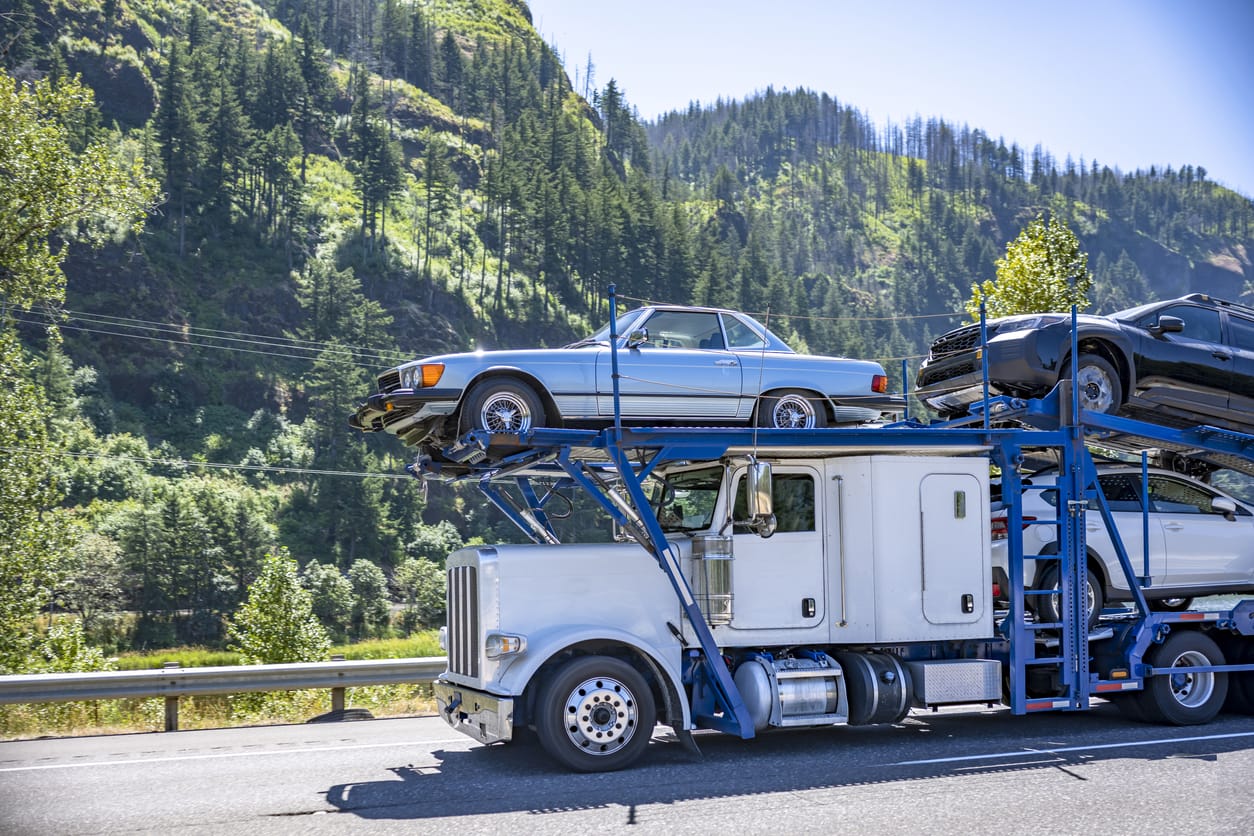
One-way drift correction. One-way rentals cluster on the same corridors every year, and drivers returning cars one at a time do not scale. Multi-car transport consolidates the drift into planned backhauls, and a broker watching both directions of a lane can place rental repositioning on trucks that would otherwise deadhead home.
Fleet intake and defleeting. New units arrive from auction sites and manufacturer lots; retired units leave for auction. Both are transport events, and defleeting in particular rewards planning: auction calendars are fixed, and a unit that misses its sale date sits as dead capital for a month.
Event surges. A Super Bowl, a major convention or a hurricane evacuation multiplies demand in one metro for one week. The companies that look best in those weeks arranged their inbound transport before the surge was on the news.

What Rental Moves Need That Retail Moves Do Not
Volume pricing with volume flexibility. Ten units on one lane is a different negotiation from one car, and the rate should reflect it. But rental volume is also lumpy, and the transport partner has to absorb a week of forty units and a week of four without repricing the relationship each time.
Condition documentation at scale. Rental companies live and die on vehicle condition records, and transport has to plug into that discipline: photographed condition reports at pickup and delivery on every unit, not a paper scrawl on unit seven of nine. Digital bills of lading with photo attachments are the standard to insist on.
Keys, fobs and logistics detail. A nine-car load with nine fobs, nine toll transponders and nine registration packets is an inventory problem riding on a trailer. The handoff process (who holds what, sealed and labeled how) is worth a paragraph in the contract, because losing a proximity fob costs real money and a rental day.
A single point of coordination. Fleet moves fail in the gaps: a lot that did not know the truck was coming, a gate that closes at five, a unit blocked in by returns. A transport partner who calls the branch, confirms the staging and owns the schedule is worth more than the last nickel of rate, which is the same argument that applies to any brokered transport relationship, multiplied by unit count.
What It Costs, and What Moves the Number
The same factors that price any car move price fleet moves: distance, lane direction, season and vehicle size, covered in our guide to what affects car shipping costs. Fleet work adds two levers retail customers do not have. Flexibility across days: a fleet that can release units any day that week rides the cheap trucks. And lane pairing: a company moving cars south in October and north in April is, to a carrier, a round trip worth discounting. Put the annual pattern on the table at negotiation, not one move at a time.

Transport or Storage: The Shoulder-Season Question
Every fleet manager eventually prices the alternative: leave units where the season stranded them and store until demand returns. Sometimes storage wins, but the arithmetic is worse than it looks. A stored unit pays rent, keeps depreciating on the calendar even while its odometer sleeps, sits out of revenue for months, and often needs battery, tire and detail attention before it re-enters service. Transport south puts the same unit back on rent within the week at winter rates. The honest comparison is storage cost plus lost rental revenue against one transport invoice, and on most mainstream units the transport wins by a wide margin. Where storage does win is specialty inventory with thin off-season demand anywhere, which is a fleet-mix question more than a logistics one.
Franchisees and Small Fleets
Most of this page reads like big-network logistics, but the economics work at small scale too. An independent operator moving six cars to a seasonal market books the same multi-car trailer space the majors use, and a broker aggregating small fleet moves onto shared loads is how a twelve-unit operation gets close to major-fleet pricing. The minimum efficient move is roughly a half trailer; below that, single-unit retail pricing applies and timing flexibility is the only lever.
Common Questions
How do rental companies move cars between cities? Multi-car open transport for volume, single units for stragglers, on planned seasonal and corridor schedules.
What does fleet repositioning cost per unit? Less than retail single-car rates on the same lane, with the discount scaling with volume, flexibility and two-way lane commitments.
How far ahead should seasonal moves book? Weeks at minimum. The seasonal lanes tighten industry-wide in the same windows every year.
Can small operators get fleet pricing? Approaching it, yes, through consolidated loads and annual lane commitments rather than one-off bookings.
How is condition damage handled at volume? Photographed condition reports per unit at both ends, digital bills of lading, and a claims process agreed in the contract rather than improvised per incident.
Get a Quote
Call Ship A Car, Inc. at (866) 821-4555 with your lanes, unit counts and dates, or price a single move with the instant calculator.