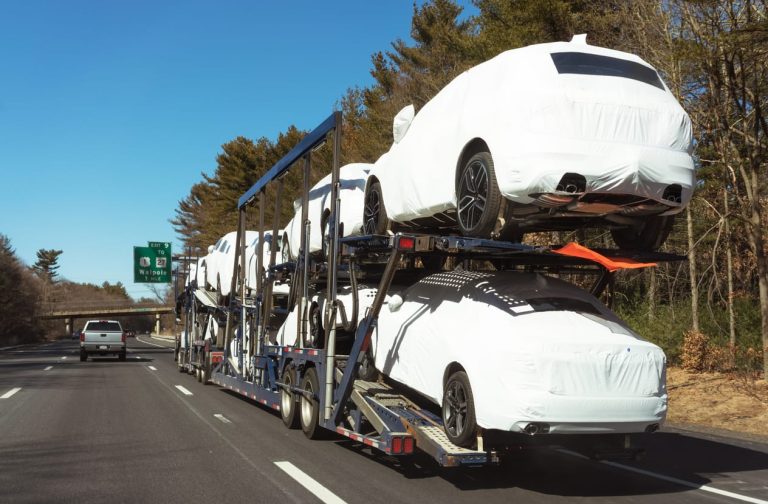
What an Auto Transport Broker Actually Does, and Why Most Shipping Runs Through One
Most vehicle shipping in America is arranged by a broker, and most customers do not know it, which is why the arrangement gets described as a middleman fee when it is closer to the reason the whole system works at all.
Here is what a broker actually does between your call and your delivery, what the alternative honestly involves, and how to tell a good one from a bad one.
The Problem the Broker Exists to Solve
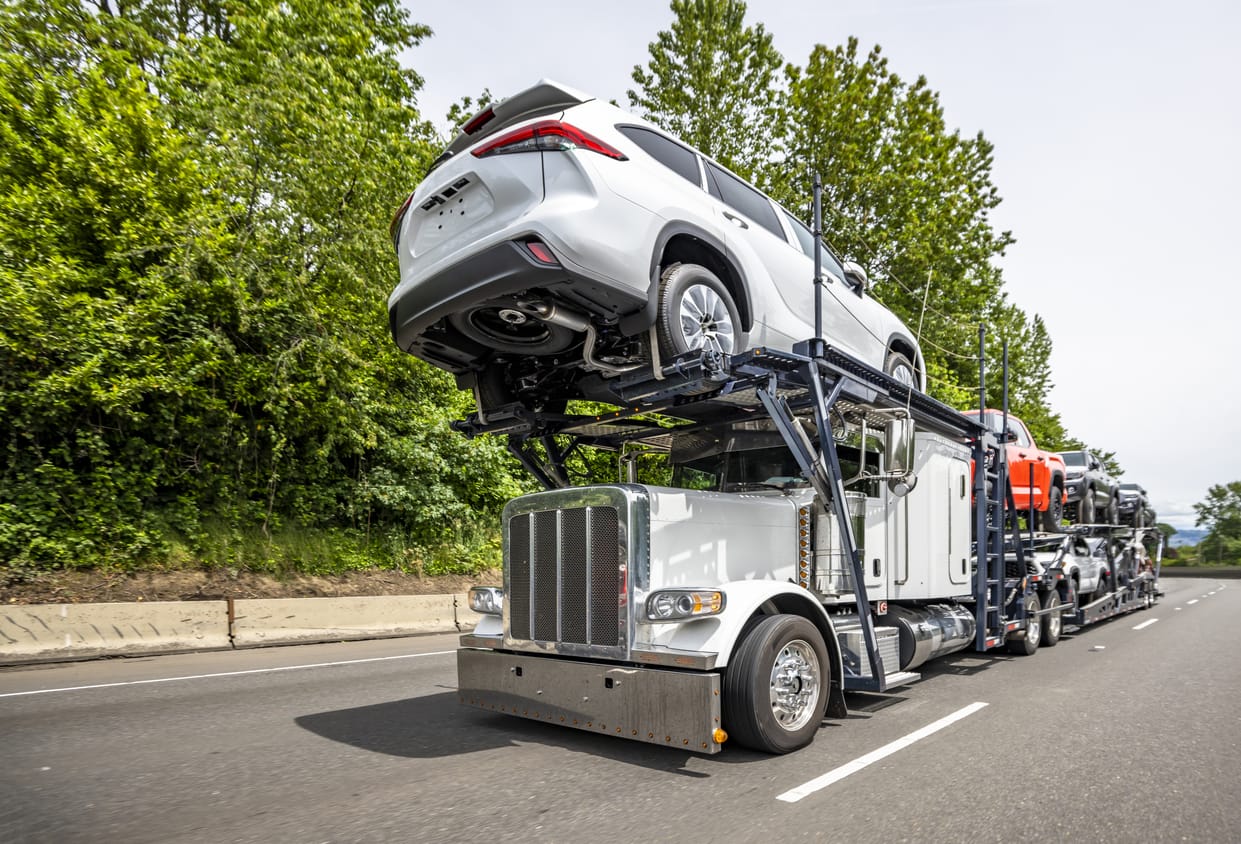
The carrier side of this industry is thousands of small operations, owner-operators and fleets of a handful of trucks, each running the lanes it knows. No single carrier covers the country, and none of them sits by the phone waiting for your route on your week.
So the practical question behind every shipment is: which truck, of the thousands out there, is already heading from near your pickup to near your delivery, with an empty slot, this week, at a workable price? Answering that requires visibility across the whole market. That visibility is the product. A broker holds federal authority to arrange transport, maintains a network of vetted carriers, and matches your car to the truck that is already going your way.
What Happens Between Your Call and Your Delivery
The work is invisible when it goes well, which is exactly when it is worth describing.
The broker prices your route against what drivers are currently accepting, posts and shops the load to carriers it has vetted, negotiates the carrier’s cut, checks the assigned carrier’s authority and insurance, coordinates the pickup window between you and a driver whose schedule changes daily, and stays the accountable party if anything slips: the reachable voice when the truck breaks down two states away, with the standing carrier relationships that get a replacement truck assigned instead of a shrug.
Payment usually splits: a broker fee at assignment, the balance to the driver at delivery. That structure is normal and it is also your leverage: the broker earns its fee at the moment a real carrier is assigned, which is the moment worth confirming.

One distinction worth keeping straight, because the words get used loosely: a broker is not a lead reseller. A lead site collects your details and sells them to several brokers, which is why one form sometimes produces a week of competing calls. A licensed broker takes responsibility for your specific shipment under its own federal authority. The difference shows up in the first phone call: a broker talks about your route and your vehicle; a lead buyer talks about beating whatever number the last caller gave you. If your inbox filled with quotes you never requested, you filled in a lead form, and the diligence below matters twice as much.
The Alternative, Honestly
You can book a carrier directly, and for some moves it is the right call: a local operator you know, a specialty enclosed carrier you have used before, a route the carrier runs weekly. Direct booking removes the fee and removes the flexibility: that carrier’s schedule is the schedule, its lanes are the lanes, and if your dates and its dates diverge, there is no network behind it to catch the load.
What you cannot practically do is replicate the matching yourself. The load boards where freight meets trucks are subscription tools built for the industry, carrier vetting takes access to federal records plus the judgment to read them, and a private individual posting one car has no reputation for a driver to trust. The broker’s rate for doing this is usually modest against what your time and a mispriced load would cost.
Where It Goes Wrong, and How to Protect Yourself
The failure modes are specific. A broker who quotes below what drivers accept, hoping to shop your load cheap, so the car sits and the price “revises.” A broker who will not name the assigned carrier, which blocks the one check that matters. And the rare double-broker chain, where your load is re-sold down a line of middlemen and accountability dissolves.
The protections are equally specific. Verify the broker’s own federal authority and bond. When a carrier is assigned, get its name and USDOT number and check its record yourself, using the ten-minute process in our page on reading a carrier’s safety record. Treat a quote far below the cluster as a schedule risk, per why quotes vary for the same route. And pay in ways you can dispute.

The Questions That Sort Good Brokers From Bad
Five, and the answers tell you everything: Which carrier will haul my car, and when will I know? What is your fee, and when is it charged? What cargo insurance limit will the assigned carrier have? What would change this price at pickup? And what happens if no carrier accepts at this rate? A broker who answers all five precisely is showing you the operation; one who answers with reassurance is showing you the sales script.
Common Questions
Do I need a broker to ship a car? Not legally, but most shipping runs through one because no single carrier covers the country, and the matching is the hard part.
What does a broker charge? A fee typically collected at carrier assignment, with the balance paid to the driver at delivery. Ask for the split explicitly.
Is booking a carrier directly cheaper? Sometimes, when a good carrier already runs your route on your dates. You trade the fee for the flexibility of the network.
What is the one check that matters? The assigned carrier’s name and USDOT number, verified in the federal record before pickup. A broker who withholds it is the red flag.
What is double brokering? Your load re-sold down a chain of middlemen. Prevent it by confirming the named carrier is the one whose truck arrives.
Get a Quote
Call Ship A Car, Inc. at (866) 821-4555 with both zip codes and your date range, or price the move with the instant calculator.