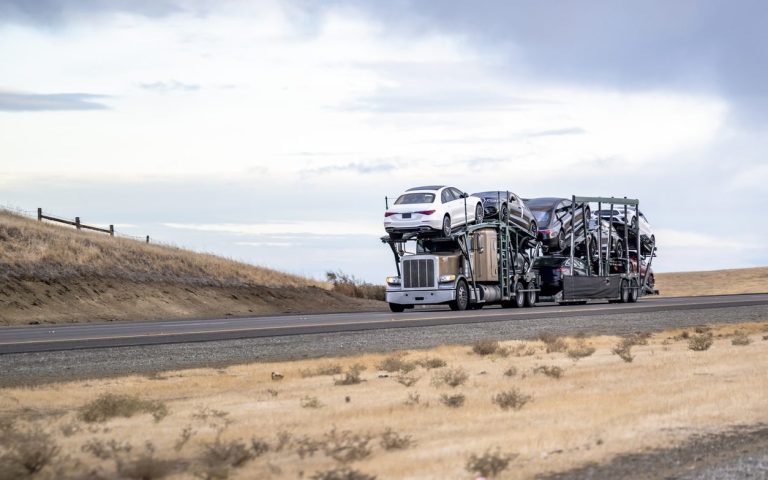
Moving to or from Cape Coral, Florida: Getting the Car There
Cape Coral is one of the more awkward Florida destinations for vehicle transport, and the reason is its layout rather than its location. It is a large, low density city of canals and long residential streets built on a grid that a 75 foot truck cannot easily work, sitting off the main interstate by a bridge crossing. None of that is a problem once you plan for it.

Where Cape Coral Sits
Interstate 75 runs north to south a few miles east, connecting Tampa and the north to Naples and the Miami corridor. Cape Coral itself is west of the Caloosahatchee River, reached from Fort Myers by bridge.
That means carriers are constantly nearby on I-75 but not actually in Cape Coral, and the last leg involves a bridge crossing and a run through residential grid streets. It is not difficult, but it is a detour, and detours are what carriers price.
The practical consequence: a handover at a large lot on the Fort Myers side, or near a I-75 exit, is frequently cheaper and always easier than a residential Cape Coral address. It is twenty minutes of your time against a meaningful difference in rate and a much better chance of an on-time pickup.
The Seasonal Pattern
Southwest Florida is snowbird country, and the timing is the sharpest variable in the whole move.
Southbound demand builds through October and peaks in November. Northbound spikes in March and April. Inside those windows rates rise, carriers fill early, and lead times stretch. Outside them the same route is unremarkable.

Book three to four weeks ahead in the peaks and one to two outside them, and give a range of pickup days rather than a single date. If your dates can move at all, late September southbound or early May northbound avoids the crush entirely.
Book both directions together if you know both, because everybody heads north in the same fortnight.
Timing the Car Against the Household Move
The vehicle is usually the easiest part of a relocation and the one most often left until last, which is how it becomes the difficult part.
Arrange for the car to arrive after you do rather than before. A vehicle delivered to a house nobody is living in yet becomes a storage problem, and storage is an avoidable cost. If you cannot be there, name somebody who can inspect it and sign for it, because whoever signs the bill of lading accepts the condition recorded on it.
Work backwards from the date you need it. Add a few days for a carrier to be assigned, then the transit time, then a buffer for the delivery window, which is a range rather than a promise because federal rules cap how long a driver may drive each day.
If you are moving a household and two vehicles, consider driving one and shipping the other. It removes the airfare from the calculation entirely and usually makes shipping the clear answer for the second car.
Hurricane Season Is the Other Variable
From June through November, Gulf weather governs scheduling across southwest Florida, and Cape Coral has direct experience of what that means.
Before a storm, everybody wants to move vehicles out of the same area at once and capacity disappears within a day or two of a serious forecast. If you are shipping ahead of a storm, decide early rather than when the track firms up.
Afterwards the problem reverses: roads close, fuel is short, and carriers will not commit to delivery into an area they cannot reach. That is a limitation of the situation rather than of the carrier.
Never accept delivery of a vehicle that has stood in floodwater without a proper inspection. Water damage to electronics and drivetrains commonly appears weeks later.
Access Within the City
Cape Coral’s residential streets are wide by Florida standards but long, with limited turning room and a great many cul-de-sacs and canal-end dead ends.
Gated communities and condominium complexes are common and frequently will not admit a commercial vehicle, and low branches over residential streets are a real constraint for a 13 foot 6 inch truck.
The answer is the meeting point described above. Agree it when you book, and check with your community management if you are in a gated development, since some have rules about commercial vehicles and delivery hours.
Heat, Humidity and a Car That Sits
If the vehicle is going to sit for a season, prepare it for that rather than just for the trip.
Wash it so existing marks are visible, then photograph every panel in daylight, including the wheels, the lower bumpers and the rocker panels, which are what loading marks. Leave about a quarter tank of fuel.
Empty the cabin and the trunk, since personal items are not covered by cargo insurance and they add weight. Remove anything that can melt, warp or burst, because a car parked in southwest Florida sun for months gets hotter inside than most owners expect.
Then plan for the months: a battery tender if power is available, tire pressures checked at both ends, fresh fluids if due, and covered parking if you can arrange it. Keep your insurance active for the whole period, because dropping it saves very little and leaves theft and weather uncovered.
Open or Enclosed
Open transport carries the overwhelming majority of vehicles on this lane and is right for an ordinary car.
Enclosed costs 20 to 30 percent more and is worth it on a collector vehicle or fresh paintwork, and particularly on a northbound spring move if your home state salts its roads. It has a local advantage too: enclosed carriers are frequently smaller trucks that can reach an address a full size open trailer cannot. Our guide to seasonal car transport to Florida covers the wider picture.
Common Questions
Can a truck deliver to my Cape Coral address? Sometimes, but long grid streets, cul-de-sacs, low branches and gated communities often mean a meeting point instead.
When is this lane busiest? Southbound October and November, northbound March and April. Book three to four weeks ahead in those windows.
Should I ship before a hurricane? Decide early. Capacity vanishes within a day or two of a serious forecast, and the area may be unreachable afterwards.
How long does it take? From the Northeast or Midwest, typically two to four days in transit once collected, plus a few days for assignment.
Is a meeting point cheaper? Frequently yes, and it improves the chance of an on-time pickup. A lot near I-75 or on the Fort Myers side works well.
Get a Quote
Call Ship A Car, Inc. at (866) 821-4555 with both zip codes, your date range and an honest description of the access at your address, or price the move with the instant calculator.