How to Ship a Tiny Home
Whether a tiny home is a vehicle or a building decides how it moves, and the answer is usually written on its paperwork rather than visible from outside. A tiny home on a certified trailer chassis with a VIN is towed. One built on skids or a foundation is freight, and frequently oversize freight. Establish which you have before asking anyone for a price.

The Two Categories
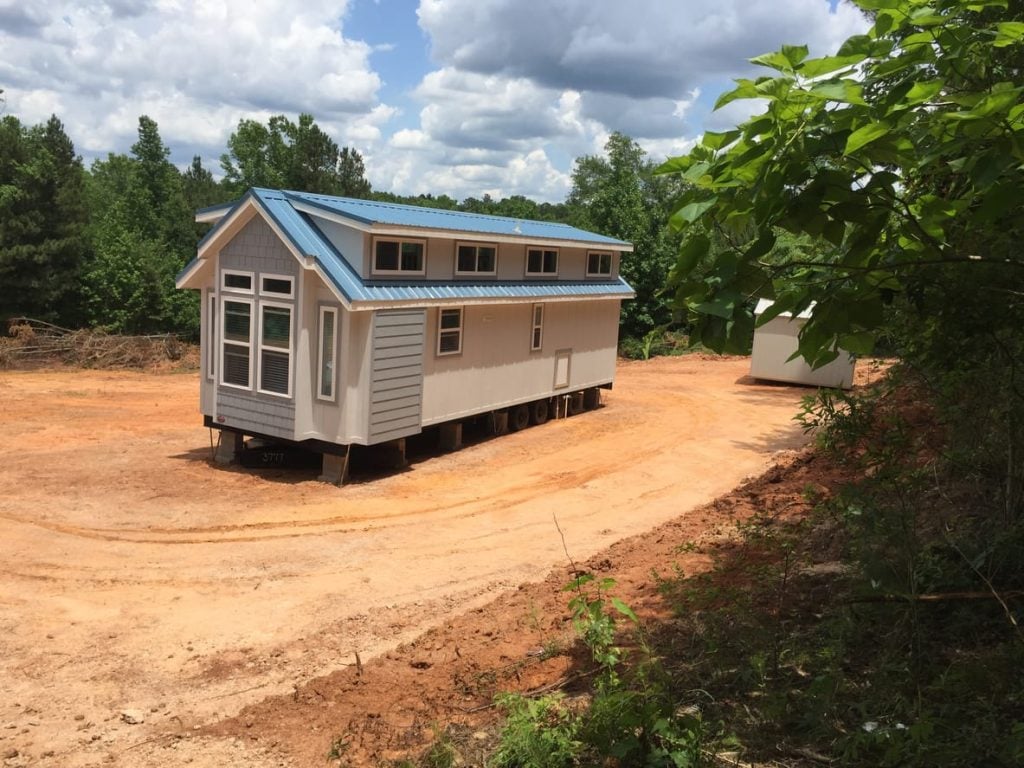
Tiny home on wheels. Built on a purpose-made trailer chassis, usually with a VIN and a title, frequently registered as a recreational vehicle or a travel trailer depending on the state. This is towed behind a suitable vehicle. It has axles, brakes, lights and a coupler, and it is legally a trailer.
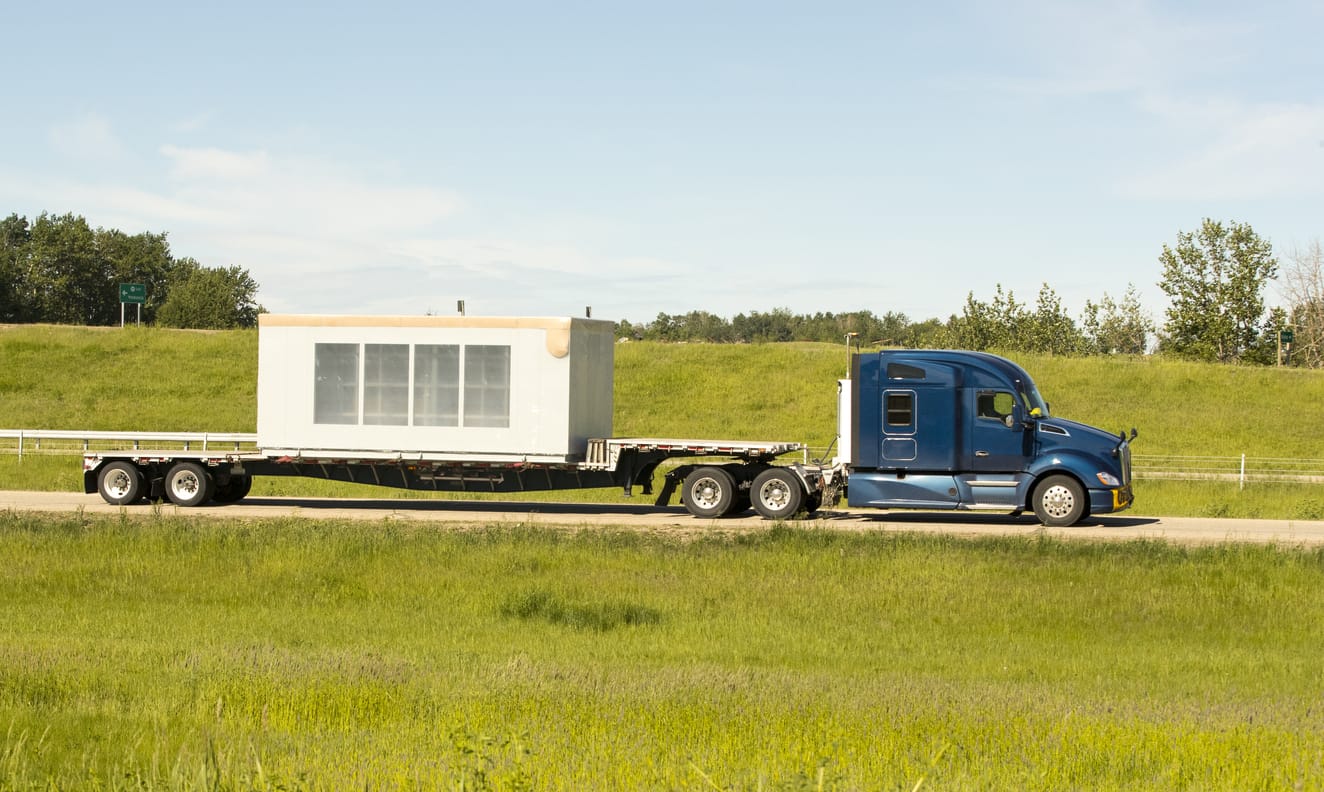
Tiny home on a foundation or skids. No chassis, no axles, no VIN. This is a structure, and it moves the way a modular building moves: lifted onto a trailer, secured, and transported as freight.
The difference is not cosmetic. It changes the equipment, the permits, the insurance and who is qualified to move it.
Get the Four Numbers
Width, height, length and weight, measured rather than taken from a builder’s brochure.
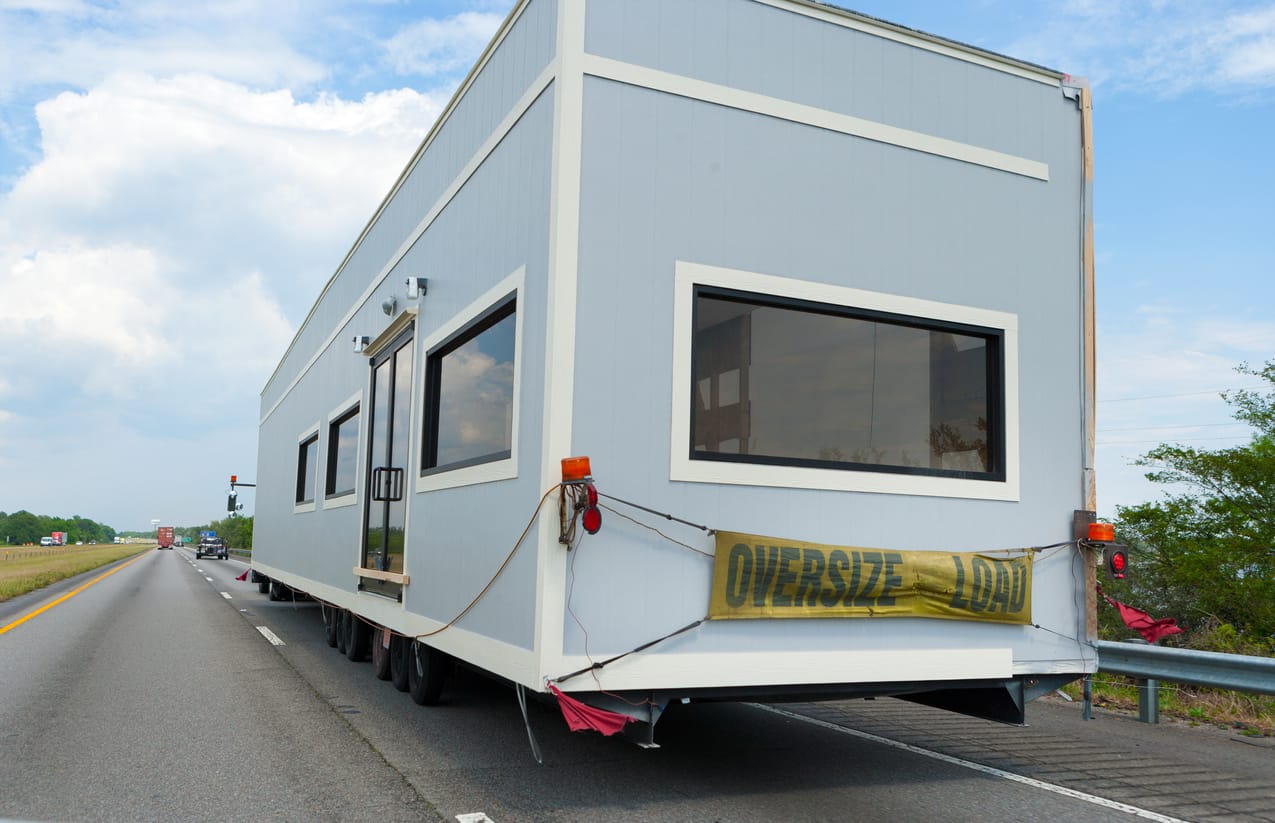
Width. Past 8 feet 6 inches it is an oversize load in every state. Most tiny homes on wheels are built at or just under that deliberately; many custom builds are not.
Height. This is the one that catches people. On a trailer chassis the floor already sits around 2 feet up, so a 10 foot interior puts the roof near or over the 13 feet 6 inch legal ceiling. Measure to the top of the highest thing on the roof, including a vent, a solar panel or a chimney.
Weight. Tiny homes are heavier than people expect. Timber framing, cladding, insulation, appliances, water tanks and a loft full of contents add up quickly, and a build that was designed to 10,000 pounds frequently leaves the yard at considerably more.
Get a certified scale weight if you possibly can. An underdeclared weight is the most common cause of a corrected invoice or a load that cannot legally move.
Permits and Escorts
Past 8 feet 6 inches wide, 13 feet 6 inches high or 80,000 pounds gross, the move needs an oversize permit from every state on the route, issued against a specific configuration and path.
Wider loads bring escort vehicles, with thresholds varying by state and road type. Permitted movement is generally daylight only on weekdays with holiday restrictions, which turns a cross-country tiny home move into a multi-day operation.
Low bridges are the practical constraint on a tall load, and a posted clearance is a hard stop. A route survey is worth doing rather than assuming the interstate route works.
Preparing the Home Itself
A tiny home is a building being subjected to highway forces, and the preparation is closer to preparing an RV than preparing a vehicle.
Inside: empty everything that is not fastened down. Secure or remove contents of cupboards, tape or latch every door and drawer, and empty and clean the refrigerator with the door propped. Loose items in a loft are the most common source of interior damage.
Water: drain the fresh tank, the lines and the water heater completely, and winterize with antifreeze if the route crosses a freeze. Empty any waste tank.
Utilities: disconnect and cap everything. Turn off and, where required, remove propane cylinders.
Outside: secure or remove anything that can lift at 65 miles an hour: solar panels, vents, skirting, a porch, steps, awnings and window boxes. Check the roof edges and sealant, because airflow finds every weakness. Board or protect large windows.
If It Is on Wheels, Check the Running Gear
The chassis under a tiny home is frequently the least maintained part of it, because it does nothing for years at a time.
Check every tire including the spare, and look at the date codes rather than the tread: trailer tires age out before they wear out, and a set that has sat for three seasons is exactly the blowout profile. Check the wheel bearings and have them serviced if there is any doubt.
Test the lights with a tow vehicle connected, confirm the brakes work, and check the coupler, the safety chains and the breakaway cable.
Confirm registration is current and that the tow vehicle is genuinely rated for the loaded weight. This is where owner-towing plans usually fail: a truck rated for a boat is frequently not rated for a 12,000 pound house.
Documentation and Insurance
Photograph the whole exterior in daylight from every side, the roof if you can safely see it, and the interior. Roof damage is the hardest to argue about later, so get it recorded before it moves.
Ask what the carrier’s cargo limit is and whether it is per incident. A tiny home is frequently worth more than a standard limit assumes, and higher coverage is arranged in advance rather than after a problem. Confirm your own policy covers it in transit. Our guide to wide and oversize loads covers the permit thresholds.
Common Questions
Is it a vehicle or freight? On a certified trailer chassis with a VIN it is towed as a trailer. On skids or a foundation it is freight, usually oversize.
What measurement catches people out? Height. The trailer floor already sits around 2 feet up, so a tall interior puts the roof near the legal ceiling.
Will it need permits? Frequently, on width or height, from every state on the route, with daylight-only weekday movement.
What breaks in transit? Loose interior contents, then roof-mounted items and skirting that lift at speed.
Can I tow it myself? Only if your vehicle is genuinely rated for the loaded weight and the running gear has been serviced. Check the tire date codes.
Get a Quote
Call Ship A Car, Inc. at (866) 452-3657 for heavy haul and specialized freight with the measured width, height, length and weight and whether it is on a titled chassis, or price it with the specialized transport calculator.