Shipping a Livestock Trailer
We move the trailer, not the animals, and that distinction is the whole job. An empty livestock trailer is straightforward freight: it rolls, it has a known width, and it goes on a flatbed or travels behind a truck. Live animals are a completely different business governed by health certificates, welfare rules and inspection at state lines, and it is not what an auto transport company does. If you are moving stock, you want a livestock hauler. If you are moving the trailer itself, that is us.
Width Is Usually the Deciding Number
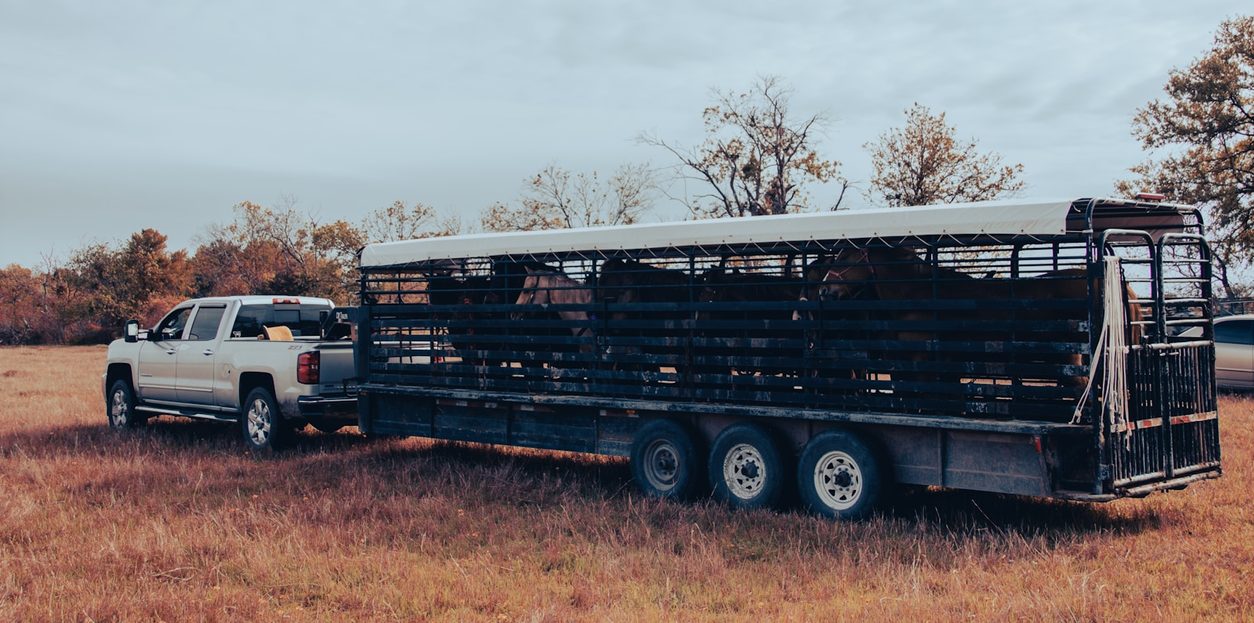
Most stock trailers sit right at the edge of legal width, which is why measuring matters more here than with a car.
A standard bumper pull is typically under 8 feet 6 inches and travels as an ordinary load. Many gooseneck and larger stock trailers are wider than that once you include fenders, and at that point you are into permit territory for every state on the route. Measure the widest point, including any protruding hardware, rather than quoting the model’s nominal size.
Height matters too if the trailer is loaded onto a deck rather than towed, because the deck height adds to the trailer height and the total is what has to clear.
Towed or Hauled
There are two ways to move a trailer and they price differently.
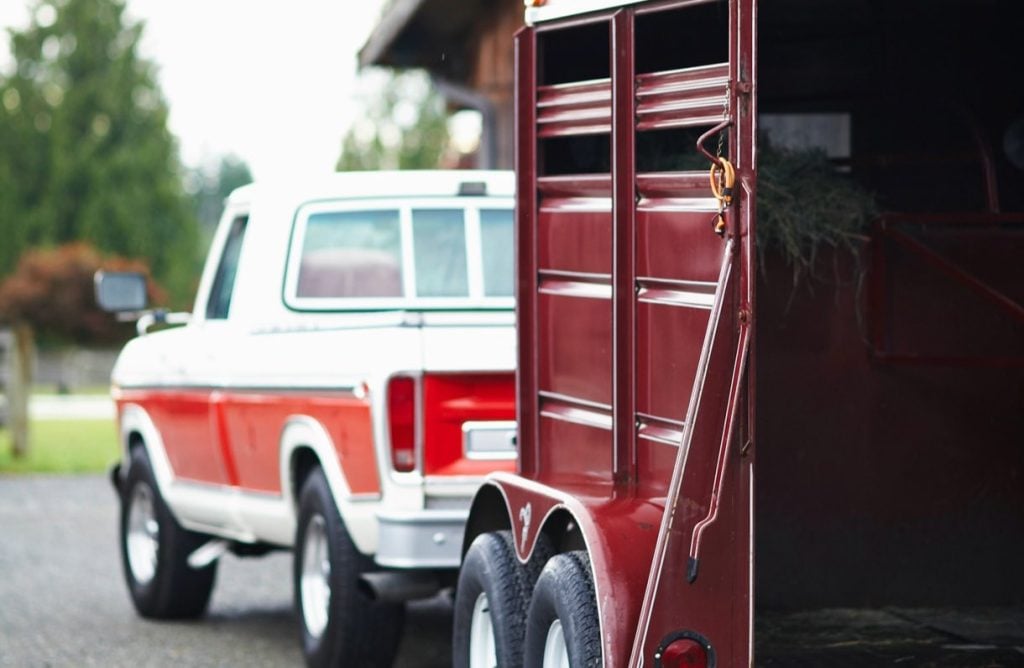
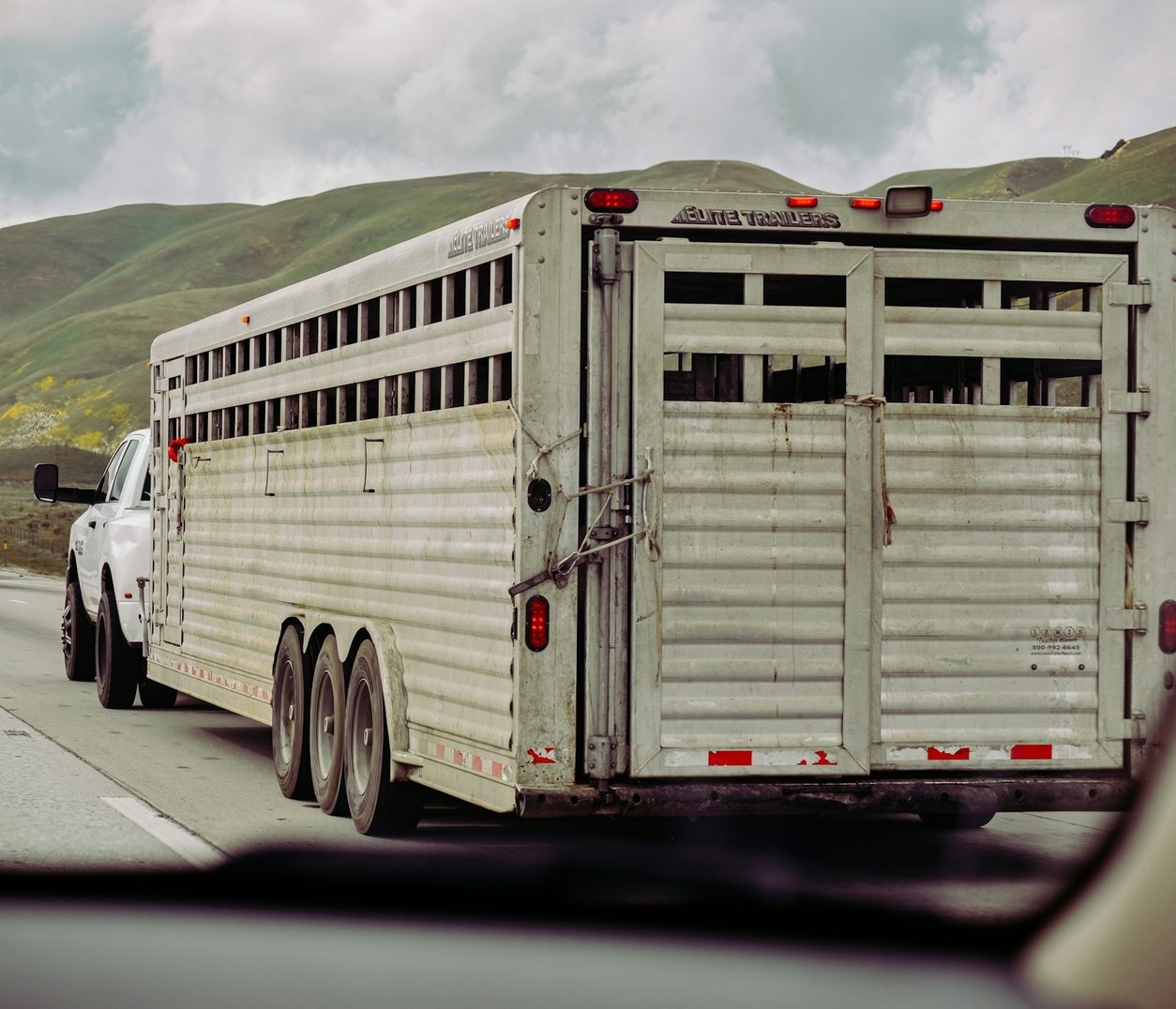
Towed means a truck hitches to it and pulls it, which suits a roadworthy trailer with sound tires, working lights and a serviceable coupler. It is usually the cheaper option because it needs no deck space.
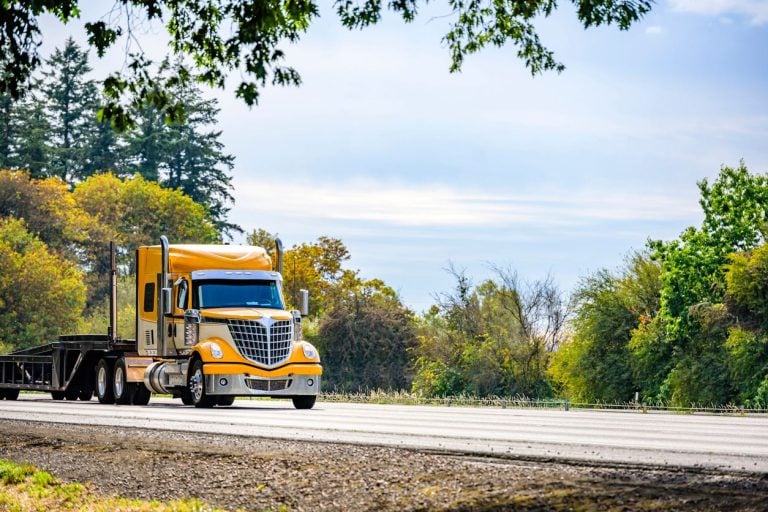
Hauled means the trailer rides on a flatbed or step deck. That is the answer for a trailer that is not roadworthy, has seized brakes or bad bearings, or is valuable enough that you would rather it did not accumulate road miles.
Be honest about condition when you book. A trailer described as tow ready that has flat tires or a frozen coupler cannot be taken, and the slot is lost.
What Has to Work for a Tow
Four things, and all of them are checkable in ten minutes.
Tires must hold air and have usable tread, including the spare if there is one. Lights and the electrical connector must function, since the trailer has to be legal on the road behind the truck. Brakes and bearings need to be serviceable, because a seized hub on a long haul is a serious problem. And the coupler, safety chains and jack must be sound and match the towing vehicle’s hitch class.
If any of those fail, the trailer is a hauled load rather than a towed one. That is fine, it just needs deciding in advance.
Prepare It as an Empty Trailer
Clean it out thoroughly. Manure and bedding are weight, they are a debris hazard on the road, and in some cases they are a biosecurity concern at the destination. A trailer that arrives clean also lets you see its actual condition on delivery.
Remove or secure everything loose: dividers, gates, panels, buckets, tack and mats. Loose items become projectiles and they damage the trailer’s own interior. Latch and pin every gate and door so nothing swings open in transit.
Retract or secure the jack, and if the trailer has living quarters, treat that section like a travel trailer: empty the water, secure the contents, and lock it.
Paperwork
Have the title or registration available, since a trailer is a titled vehicle in most states and the carrier may be asked to show what it is moving.
If the trailer is being sold, agree who releases it and who signs the condition report, exactly as you would with a car bought remotely. And photograph everything before it moves, including the roof, the floor, the interior and the tires, because trailers accumulate scuffs and it is otherwise impossible to say when a mark appeared.
What It Costs
A towed trailer on a common lane is usually priced similarly to a large vehicle, with the exact figure driven by distance, width and whether a permit is needed. A hauled trailer costs more because it occupies deck space that could carry vehicles.
Permits and escorts, where width requires them, are the largest single variable. Reducing width where possible, by removing bolt on fenders or protruding hardware, is worth pricing against the permit cost.
Common Questions
Can you transport the animals too? No. We move the empty trailer. Live animals need a livestock hauler with the appropriate health paperwork.
Towed or on a truck? Towed if it is roadworthy, hauled if it is not or if you would rather it did not accumulate miles.
Does it need a permit? If it exceeds 8 feet 6 inches at its widest point, yes, for every state on the route.
Do I need to clean it? Yes. Manure and bedding are weight, a road hazard, and a biosecurity issue at some destinations.
What if the tires are flat? Then it is a hauled load rather than a towed one. Say so at booking so the right equipment is sent.
Get a Quote
Call Ship A Car, Inc. at (866) 452-3657 with the trailer’s measured width, its length, and whether it is roadworthy enough to tow.