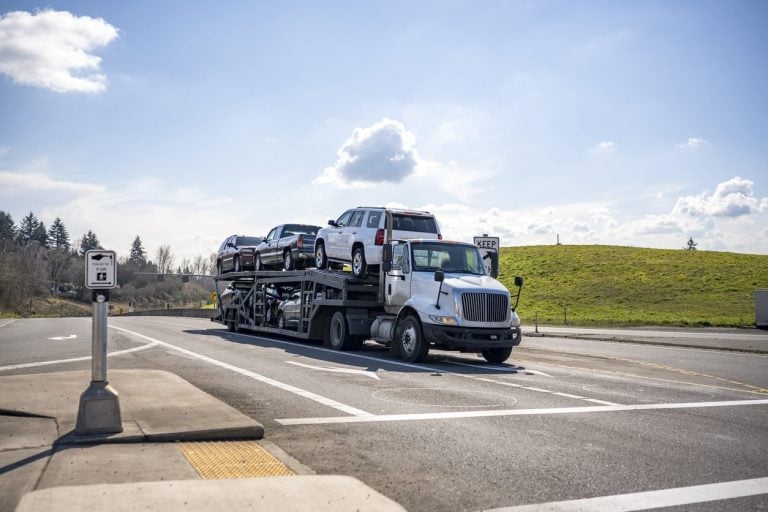
Road Safety Legislation: What Actually Reduces Deaths
American road deaths run far higher per mile driven than in comparable wealthy countries, and the gap is not explained by Americans driving more. It is explained by a combination of vehicle design, road design, speeds, enforcement and law, and the countries that have closed the gap did it by treating all five as one problem rather than campaigning about driver behavior.
Here is what the evidence supports, what is contested, and why it matters to anyone who drives for a living.

The Approach That Underpins Modern Policy
Most current road safety legislation traces to a framework that started in Sweden and has been adopted in various forms since.
Its central claim is that human error is inevitable, so the system should be designed so that error does not kill. That reverses the traditional emphasis: instead of trying to produce perfect drivers, you build roads and vehicles that tolerate imperfect ones.
In practice that means designing for survivable speeds, separating road users who travel at very different speeds, and removing the roadside objects that turn a mistake into a fatality. It is unglamorous engineering rather than exhortation, and it is what the measurable improvements have come from.
What the Evidence Actually Supports
Five interventions with strong records.
Speed management. The most consistently effective single factor, because crash energy rises with the square of speed. Lower speeds in places where vehicles and people mix, and design that makes the safe speed the natural one, both work.
Road design. Roundabouts substantially reduce fatal crashes at intersections by removing the high speed angled impact. Median barriers prevent head on collisions. Rumble strips reduce lane departures. None of these depends on anyone behaving better.
Restraint use. Seat belt laws with primary enforcement produce measurably higher usage than laws where an officer must stop you for something else first. That difference translates directly into survival.
Impaired driving law. Lower blood alcohol thresholds and ignition interlock requirements for offenders both have evidence behind them.
Vehicle safety standards. Structural requirements, airbags and increasingly automatic emergency braking. This is where the most measurable progress of the past thirty years has come from.
Where It Is Genuinely Contested
Three areas where reasonable disagreement exists.
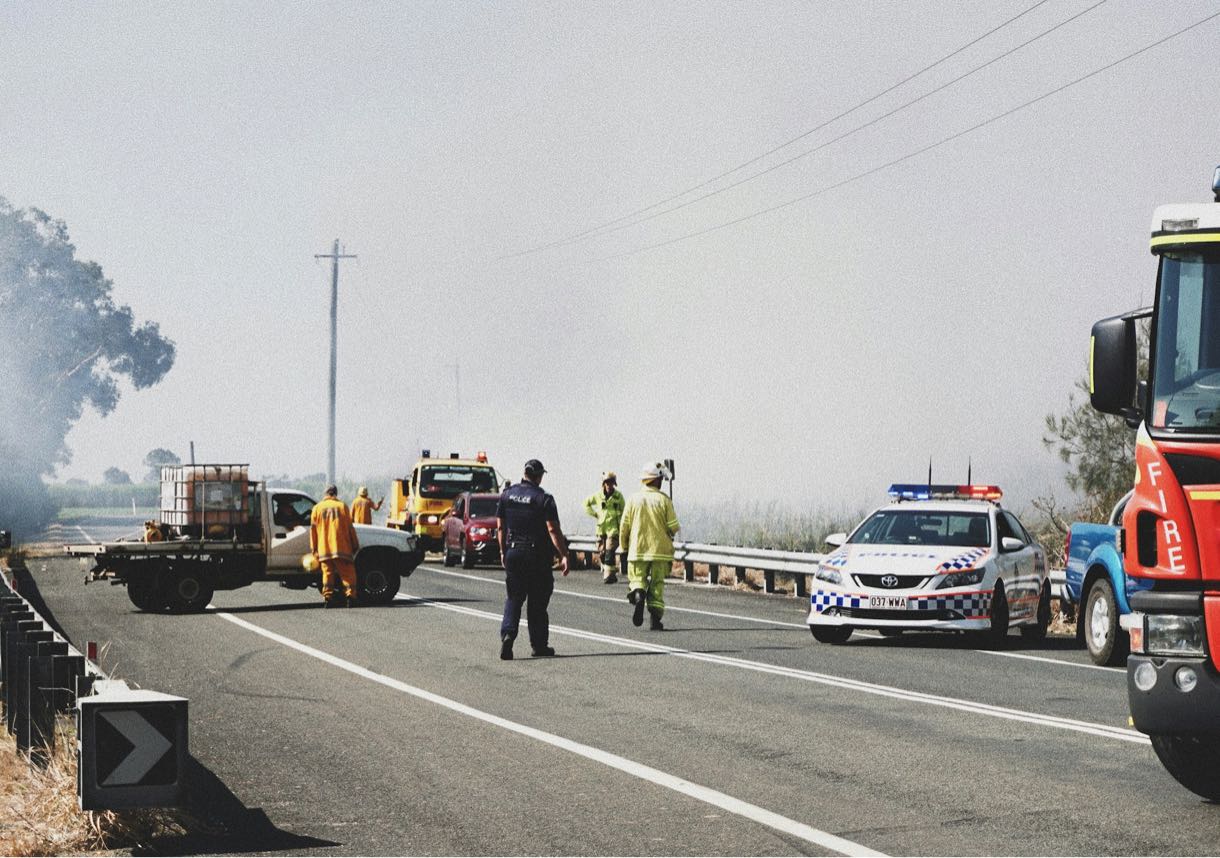
Automated enforcement. Cameras apply a consistent standard and remove discretion, which supporters value. Critics point to accuracy questions, revenue incentives when programs fund themselves through citations, and surveillance scope. States have taken sharply different positions, and several have repealed programs after adopting them.
Vehicle size. Larger, taller vehicles protect their occupants better and are more dangerous to people outside them, particularly through higher hoods that change the geometry of a pedestrian impact. That trade off between occupants and everyone else is a real policy question rather than a settled one.
Speed limit setting. There is genuine disagreement between setting limits by observed driver behavior and setting them by the speed a road’s design and surroundings can tolerate.
The Commercial Vehicle Side
Trucking is regulated separately and more heavily, and the mechanisms are different.
Hours of service rules cap driving time to address fatigue, enforced through electronic logging devices rather than paper.
Inspection and maintenance requirements, with roadside inspections that can place a vehicle out of service on the spot. That data is public, which is why a carrier’s safety record can be looked up.
Speed limiters on many fleet trucks, both for safety and for fuel economy.
Advanced driver assistance, with collision mitigation and lane departure warning increasingly standard on new equipment.
What is worth understanding is that these are enforced with real consequences. A carrier operating unsafe equipment accumulates a record that affects its ability to operate, which is exactly why verifying a carrier is a practical step rather than a formality.
Why It Matters When You Hire a Carrier
This is the point where policy becomes something you can act on.
Every interstate carrier’s inspection and out of service data is public through the federal motor carrier regulator. A carrier with a poor record is more likely to be stopped, more likely to have equipment placed out of service mid trip, and more likely to leave your vehicle sitting on a shoulder waiting for a replacement truck.

So the safety record is not only an ethical consideration. It is a reliability indicator, and checking it takes minutes. Look up the USDOT or MC number, confirm the authority is active and the name matches, and look at the inspection history. Our page on red flags in vehicle shipping covers the rest of the verification.
What an Individual Driver Can Do
The interventions with the best evidence are also the simplest, which is not a coincidence.
Wear the belt, every time, including in the back. Keep the phone out of your hand. Slow down, particularly where vehicles and people mix. Do not drive impaired or seriously fatigued. And keep the vehicle maintained, tires above all, since they are the only contact with the road.
None of that is new advice. It is on the list because it keeps appearing in the crash data, which is a better reason than novelty.
Common Questions
What reduces road deaths most? Speed management and road design, because both reduce crash energy and tolerate human error rather than requiring perfection.
Why are US road deaths higher per mile than in comparable countries? A combination of vehicle design, road design, speeds, enforcement and law, not simply more driving.
Do speed cameras work? They change behavior where deployed and are genuinely contested on accuracy, revenue incentives and surveillance. State law differs sharply.
Are trucks regulated differently? Yes, and more heavily: hours of service, electronic logging, roadside inspections and out of service authority.
Can I check a carrier’s safety record? Yes. Inspection and out of service data is public through the federal motor carrier regulator by USDOT or MC number.
Get a Quote
Call Ship A Car, Inc. at (866) 821-4555 with both zip codes and your date range, or request an estimate for the move through the quote calculator.