Airbags in Class 8 Trucks: Where Safety Standards Stand
Passenger cars have had mandatory frontal airbags for decades, and heavy trucks still do not, which surprises most people the first time they hear it. The reason is not indifference. It is that a Class 8 tractor crashes differently from a car, and the safety investment in heavy trucks has largely gone into avoiding collisions rather than cushioning them.

What Class 8 Actually Means
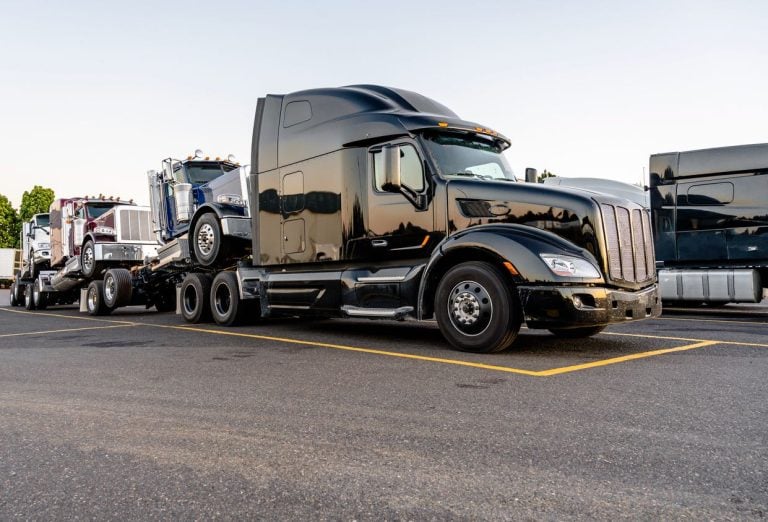
Class 8 is the heaviest category of commercial vehicle, covering anything over 33,000 pounds gross vehicle weight rating. It is the class that includes the tractor units pulling car haulers, flatbeds, dry vans and lowboys.
These vehicles sit high, weigh many times what a car weighs, and are built around a frame designed for load rather than for crumple zones. The physics of a heavy truck collision are dominated by mass and by what the truck hits, and in a majority of fatal truck crashes it is the occupants of the other vehicle who are killed.
That asymmetry has shaped regulation: much of the safety effort on heavy vehicles targets protecting everyone else on the road.
Why Frontal Airbags Are Not Standard
Several practical reasons rather than one.
A tractor’s crash dynamics differ from a car’s. The cab sits well above the impact plane of most vehicles it strikes, and the frame does not collapse the way a passenger car’s front structure is designed to. The deceleration profile an airbag is tuned for is not the same.
Rollover and underride are proportionally more significant in heavy truck occupant injury than frontal impact, and a frontal airbag does nothing for either.
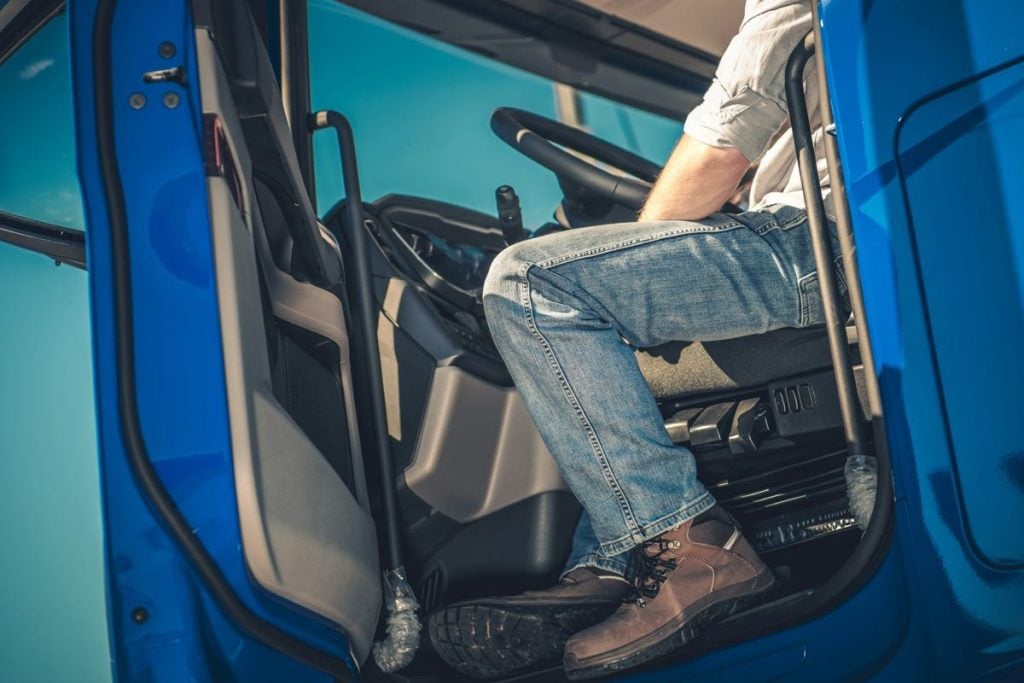
Seating position and the air ride seat itself complicate deployment geometry, because the driver’s distance from the wheel varies far more than in a car.
None of this means airbags are useless in trucks. Many manufacturers offer them, and driver side airbags have been available on major North American tractors for years as an option or as standard on higher trims. The point is that they have not been mandated, and fleets have not universally specified them.
What Has Been Mandated Instead
The regulatory effort on heavy truck safety has concentrated elsewhere, and the list is substantial.
Electronic stability control is required on new heavy tractors, and it addresses rollover and loss of control, which are the crash types that most often injure the truck’s own driver.
Antilock braking, improved rear underride guards on trailers, and reduced stopping distance requirements for tractors have all been mandated over the years. Seat belt use, which remains the single most effective occupant protection in any vehicle, is enforced heavily on commercial drivers.
Where airbags do appear on the regulatory agenda, it tends to be alongside broader crash avoidance requirements rather than on its own.
Underride Is the Bigger Story
If the goal is reducing deaths in heavy truck crashes, the evidence points somewhere other than the tractor cab, and it is worth understanding why.
Underride is what happens when a passenger car strikes a trailer and passes beneath it. Because the trailer deck sits above the car’s hood line, the impact hits the windshield and roof rather than the front structure, which means the car’s own airbags and crumple zones never do their job. These crashes are disproportionately fatal.
Rear underride guards have been required on trailers for many years, and the standards for them have been strengthened. Side underride protection remains the open question: research consistently shows side guards reduce fatalities in these collisions, and requiring them has been debated repeatedly without a rule taking effect.
So the honest summary of heavy truck occupant safety is that airbags in the cab are a modest lever, while underride protection on the trailer is a large one that affects the people most likely to be killed. That is where the argument has largely moved.
Crash Avoidance Is Where the Investment Went
The modern approach on heavy vehicles is to prevent the collision rather than to survive it, and the systems now common on new tractors reflect that.
Collision mitigation systems detect a closing hazard and brake automatically. Adaptive cruise control maintains a following distance rather than a speed. Lane departure warning and lane keeping assist address drift, which is closely associated with fatigue. Blind spot detection covers the areas a mirror cannot.
These are increasingly specified as standard by large fleets, partly for safety and partly because insurers price them. The combination of stability control, collision mitigation and a governed top speed is what a well equipped modern tractor looks like.
What It Means for Your Shipment
For a customer moving a vehicle, this is one more dimension of what separates a well run carrier from a marginal one.

A carrier running late model equipment with current safety systems is a carrier that has invested in its fleet, and fleet age correlates with a great deal else: maintenance standards, driver retention and how the operation treats compliance generally.
You cannot inspect a truck before booking, but you can read the federal safety record, which includes vehicle maintenance violations and out of service rates. A carrier with a high vehicle out of service rate is running equipment that fails inspection. Our guide to checking USDOT and MC numbers explains how to read that data in two minutes.
Ask which carrier is assigned once you have booked, and look them up. It is the single most useful check available to a customer, and it covers far more than airbags.
Common Questions
Do Class 8 trucks have airbags? Many do, as an option or on higher specification models, but frontal airbags are not federally mandated the way they are on passenger cars.
Why were they not mandated? Heavy truck crash dynamics differ, rollover and underride matter more to occupant injury, and seating position complicates deployment.
What is required instead? Electronic stability control, antilock braking, underride guards and stopping distance standards, plus heavy enforcement of seat belt use.
What are fleets actually buying? Crash avoidance: collision mitigation, adaptive cruise, lane departure warning and blind spot detection, frequently with a governed top speed.
How does this affect me as a customer? Indirectly. Fleet age and equipment standards correlate with maintenance and compliance, and the federal safety record shows both.
Get a Quote
Call Ship A Car, Inc. at (866) 821-4555 with both zip codes and your date range, and ask for our USDOT number so you can check the safety record yourself, or price the move with the instant calculator.