Autonomous Trucks: Where They Actually Are, and What Drivers Say
Autonomous trucking has been five years away for about a decade, and the gap between the demonstrations and the road is where the useful information lives. Limited pilots run on specific corridors under specific conditions. Nothing carrying your car is driving itself, and nobody serious in the industry expects that to change soon.
What Is Actually Running Today
The real deployments are narrower than the headlines suggest, and knowing their shape explains the timeline.
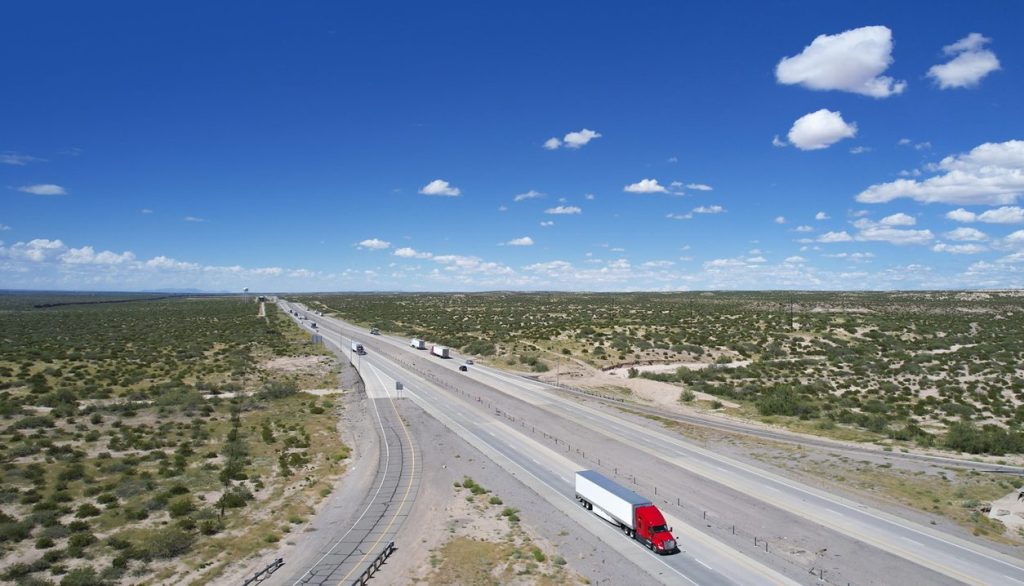
Highway-only operation on fixed corridors in the Sun Belt is where the work has concentrated: long, straight, weather-stable interstate segments between designated transfer hubs. A human drives the first and last miles, the automated system handles the middle, and a driver frequently sits in the seat regardless.
Yard automation is further along and less discussed, because moving trailers around a terminal is a controlled environment with no public traffic in it.
Platooning, where trucks travel in close formation to save fuel, has been demonstrated repeatedly and deployed narrowly. It works and the savings are real; the coordination and regulation are what have limited it.
What Drivers Actually Say
The industry conversation is more measured than either the enthusiasts or the alarmists.
Most drivers do not expect to be replaced. What they expect is the boring part of the job to be automated, the long featureless interstate stretch, while the difficult parts stay human: backing into a tight dock, securing a load, handling a customer, and dealing with anything that goes wrong.

The skepticism is specific rather than general. Snow that obscures lane markings. Construction zones where the cones contradict the paint. A police officer waving traffic through a closed intersection. A tire failure at speed. Those are ordinary occurrences for a long haul driver and each is genuinely hard to automate.
There is also a fair point about incentives: the segments being automated are the profitable easy miles, which would leave human drivers with a higher proportion of the difficult ones at the same pay.
Why Vehicle Transport Is Further Behind
Car hauling is one of the least automatable segments of trucking, and the reason is loading rather than driving.
A car hauler is not a box on wheels. Every vehicle is driven onto hydraulic decks, positioned within inches, secured individually, and the deck geometry is adjusted for the mix of vehicles on board. It is skilled physical work performed differently for every load.
Add multi-stop routing, residential access, customer handovers and a condition inspection signed by a human at both ends, and the driving is the easy part of the job. Automating the highway miles would not remove the driver from this segment.
The Regulatory Position
There is no single national framework for autonomous commercial vehicles, and that fragmentation is as much a brake on deployment as the technology.
Federal safety standards were written assuming a human driver, and provisions covering hours of service, inspections and licensing all reference a person. Rewriting those is a slow process, and until it happens an automated truck operating interstate sits in an awkward position regardless of how well it drives.
States have gone their own ways. Some have enacted permissive frameworks for testing and limited commercial operation, others require a human safety operator, and a few have no specific provision at all. A truck crossing several states may change legal status at each line, which is precisely why the pilots concentrate in a handful of Sun Belt states with compatible rules.
Insurance and liability are the quieter obstacle. When a truck with no driver is involved in a collision, who is liable is not a settled question, and underwriters price uncertainty conservatively. That cost lands on the operator and it is significant.
None of that means the technology fails. It means deployment is governed by legal certainty as much as by capability, and legal certainty arrives slowly.
What Would Actually Change for Customers
If highway automation matures, the effect a customer would notice is capacity rather than robots.
A truck that can run the middle of a long trip without a driver’s hours limiting it moves faster over long distances. That would compress coast to coast transit times and add effective capacity, which over time means lower rates.

What would not change is the parts you actually interact with: a person collecting the vehicle, inspecting it with you, signing the bill of lading and delivering it. That is the shape of the industry for the foreseeable future.
The other thing worth watching is whether the transfer hub model spreads beyond the Sun Belt corridors, because that would be the first real signal that the technology is ready for weather and terrain it has so far avoided.
What This Means for Booking Today
Nothing, and that is the honest answer.
Your vehicle will be moved by a driver on a schedule governed by federal hours of service rules, which is why delivery is a window rather than a time. Anybody selling faster service today is selling priority dispatch or a dedicated truck, not autonomy.
Book on the things that actually work: a range of pickup days, a realistic rate, and earlier booking in the seasonal peaks. Our guide to logistics technology that affects your shipment covers what genuinely does.
Common Questions
Are autonomous trucks carrying freight now? In limited pilots on specific Sun Belt corridors, usually with a human in the seat. Not in general freight service.
Will drivers be replaced? Not in vehicle transport. The loading, securing, access and inspection work is skilled and physical, and the driving is the easy part.
What do drivers actually object to? Specific conditions: snow-covered lane markings, construction zones, human traffic direction and mechanical failures at speed.
Would it make shipping cheaper? Eventually, through added capacity and faster long distance transit rather than through removing drivers from this segment.
Does any of it affect my booking today? No. Your vehicle moves with a driver, on a schedule set by federal hours of service rules.
Get a Quote
Call Ship A Car, Inc. at (866) 821-4555 with both zip codes and your date range, or price the move with the instant calculator.