Logistics Technology That Actually Affects Your Shipment
Most writing about logistics technology is about warehouses and supply chains you will never see. A handful of things genuinely change what happens to your vehicle or your freight: how the truck is tracked, how the driver’s hours are recorded, how the load got matched to that truck in the first place, and what the paperwork is made of. Those four are worth understanding, because they explain most of what you experience as a customer.
Tracking, and Why It Is Less Precise Than You Expect
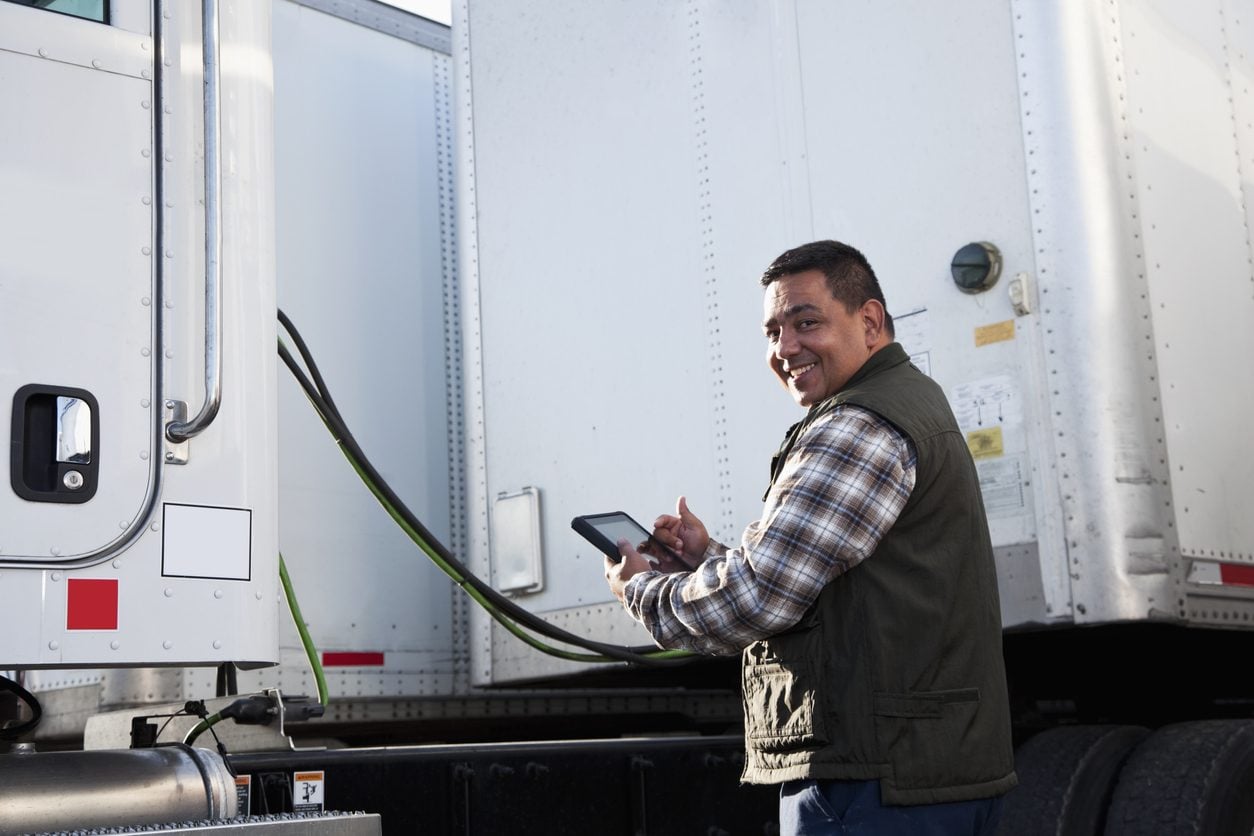
Almost every carrier now has GPS telematics in the truck, so somebody knows where it is. What varies enormously is what reaches you.
Some operations give the customer a live map. Most give status updates: collected, in transit, out for delivery, with an estimated window that firms up as the truck gets closer. Both are legitimate. What matters is knowing which one you are getting before you spend a day refreshing a page that was never going to show a moving dot.
The reason the estimate stays a range rather than a time is not technology, it is the road. A truck carrying eight or ten vehicles has multiple stops, and each one can slip. Traffic, weather, a customer who is not there, a mandatory rest break. The tracking is accurate; the prediction downstream of it inherits every one of those variables.
Ask at booking what visibility you actually get, and get the driver’s number for the day of delivery. A two minute phone call remains more useful than any dashboard.
Electronic Logging Devices Shape Your Delivery Window
This is the piece of technology with the largest effect on transit time, and almost no customer knows it exists.
Federal rules limit how long a commercial driver may drive and work, and since electronic logging devices replaced paper logbooks those limits are recorded automatically and cannot be adjusted after the fact. A driver has a daily driving limit, a longer on-duty limit, a required rest period and a weekly cap.
The practical consequence: a driver who runs out of hours forty miles from your address stops for the night. It is not negotiable and it is not a lack of effort. That is why a delivery estimate is a window, and why “he is only an hour away” sometimes means tomorrow morning.
It is also why enforcement matters to you as a customer. A carrier cutting corners on hours is a carrier taking risks with your vehicle on board.
Load Boards Are How Your Vehicle Found Its Truck
The matching of loads to trucks happens on digital load boards, and understanding this explains a lot about pricing.
A broker posts your vehicle with its route, dates and a rate. Carriers running that corridor see it alongside everything else available and choose. If the rate is competitive for that lane at that moment, it is picked up quickly. If it is below market, it sits, and your pickup date drifts while you wait for someone to accept it.
This is the mechanism behind the quote that seemed too good and then went nowhere. Nobody is refusing to move your car; the load simply is not attractive against the alternatives on the same screen. A realistic rate assigned in three days beats an optimistic one that never assigns.
It also explains why rates move week to week on the same route. Load boards are a live market, and seasonal demand, fuel and the balance of freight in each direction all move the number.
Digital Paperwork, and the One Document That Still Matters
Bills of lading, inspection reports and proof of delivery have largely moved onto tablets and phones, with photographs attached at both ends. That is a genuine improvement: timestamped condition photographs are far better evidence than a hand-drawn diagram on a carbon copy.
What has not changed is that the bill of lading is the document that decides any dispute. Whoever signs it at delivery is accepting the condition recorded on it. Inspect the vehicle before you sign, in daylight if at all possible, and write any discrepancy onto the document while the driver is standing there.
Get your own copy, digital or paper, before the truck leaves. Take your own photographs at both ends regardless of what the carrier’s system captures.
Vetting a Carrier Takes About Five Minutes
The most useful technology available to you as a customer is not the carrier’s, it is the federal database anyone can search.
Every interstate motor carrier and broker operates under a USDOT number and, for brokers, an MC number. Those numbers are searchable, and the record shows whether the authority is active, what insurance is on file, and the company’s safety and inspection history. It takes a few minutes and it is the single best check you can run.
Ask for the number rather than accepting a company name, since names change and numbers do not. Confirm the insurance on file matches what you were told, and confirm the authority is active rather than pending or revoked. Our guide to FMCSA and USDOT numbers explains how to read what you find.
Reviews are worth reading with the same skepticism you would apply anywhere else. What is informative is not the star average but whether complaints describe the same failure repeatedly, and how the company responded when something went wrong.
What Is Mostly Still Marketing
Some of what gets written about this industry is real but distant from your shipment.
Autonomous trucks run in limited pilots on specific corridors. Platooning has been demonstrated repeatedly and deployed narrowly. Blockchain documentation has been announced more often than it has been used. Drones do not deliver cars.
Electric class 8 trucks are genuinely arriving, and where they operate they change range and refueling planning, but they are a small share of the fleet moving vehicles today. None of this should factor into how you book a shipment this month.
Common Questions
Can I track my vehicle live on a map? Sometimes. Many carriers provide status updates rather than a live map. Ask what you get before you book.
Why is my delivery a window rather than a time? Multi stop routes plus federally limited driving hours. A driver out of hours stops, whatever the distance remaining.
Why did my cheap quote never get picked up? Carriers choose loads from a live board. A rate below market for that lane sits unaccepted while your dates slip.
Is a digital bill of lading as good as paper? Yes, and the attached timestamped photographs are better. The rule is the same: inspect before signing.
Do autonomous trucks move cars yet? No, not in any way that affects a booking today. Treat it as a development rather than an option.
Get a Quote
Call Ship A Car, Inc. at (866) 821-4555 with both zip codes and your date range, or request an estimate for the move through the quote calculator.