Florida Golf Cart Rules: Who Can Drive One and Where
Florida tightened the age rules for driving a golf cart on public roads, and the change surprised a lot of families in cart friendly communities where teenagers had driven them for years. The short version is that age alone is no longer enough. A young driver needs a license or learner’s permit, and an adult needs government issued photo identification.
The other half of the picture is the distinction between a golf cart and a low speed vehicle, which is where most of the genuine confusion lives, because they look similar and are regulated completely differently.

The Age Rule
Under the current law, a person under 18 must hold a valid learner’s driver license or a driver license to operate a golf cart on a public road or designated path. A person 18 or over must have government issued photographic identification in their possession.
Before the change, a 14 year old could legally drive a golf cart on roads where carts were permitted. That is no longer the case, and in retirement and resort communities where carts function as everyday transport it changed household routines rather than being a technicality.
Rules of this kind get amended, so confirm the current position with the Florida Department of Highway Safety and Motor Vehicles rather than relying on any article, including this one, if a specific decision turns on it.
Where a Golf Cart May Be Driven
A golf cart is not a road vehicle by default. It may be operated on roads specifically designated for cart use by the county or municipality, on roads with a posted speed limit of 35 miles per hour or less where the local authority has permitted it, and to cross certain roads at approved points.
What that means in practice is that the rules are local. A community two miles away may allow something yours does not, and the signage is the authority. Daylight operation is the default unless the cart carries the lighting and equipment required for use after dark.
Golf Cart or Low Speed Vehicle
This distinction decides almost everything else, and it turns on top speed.
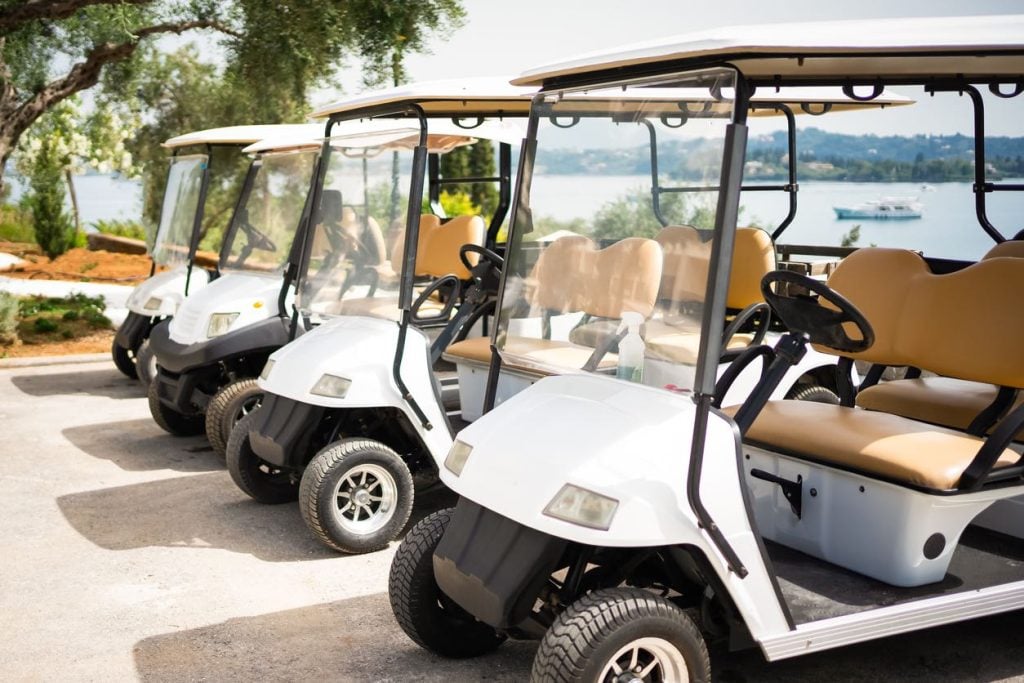
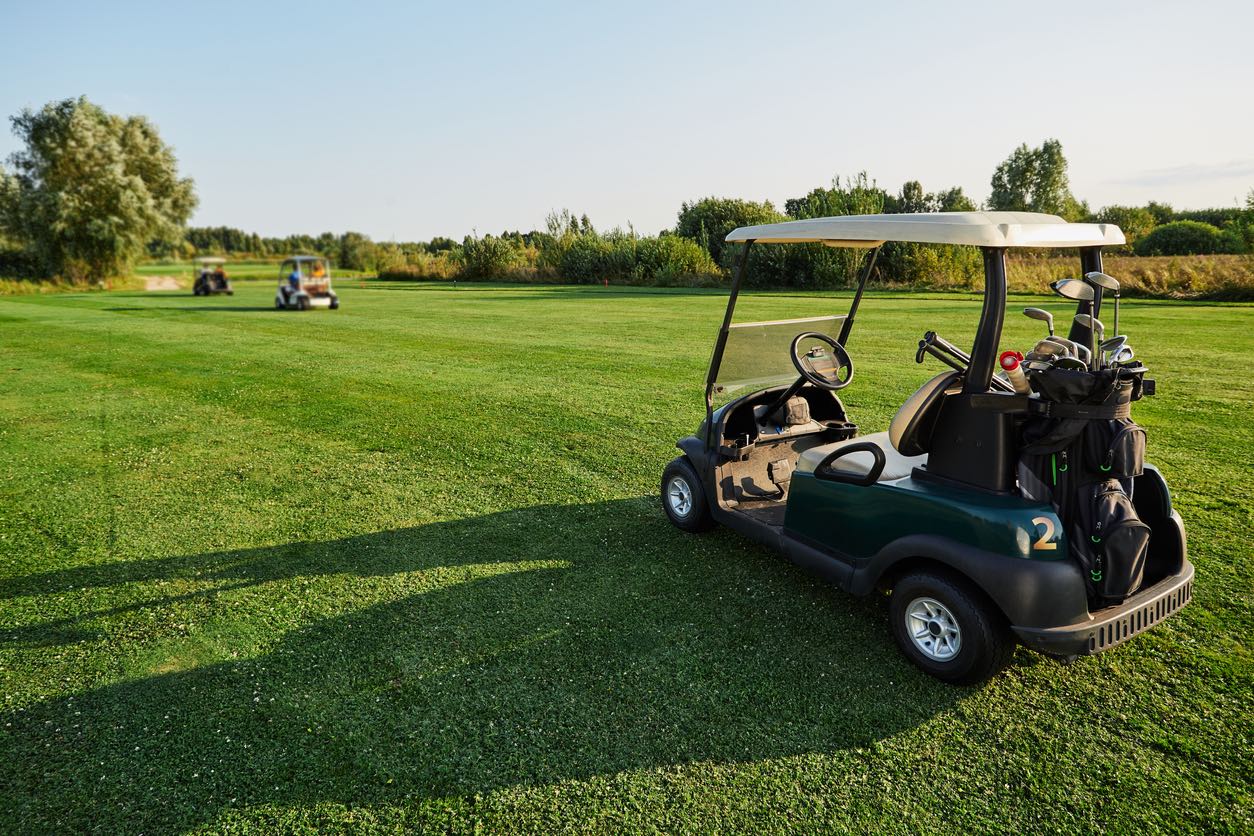
A golf cart is designed for speeds not exceeding 20 miles per hour. It does not need a title, registration, insurance or a VIN, and it is restricted to the roads described above.
A low speed vehicle is capable of more than 20 and not more than 25 miles per hour. Federal safety standards apply to it, so it must have seat belts, headlights, brake lights, turn signals, mirrors, a windshield, a parking brake and a VIN. In Florida it must be titled, registered and insured, and the driver must hold a valid driver license. It may be operated on roads posted at 35 miles per hour or less.
The trap is that a golf cart modified to exceed 20 miles per hour becomes, in the eyes of the law, an unregistered low speed vehicle that cannot meet the federal equipment standards. Speed upgrades are common and the consequence is rarely explained at the point of sale.
One more distinction catches people out: a golf cart is not a moped, an ATV or a UTV, and none of those are interchangeable in law. Each has its own registration, equipment and road use rules, and a vehicle sold as one thing may be classified as another once it is on a public road. If you are buying rather than shipping, get the classification in writing before money changes hands.
Insurance Is Worth Checking Separately
A golf cart does not require insurance in Florida, which is not the same as being covered.
Homeowner policies vary considerably in whether they cover a cart off the property, and many exclude it. Given that a cart carrying four people at 20 miles per hour with no seat belts, no airbags and no crumple structure can cause serious injury, the exposure is real. Ask your insurer directly what is covered on public roads rather than assuming.

Shipping a Golf Cart
Carts move between homes constantly in Florida, and shipping one is straightforward if you give the right information up front.
Give the make, model, length, width and height, and say whether it is a two, four or six seater, because footprint rather than weight determines what it costs. Say whether it runs and steers, since one that does not needs different handling. Say whether it has a lifted suspension, an extended roof or a rear seat kit, all of which change the dimensions from the manufacturer’s figures.
Electric carts need their own note. Lead acid batteries should be charged and secured, lithium packs may have transport requirements depending on the chemistry, and either way the battery should be disconnected or isolated as advised by the manufacturer.
Enclosed transport is worth considering for a new or customized cart, because carts have exposed seats and trim that an open deck does not protect. Our page on golf cart shipping covers the process, and electric golf carts and low speed vehicles explains the equipment differences in more detail.
Common Questions
How old must you be to drive a golf cart in Florida? Under 18 requires a learner’s permit or driver license. Adults need government issued photo identification with them.
Where can a golf cart legally go? On roads designated for cart use and certain roads posted at 35 miles per hour or less, as permitted locally. The local signage governs.
What makes something a low speed vehicle? A top speed above 20 and up to 25 miles per hour. It then needs federal safety equipment, a title, registration, insurance and a licensed driver.
Does a golf cart need insurance? Not by law, but many homeowner policies exclude it off the property. Check with your insurer.
What do you need to quote transport? Make, model, seating, measured dimensions including any lift or roof, and whether it runs and steers.
Get a Quote
Call Ship A Car, Inc. at (866) 821-4555 with both zip codes, the cart’s measured dimensions and your date range, or request an estimate for the move through the quote calculator.