Electric Golf Carts and Low Speed Vehicles: What They Are and How to Ship One
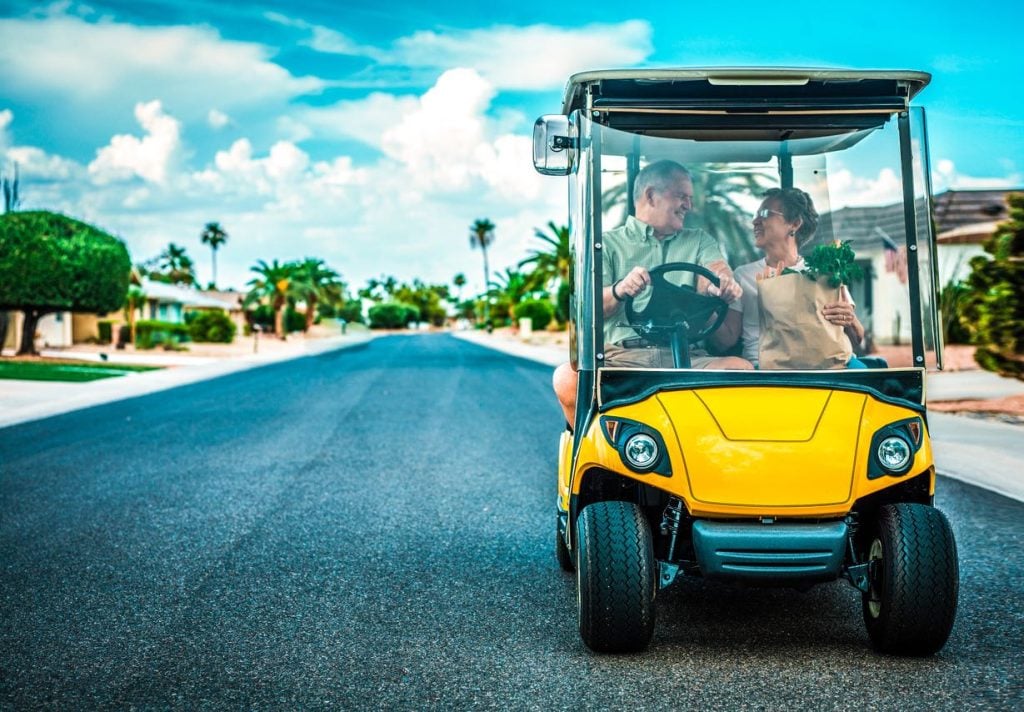
The important distinction, and the one that decides everything else, is between a golf cart and a low speed vehicle. A golf cart is exactly what it sounds like and is not built for public roads. A low speed vehicle, or LSV, is a federally recognized vehicle class with a top speed between 20 and 25 miles per hour that must carry seat belts, lights, mirrors, a windshield and a VIN. In many communities it can be registered, insured and driven on public streets. That difference changes how you insure it, where you can drive it and how it ships.
Why They Became Real Transportation
In a growing number of places these are not recreational vehicles at all, they are how people get around.
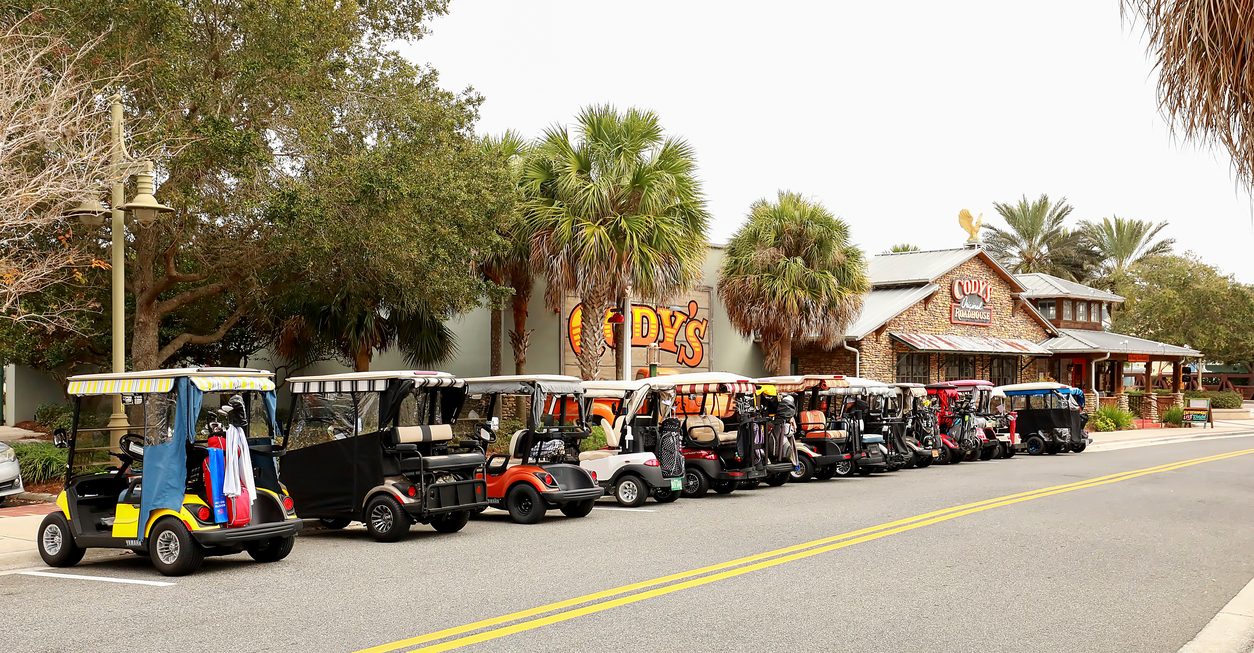
Master planned communities in Florida, Arizona, the Carolinas and coastal Texas were laid out with cart paths from the start, and in some of them a cart is the primary household vehicle for short trips. Beach towns, island communities and retirement developments follow the same pattern.
The economics help. Electric drivetrains cost very little per mile, there is almost nothing to service compared with a car, and a household that replaces short car trips with cart trips notices the difference. Parking is easier, and in dense resort areas that alone is the argument.
What has changed recently is quality. Modern carts are built to a much higher standard than the fleet vehicles most people picture, with lithium batteries in place of lead acid, longer range, better suspension and equipment lists that look like a small car’s.
Know Your Local Rules Before You Buy
This is where people get caught, because the rules are local rather than national.
Federal regulation defines the low speed vehicle class and the safety equipment it must carry. Everything after that, whether you can register one, which roads you may use, whether a license is required and what the minimum age is, is set by the state and frequently by the municipality.
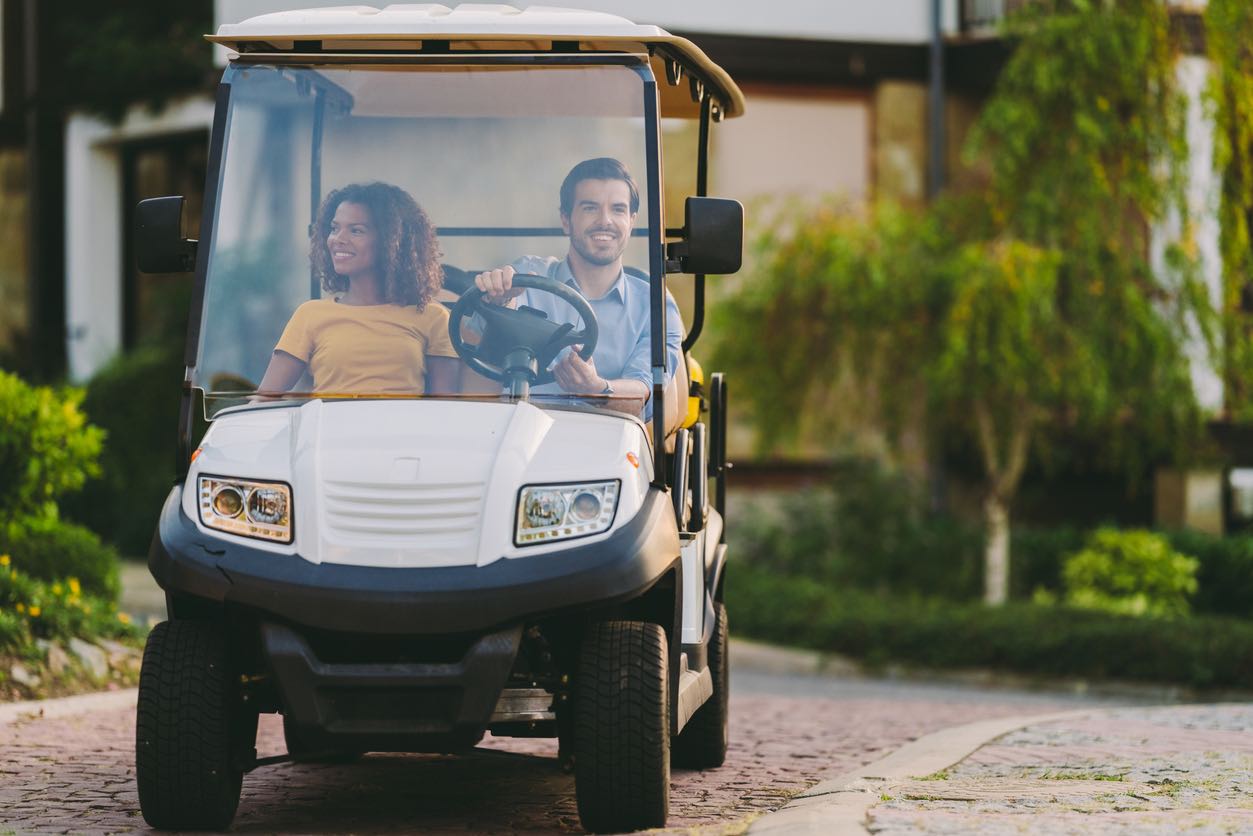
The common pattern is that LSVs may use roads posted at 35 miles per hour or less and may cross higher speed roads at intersections. Plenty of places allow less than that, and some allow considerably more. Plain golf carts, without the LSV equipment, are usually restricted to private property and specifically designated streets.
Check the rules for the exact community you are moving to rather than the state generally, because a neighboring town can be entirely different.
Shipping One: What Actually Matters
Carts and LSVs ship routinely, and the practical questions are different from a car’s.
They are small and light, typically 700 to 1,200 pounds for a four seat electric cart, which means they can travel in ways a car cannot. They are also low powered and, in the case of a plain golf cart, not street legal, so they cannot be driven on or off a trailer over any distance the way a car can be.
Enclosed transport is the common choice and often the better value here. Carts have exposed seats, open sides and soft tops that suffer in weather and road grit, and an enclosed trailer removes all of that. Because a cart is small, an enclosed move for one is not priced like an enclosed move for a full size car.
Open transport works too and costs less, particularly for a fleet or several carts moving together, which is how dealers and communities move them.

Charging and Range in Practice
Range is the question buyers ask first and the answer depends almost entirely on the battery.
A lead acid pack typically gives 15 to 25 miles before it needs charging, and its usable range falls as the pack ages. A lithium pack of comparable size commonly gives 40 miles or more, holds its voltage better through the discharge, and lasts several times as many cycles. That is the reason lithium has taken over the market despite costing more up front.
Charging is ordinary household current. Most carts plug into a standard outlet and recharge overnight, which is why a garage or a covered space with an outlet is effectively a requirement rather than a nice extra. Hills, heat, passenger load and accessories all reduce real range below the brochure figure, so if the cart has to cover a hilly community reliably, size the battery for the worst day rather than the average one.
Preparing a Cart for Transport
The battery is the first consideration and it depends on the chemistry.
Lead acid batteries should be charged and their terminals clean, since a discharged lead acid pack can be damaged by sitting. Lithium packs are usually best shipped at a partial rather than full state of charge, and some carriers have specific requirements, so ask rather than assume. Either way, confirm what the manufacturer recommends for storage and transit.
Fold or remove the soft top and windshield if they are not fixed, since these are the parts that flex and crack. Remove the loose items: bag holders, coolers, chargers and anything in the storage tray. Secure the steering, engage the parking brake and set the direction switch to neutral so the cart can be repositioned by hand.
Photograph it in daylight from every side before it loads, including the seats, the top and the wheels. Note the serial or VIN. Get any existing damage described specifically on the bill of lading rather than as general wear.
What It Costs
Distance sets most of the price, as it does for any vehicle. Beyond that, enclosed costs more than open, a cart traveling on its own costs more per unit than several moving together, and rural pickup or delivery points cost more than ones near a highway.
Seasonality is real on the lanes that matter most for carts. Florida and Arizona see the same snowbird pattern as cars, with southbound demand building through the fall and northbound spiking in spring. Book those windows three to four weeks ahead. Our guide to golf cart shipping covers the service in more detail.
Common Questions
What is the difference between a golf cart and an LSV? An LSV is a federal vehicle class with a top speed of 20 to 25 miles per hour that must have seat belts, lights, mirrors, a windshield and a VIN, and can often be registered for street use. A plain golf cart cannot.
Can I drive one on public roads? An LSV usually may on roads posted at 35 miles per hour or less, depending on state and local rules. A plain golf cart usually may not.
Open or enclosed? Enclosed is the common choice because carts have open sides and soft tops. It costs less for a cart than it would for a car.
How should the battery be shipped? Lead acid charged with clean terminals, lithium usually at a partial charge. Confirm the manufacturer’s guidance and the carrier’s requirements.
Can several carts ship together? Yes, and it is the cheaper way to do it. Dealers and communities move them this way routinely.
Get a Quote
Call Ship A Car, Inc. at (866) 821-4555 with both zip codes, the make and model of the cart and whether it is a plain cart or a registered LSV, or request an estimate for the move through the quote calculator.