Pennsylvania Heavy Equipment Shipping
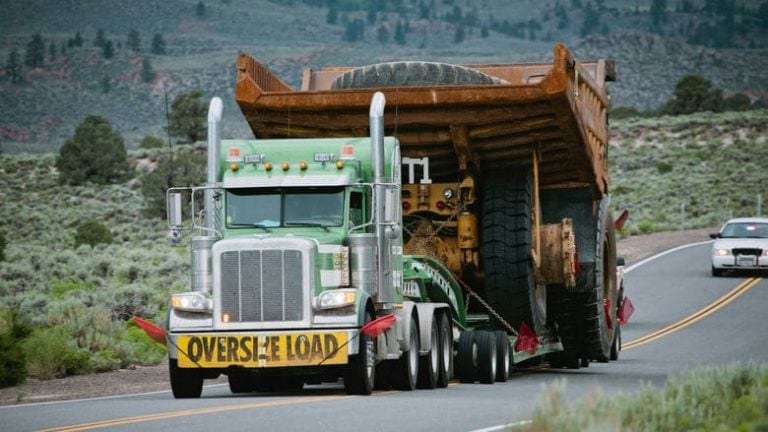
Pennsylvania is a mountain state pretending to be an eastern one, and that is the thing carriers underestimate. The Appalachians run diagonally across the middle of it, the turnpike carries a string of tunnels with fixed clearances, and a great many of the bridges were built long before the loads that now cross them. The corridors are excellent; the constraints are vertical.
The Legal Limits
Pennsylvania follows the standard federal figures.
Maximum width is 8 feet 6 inches, maximum height is 13 feet 6 inches, and gross weight is capped at 80,000 pounds with 20,000 on a single axle and 34,000 on a tandem. Past any of those the load needs a permit.
Height matters more here than in most states, and it is measured including the trailer. A flatbed deck sits around 5 feet off the road, so an 8 foot 6 inch machine is already at the ceiling. A step deck buys roughly a foot and a lowboy drops the deck to somewhere around 18 to 24 inches.
Permits and Escorts
Oversize and overweight permits come from the Pennsylvania Department of Transportation, issued against a specific machine, configuration and route. The Pennsylvania Turnpike is operated by its own commission and permits separately, so a load using turnpike mileage needs both authorizations lined up before it moves.
Routine permits are normally issued quickly. Wider loads bring escort vehicles, with thresholds varying by road type, and the largest loads require engineering review of structures along the route.
Permitted movement is generally daylight only on weekdays with holiday restrictions. Across a state around 300 miles wide with mountain grades in the middle, that makes a cross state permitted move a multi day job.
Tunnels and Clearances
This is the Pennsylvania-specific problem and it is worth understanding before you plan a route.
The Pennsylvania Turnpike runs through a series of mountain tunnels with fixed clearances that cannot be raised. A load that would clear an overpass elsewhere may not clear a tunnel bore here, and the alternative is a detour over the mountain on secondary roads with their own grade and weight problems.
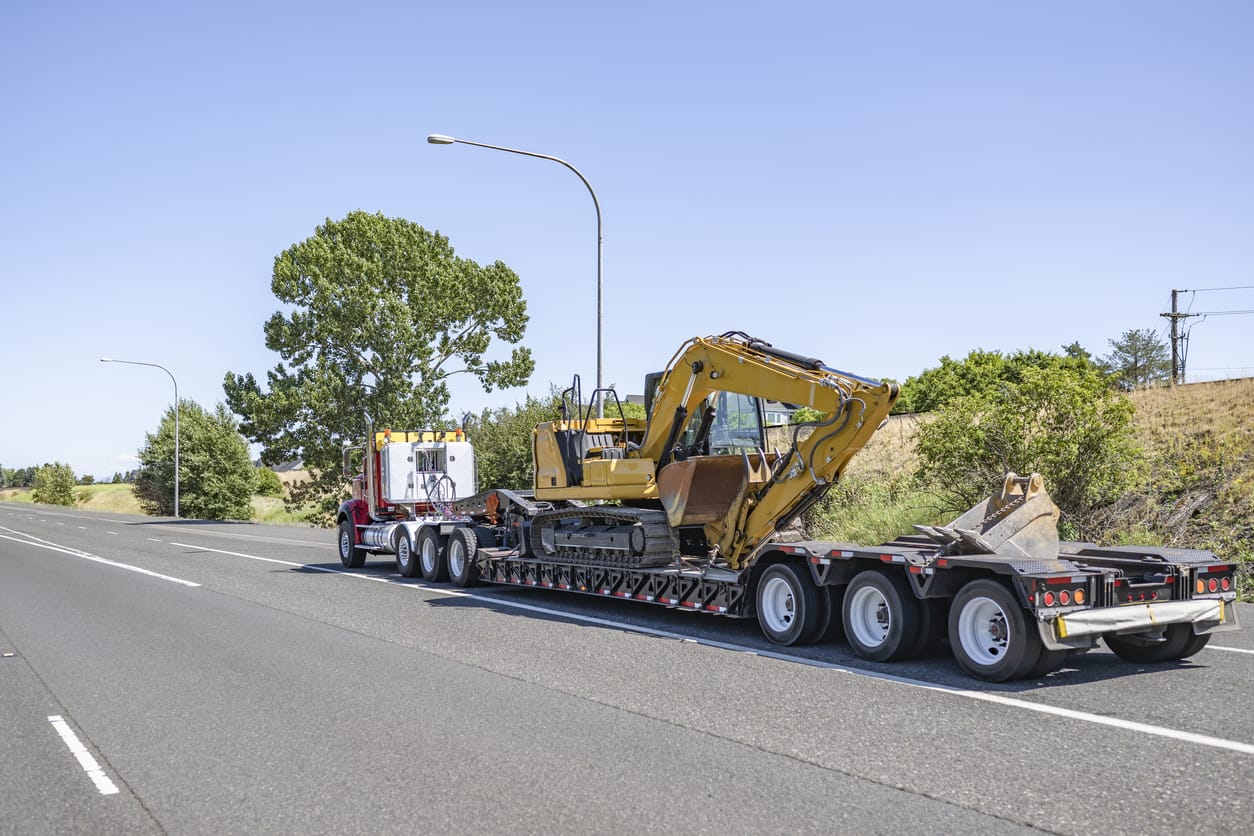
Away from the turnpike, the older road network through the Alleghenies has low rail bridges and stone arch overpasses that predate modern trucking entirely. A posted clearance is a hard stop, and the detour around one is frequently substantial rather than the next street over.
Plan on a route survey for anything tall. A carrier who runs Pennsylvania regularly already knows which crossings work, and that knowledge is worth more here than almost anywhere else in the east.
Bridges and Weight Postings
Pennsylvania has one of the largest bridge inventories in the country and a long-documented backlog of structurally deficient ones.
The practical consequence for heavy haul is a great many posted weight limits on secondary roads and local bridges. A permit issued for a state route does not authorize a posted local bridge, and a machine that is legal on the interstate can be stopped a mile from the job site by a township crossing.
Confirm the last mile specifically. It is the part of a Pennsylvania move most likely to go wrong.
The Corridors That Work
Once you are past the vertical constraints, the routing is genuinely good.
Interstate 76, the Pennsylvania Turnpike, runs east to west across the south of the state. Interstate 80 runs east to west across the north and is a major national freight corridor. Interstate 81 runs southwest to northeast through the Cumberland and Lehigh valleys, and Interstate 95 clips the southeast corner through Philadelphia.
Pittsburgh and Philadelphia anchor the two ends, the Lehigh Valley has become a major distribution hub, and the Marcellus shale region in the north and west generates steady demand for drilling and pipeline equipment. That mix keeps carrier availability reliable year round.
Winter Changes the Plan
The mountains get real winter, and it affects heavy haul more than ordinary freight.
Sustained grades with snow or ice on them are a different proposition with 80,000 pounds behind the cab, and permitted loads do not move in high wind at any time of year. Interstate 80 across the northern tier closes for weather with little notice.
Between roughly December and March, build slack into every schedule and expect a permitted load to sit for a day rather than run into a storm.
Choosing the Trailer
The machine picks the trailer.
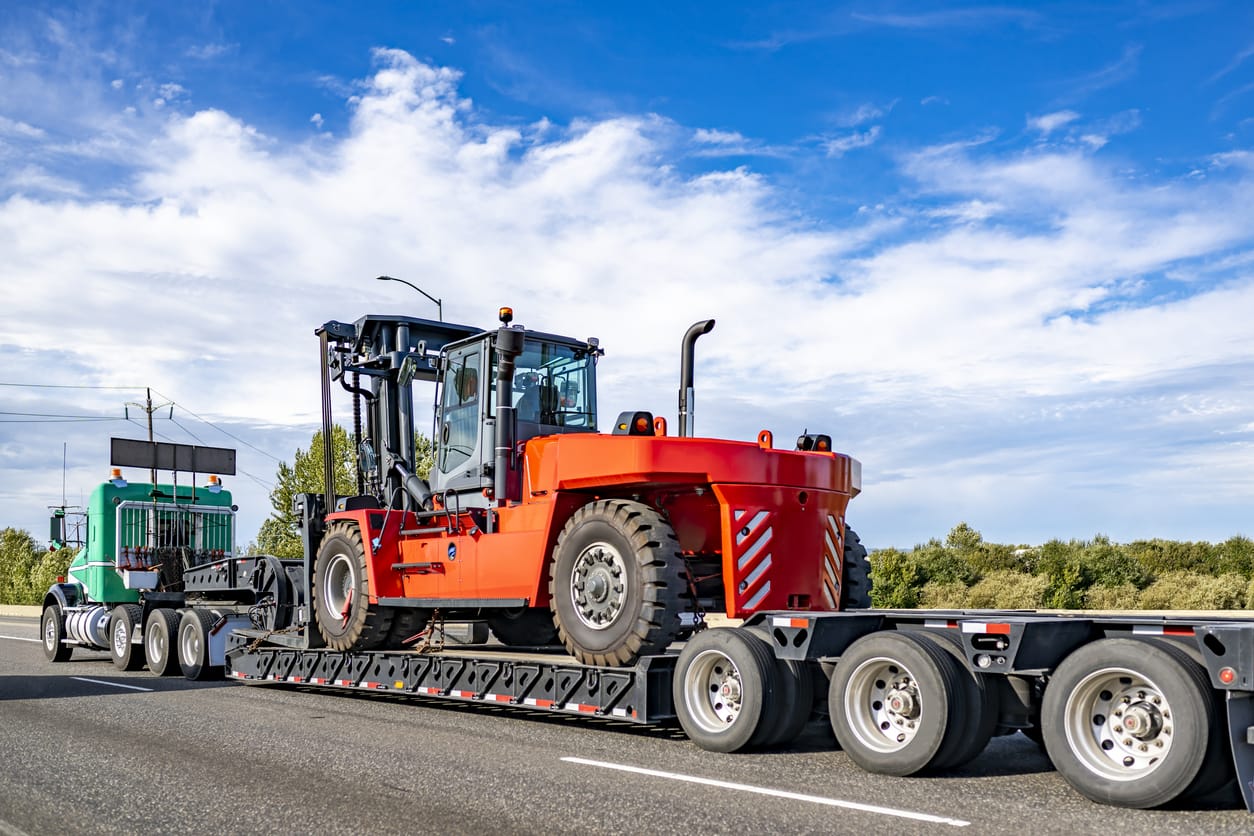
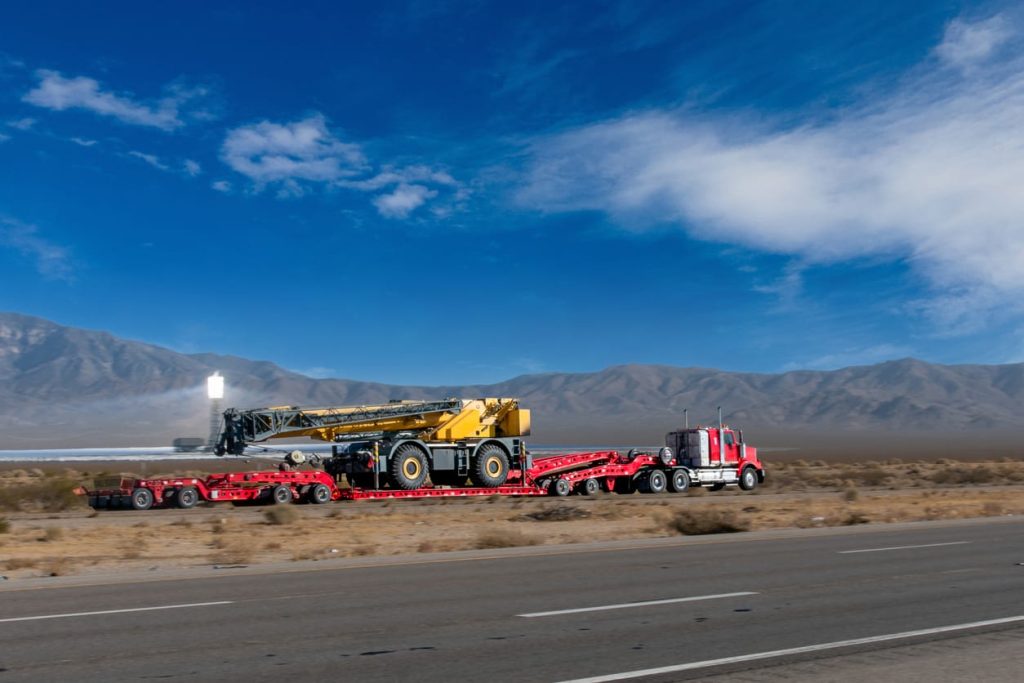
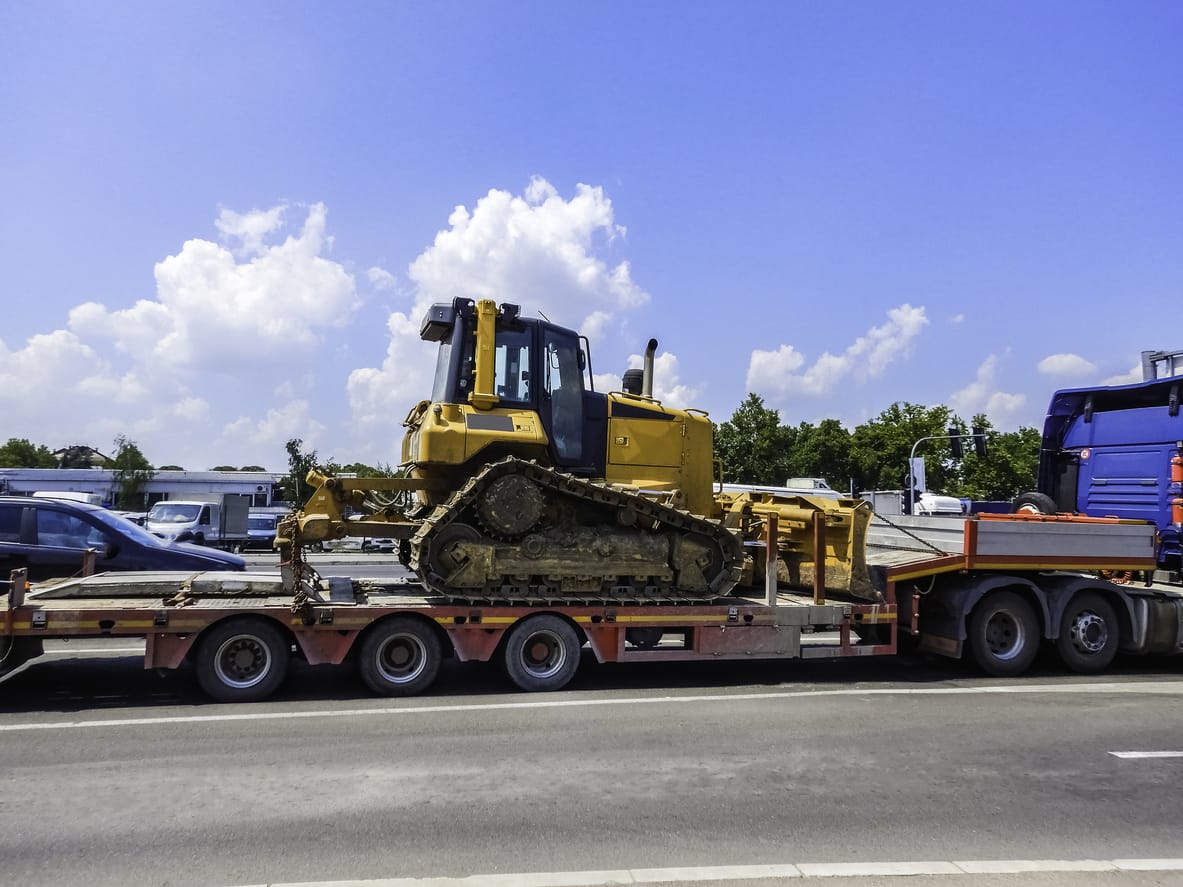
A flatbed suits smaller equipment such as skid steers, mini excavators and attachments. A step deck lowers the deck about a foot and handles mid size machines. A lowboy or removable gooseneck drops it further and is what large excavators, dozers and cranes travel on. Multi axle and stretch configurations spread weight to satisfy the federal bridge formula, which limits what can sit within a given axle spacing regardless of the gross figure.
In a state full of clearance problems, getting the deck as low as the machine allows is not just about permits. It is about which routes remain available to you at all.
Preparing the Machine
Give an accurate weight from the manufacturer’s specification or a certified scale, and include everything traveling with it. Counterweights, attachments, full tanks and fluid filled tires all add weight that is invisible from outside. Give the measured width and height rather than the brochure figures.
Then reduce the envelope where you can. Taking off a bucket, folding an attachment, lowering a boom or swapping wide pads can bring a load under a threshold and, here, can be the difference between a tunnel route and a mountain detour.
Secure or remove anything loose, drain what needs draining, and clean the tracks and tires. Photograph the machine in daylight from every side before it loads, including the undercarriage and the hour meter, and get existing damage described specifically on the bill of lading. Our guide to wide and oversize loads covers the thresholds in detail.
Common Questions
What triggers a permit in Pennsylvania? Past 8 feet 6 inches wide, 13 feet 6 inches high, or 80,000 pounds gross, or any axle limit.
Why might I need two permits? State routes are permitted by PennDOT, while the Pennsylvania Turnpike is permitted separately by its own commission.
What is the biggest routing constraint? Height. The turnpike tunnels have fixed clearances and the older mountain roads carry low rail and stone arch bridges.
What most often goes wrong? The last mile. A posted township bridge can stop a load that was legal all the way from the interstate.
Does winter stop heavy haul? It delays it. Mountain grades with ice, high wind and sudden closures on I-80 all mean building slack into December through March.
Get a Quote
Call Ship A Car, Inc. at (866) 452-3657 for heavy haul and specialized freight with the machine’s make and model, its measured width, height and weight, and both site addresses, or price it with the specialized transport calculator.