New Jersey Heavy Equipment Shipping
New Jersey is the most congested state in the country and that, rather than distance, is what makes heavy haul here difficult. The mileage is short, the corridors are excellent, and almost every complication comes from density: low overpasses, weight restricted local roads, parkways that bar commercial traffic outright, and a metropolitan area where a permitted load is confined to a few hours of the day.

The Legal Limits
New Jersey follows the standard federal figures, so start there.
Maximum width is 8 feet 6 inches, maximum height is 13 feet 6 inches, and gross weight is capped at 80,000 pounds with 20,000 on a single axle and 34,000 on a tandem. Anything past one of those needs a permit.
Height is the number that catches people, because it includes the trailer rather than just the machine. A flatbed deck sits around 5 feet off the road, so an 8 foot 6 inch machine is already at the ceiling. A step deck buys roughly a foot and a lowboy drops the deck to somewhere around 18 to 24 inches, which is what tall equipment travels on.
Permits Come From More Than One Authority
This is the part that is genuinely different here, and it catches carriers who have not run the state before.
Oversize and overweight permits for state highways come from the New Jersey Department of Transportation, issued against a specific machine, a specific configuration and a defined route. But the New Jersey Turnpike and the Garden State Parkway are run by the New Jersey Turnpike Authority, and they permit separately.
A load crossing the state on the Turnpike therefore needs authorization from both, and a route that mixes state highways with toll road mileage needs the paperwork lined up before the truck moves rather than at the toll plaza. Build that into the lead time.
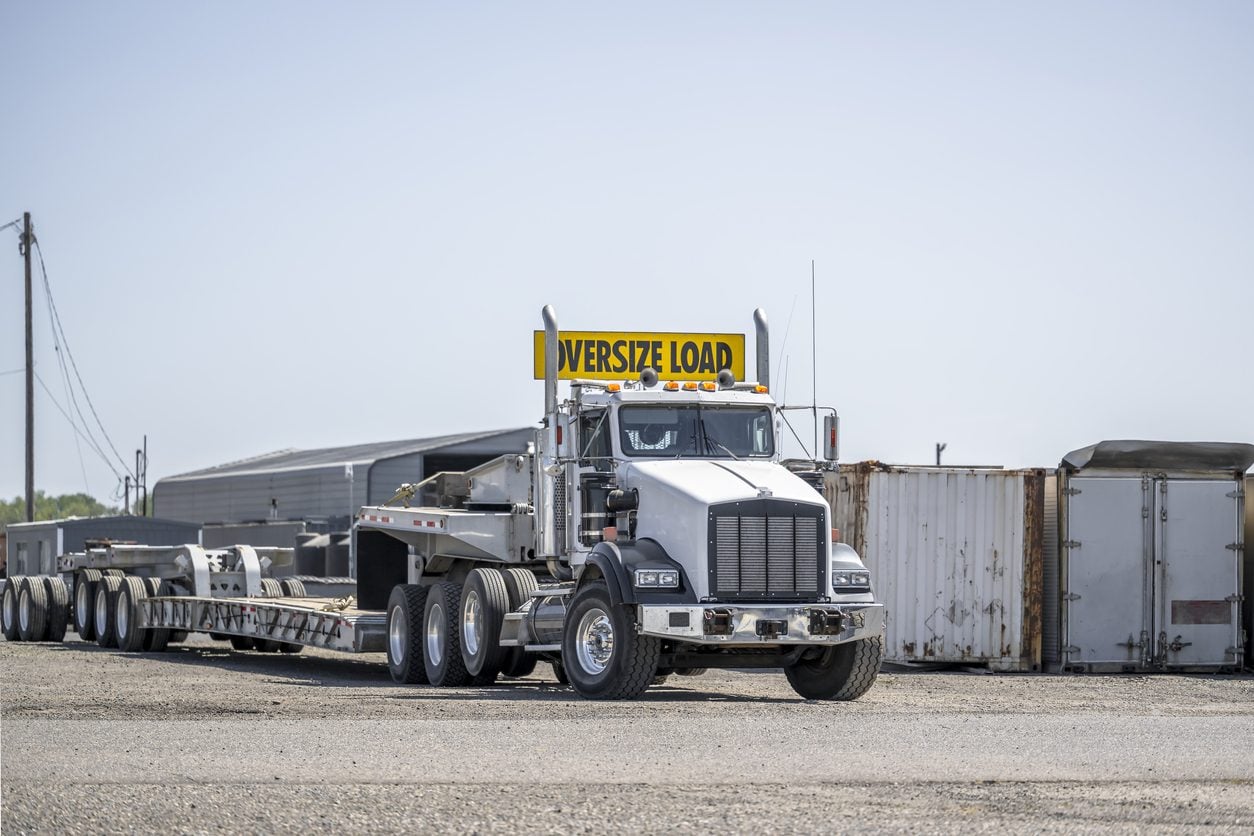
Wider loads bring escort vehicles, with thresholds set by the state and varying with the road type, and the largest loads require engineering review of the structures along the route.
The Garden State Parkway Is Not an Option
Worth stating plainly because out of state drivers assume it is a normal highway.
The Parkway restricts commercial vehicles over a set weight along much of its length, and its overpasses are low by design. It is not a heavy haul route and a permitted load does not belong on it. Plan around it rather than through it.
The Corridors That Do Work
Everything else about New Jersey routing is favorable, and this is why rates here are competitive despite the difficulty.
The New Jersey Turnpike, carrying Interstate 95, runs the length of the state and is the main north to south freight artery on the East Coast. Interstate 78 runs west toward Pennsylvania and the Lehigh Valley. Interstate 80 runs west across the north of the state toward the Delaware Water Gap. Interstate 287 forms an outer ring around the New York metropolitan area and is frequently the sensible way to avoid the worst of the congestion.
Port Newark and Elizabeth sit at the center of all of it, and the constant flow of freight through them is why carrier availability in northern New Jersey is reliable year round rather than seasonal.
Congestion Sets the Schedule
Permitted movement is generally daylight only on weekdays with holiday restrictions, and in this part of the country that general rule gets tighter.
Around the New York metropolitan area, peak commuter periods effectively remove several more hours from the day, so the window in which a permitted load can legally and sensibly move can be narrow. A run that would take an afternoon in open country becomes a staged movement here.
The practical consequence is that a short New Jersey job is not necessarily a quick one. Judge the schedule by the available hours rather than the mileage, and accept that an overnight stop has to be somewhere a permitted load can legally sit.
Low Bridges and Local Roads
The density that makes the state productive also fills it with obstacles.
Northern New Jersey has a great many older overpasses and rail bridges with clearances below the standard limit, and a posted clearance is a hard stop. Municipal streets frequently carry their own weight restrictions, and a bridge posted for a lower limit cannot be crossed by a permitted load regardless of what the state route allows.
A route survey matters more here than in most states, because the alternative to the direct road is often a substantial detour rather than the next street over. A carrier who runs New Jersey regularly already knows which crossings work, which is worth more than it sounds.
Site access is the other half of it. Construction sites in dense urban areas frequently have no room for a tractor and a lowboy to turn, and the delivery plan may involve a staging area and a short final move. Say what the access is honestly when you book. Our guide to wide and oversize loads covers the thresholds in detail.

Choosing the Trailer
The machine picks the trailer rather than the other way round.
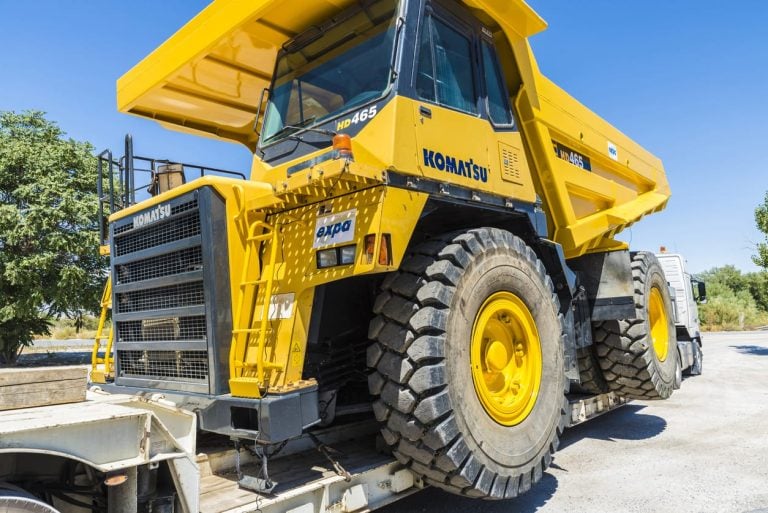
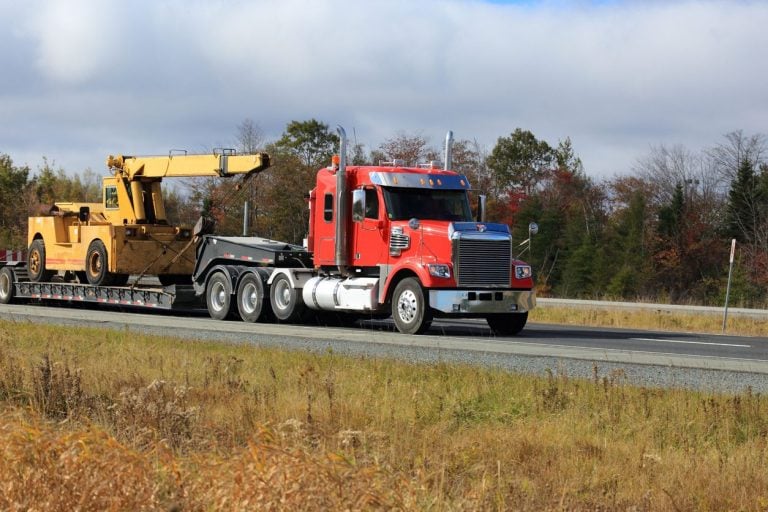
A flatbed suits smaller equipment such as skid steers, mini excavators and attachments. A step deck lowers the deck about a foot and handles mid size machines. A lowboy or removable gooseneck drops it further and is what large excavators, dozers and cranes travel on. Multi axle and stretch configurations spread weight to satisfy the federal bridge formula, which limits what can sit within a given axle spacing regardless of the gross figure.
Preparing the Machine
Give an accurate weight from the manufacturer’s specification or a certified scale, and include everything traveling with it. Counterweights, attachments, full tanks and fluid filled tires all add weight that is invisible from outside. Give the measured width and height rather than the brochure figures.
Then reduce the envelope where you can. Taking off a bucket, folding or removing an attachment, lowering a boom or swapping wide pads can bring a load under a threshold and save a permit, an escort and the routing restrictions that come with both. In a state with this many clearance problems, an inch matters.
Secure or remove anything loose, drain what needs draining, and clean the tracks and tires, since carried soil is both weight and a road hazard. Photograph the machine in daylight from every side before it loads, including the undercarriage and the hour meter, and get existing damage described specifically on the bill of lading rather than as general wear.
Common Questions
What triggers a permit in New Jersey? Past 8 feet 6 inches wide, 13 feet 6 inches high, or 80,000 pounds gross, or any axle limit.
Why might I need two permits? State highways are permitted by NJDOT, while the Turnpike and Garden State Parkway are permitted separately by the New Jersey Turnpike Authority.
Can I use the Garden State Parkway? No. It restricts commercial vehicles over a set weight and its overpasses are low. It is not a heavy haul route.
Why does a short move take so long? Permitted loads run daylight hours on weekdays, and metropolitan peak periods narrow that window further.
What is the most overlooked problem? Low clearances on older overpasses and weight postings on municipal bridges, which is why a route survey is worth doing here.
Get a Quote
Call Ship A Car, Inc. at (866) 452-3657 for heavy haul and specialized freight with the machine’s make and model, its measured width, height and weight, and both site addresses, or request a quote through the specialized transport calculator.