How to Transport a Crane
A crane almost never moves as one piece, and the planning question is not how to get it there but what order the parts have to arrive in. Counterweights come off and travel separately. Booms are sectioned. On a crawler crane the tracks come off too. What arrives first is what gets assembled first, so the load sequence at the destination is decided before the first truck is loaded, not after.
Which Kind of Crane You Have
The type decides almost everything downstream.
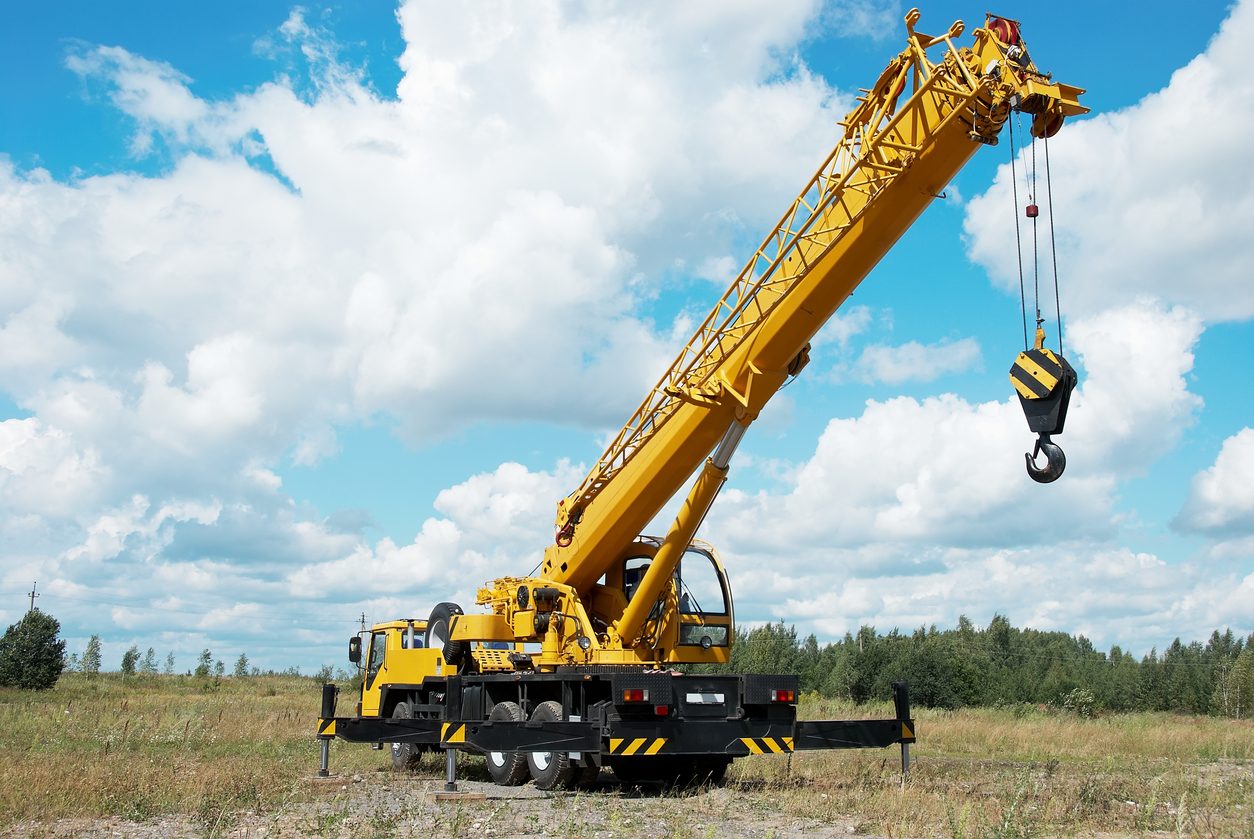
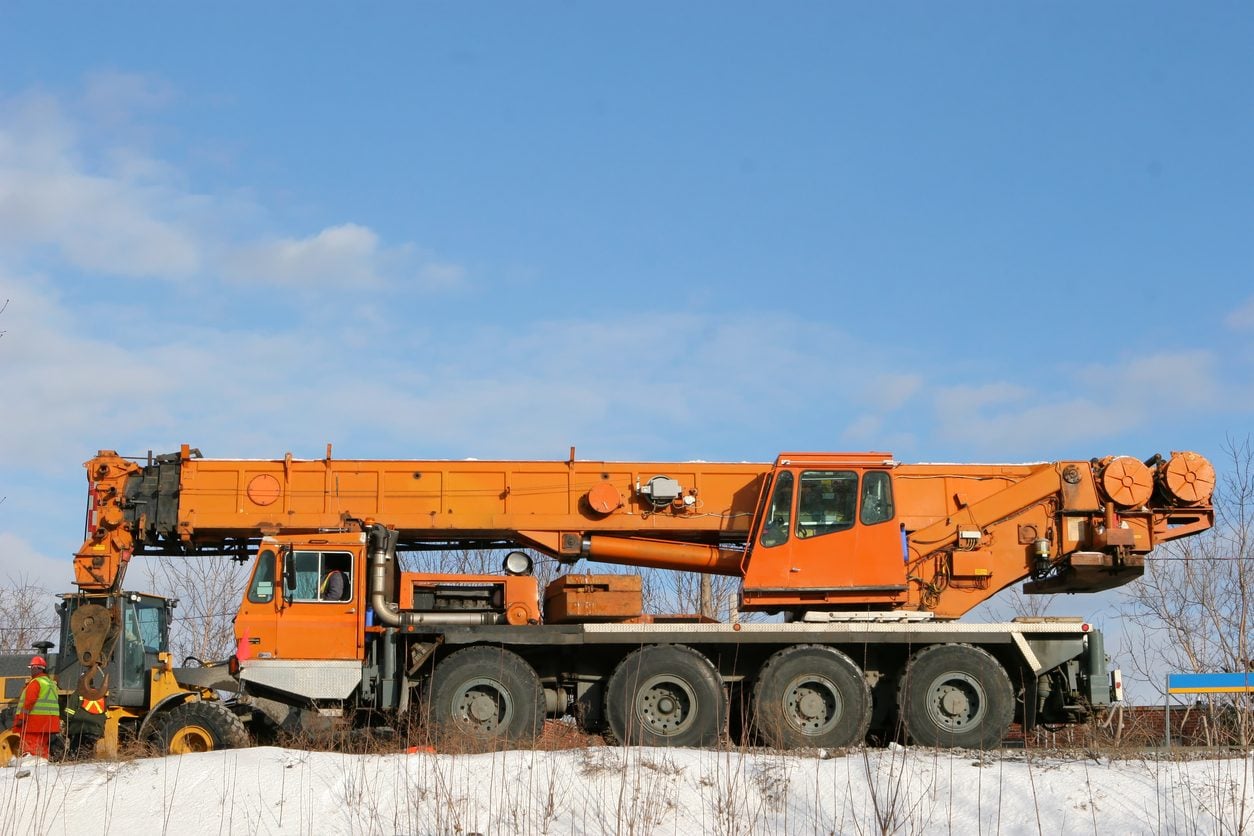
An all terrain or truck mounted crane sits on its own carrier and can drive on public roads. It usually still travels over legal axle weights, so the counterweights and sometimes the boom sections are removed and follow on separate trailers, but the machine itself moves under its own power on a permitted route.
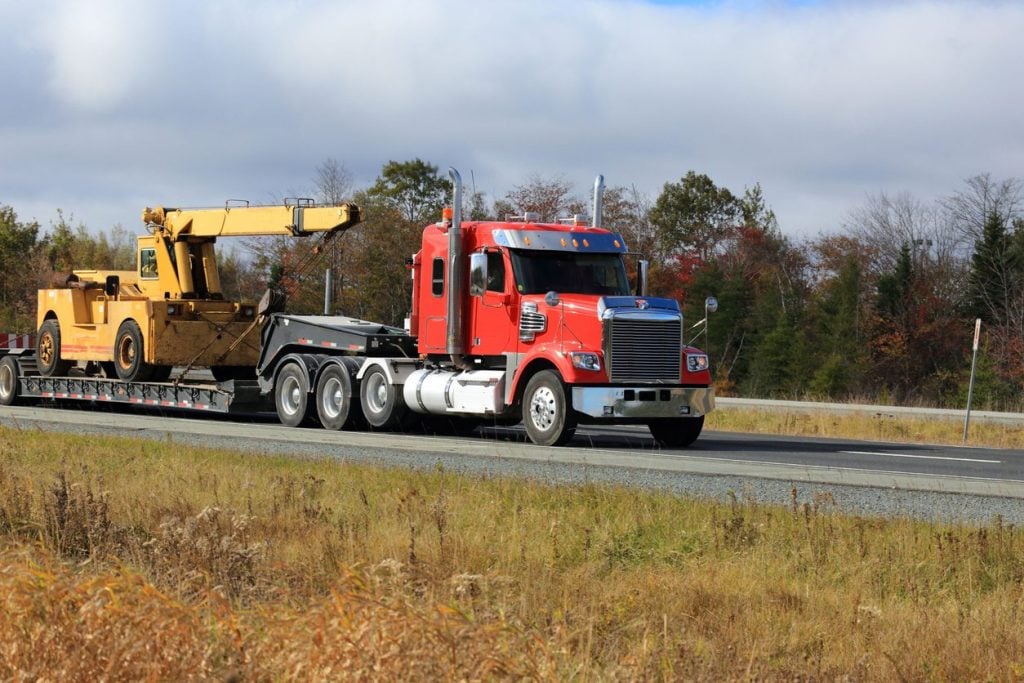
A rough terrain crane is built for site work rather than road travel and is normally hauled on a lowboy, because its tires and drivetrain are not suited to highway miles.
A crawler crane never travels on its tracks. It is dismantled completely: upper works, boom sections, tracks and counterweights all become separate loads, and a single large crawler can occupy a dozen trucks or more.
Counterweights Are Their Own Problem
This is the part that most often surprises people planning a first crane move.
Counterweight slabs are dense, heavy and awkward, and on a mid size crane they can total tens of thousands of pounds. They are removed to bring the crane within axle limits, then shipped on their own trailers, often needing a permit in their own right because of weight rather than dimension.
Budget for them as a separate load from the outset rather than treating them as an accessory to the crane move.
The Boom
Boom length is what turns a crane move into a long load rather than a heavy one.
A telescopic boom retracts, which helps, but on a large machine the retracted boom still runs well past normal trailer length and needs a stretch or extendable trailer with a rear escort. A lattice boom is shipped in sections, and those sections stack and travel on flatbeds.
Jibs, fly sections and any auxiliary equipment travel separately too, and they need to be inventoried, because a missing fly section at the destination stops assembly as effectively as a missing boom would.
Permits and Escorts
Crane moves are permit work almost by definition.
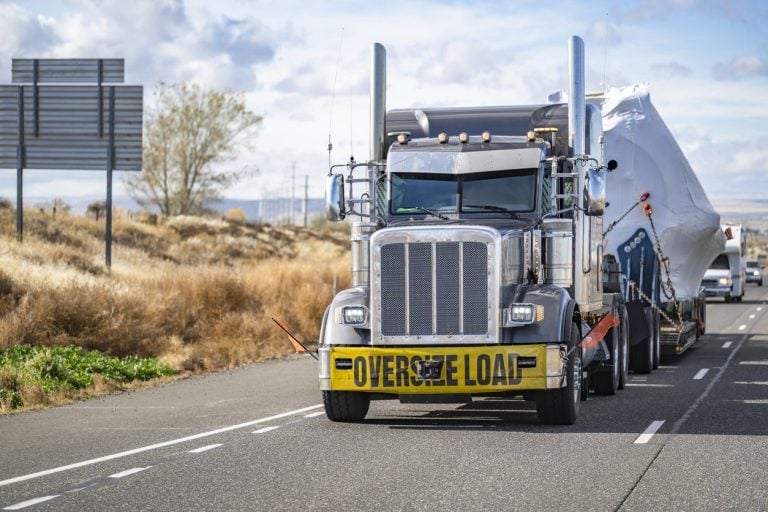
The federal baseline applies: over 8 feet 6 inches wide, 13 feet 6 inches high or 80,000 pounds gross requires a state permit for every state on the route, issued for a defined path and period. Escorts are commonly required past roughly 12 feet wide, and long loads normally need a rear escort regardless of width.
Superload permits are a separate category and take considerably longer to obtain, sometimes weeks. Where a route crosses bridges with load restrictions, an engineering review may be required before a permit is issued at all. Start the permitting early; on crane work it is more often the schedule constraint than the trucking is.
Our guide to pilot cars and heavy haul transport covers the escort requirements in detail.
Route Survey
On a crane move the route is surveyed rather than assumed.
What gets checked is bridge clearances and load ratings, turning radii at every junction the load has to negotiate, overhead lines and signals, and roadworks along the way. The permitted route that results is frequently not the shortest one, and leaving it is a violation.
Site access at both ends is surveyed too, since a yard that can receive a crane in pieces still needs room for the assist crane that puts it back together.
Assembly at the Destination
Reassembly needs its own equipment, and it needs it on site when the loads arrive.
An assist crane is normally required to rebuild a crawler crane and to refit counterweights on larger mobiles. Ground conditions have to take the weight of both machines, and there must be room to lay out sections before they go on.
This is why the arrival sequence matters. Components arriving in the wrong order mean either storing them on site or paying an assist crane to wait.
Common Questions
Can a crane drive itself to the site? An all terrain or truck mounted crane often can, on a permitted route, with counterweights following separately.
How many trucks does a crane move take? Anything from two for a small mobile to a dozen or more for a large crawler.
Why are counterweights shipped separately? To bring the crane within legal axle weights. They frequently need their own permit.
How long do permits take? Ordinary state permits are quick; superload permits can take weeks and may need an engineering review.
Do I need a crane to move a crane? Usually yes. An assist crane is needed to rebuild a crawler and to refit counterweights on larger machines.
Get a Quote
Call Ship A Car, Inc. at (866) 452-3657 for heavy haul and specialized freight, with the crane make and model, the configuration it will travel in and both site addresses.