Shipping Heavy Equipment To and From New Hampshire
The New Hampshire specific: spring thaw. From roughly late February into April, frost laws restrict heavy loads on many secondary roads while the ground softens, and those restrictions can add weeks to a delivery window if your pickup or drop site is off a main route. Everywhere else the rules are standard, over 8 feet 6 inches wide, 13 feet 6 inches high, or 80,000 pounds gross needs an NHDOT permit, with escorts once you get wide. Build the thaw into your schedule and the rest is routine.
Routes Through the State
New Hampshire has a compact but usable network. I-93 is the spine, running from the Massachusetts line through Manchester and Concord and up into the White Mountains. I-95 clips the seacoast for a short stretch near Portsmouth. I-89 connects Concord northwest toward Vermont, and Route 101 carries east-west traffic between Manchester and the coast.
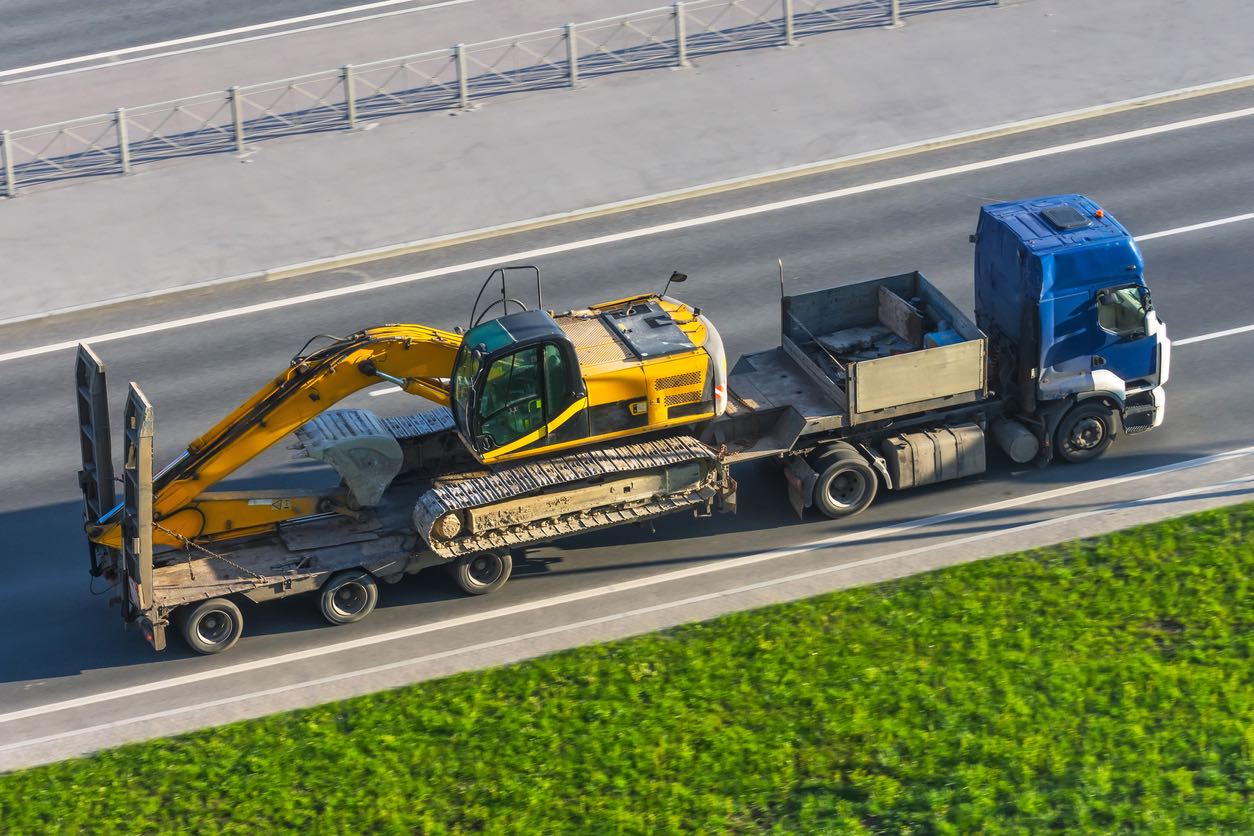
Two practical notes. The White Mountain grades on I-93 north of Franconia are demanding for a loaded lowboy, and winter conditions there close the practical window earlier than the calendar suggests. And Portsmouth is a working port but a modest one, so most equipment entering the state by water arrives through Boston and comes north by road.
Matching the Trailer to the Machine
- Flatbed for compact equipment and attachments that stay under legal height when loaded.
- Step deck for machines slightly too tall for a flatbed.
- Double drop or lowboy for excavators, dozers, and anything tall enough that deck height decides legality.
- RGN when the machine needs to drive on and off under its own power.
Height is the number that catches people out. A machine that measures 12 feet on the ground can exceed 13 feet 6 inches once it is sitting on a deck, which turns a routine move into a permitted one.
What It Costs and Why
Heavy haul pricing is driven by dimensions, weight, distance, and the permit and escort burden, not by mileage alone. A legal-dimension load on a straightforward route prices close to standard freight. Add width, and you add permits, escorts, restricted travel hours, and sometimes route surveys, each of which costs money and time. This is why two machines going the same distance can differ substantially in price.
Before You Book
Confirm the carrier’s FMCSA authority and cargo insurance limit against your equipment’s replacement value, photograph the machine including hour meter and undercarriage, and tell your coordinator about site access at both ends. Soft ground, tight yards, and overhead wires are all easier to plan around than to discover on loading day.
Call Ship A Car, Inc. at (866) 452-3657, or use the specialized transport calculator.
Frost Laws: The Detail That Catches Out-of-State Shippers
New Hampshire, like most northern states, posts seasonal weight restrictions on secondary roads while the ground thaws. As frost leaves the subgrade, the road surface loses bearing capacity, and a fully loaded lowboy that would be fine in August can damage the pavement in March. Restrictions typically run from roughly late February into April, though the exact dates shift with the weather each year and are set locally as well as at state level.

New Hampshire Heavy Haul Planning Calendar
Two practical consequences. First, a delivery to a site off a main highway may simply not be legal during posting, regardless of permits. Second, the announcement often comes with only days of notice, so a shipment booked for March should have a contingency. If your timing is flexible, moving heavy equipment into New Hampshire before mid-February or after mid-May avoids the question entirely.
Permit Thresholds
The federal baseline applies: 8 feet 6 inches wide, 13 feet 6 inches high, 80,000 pounds gross. Beyond that you need an NHDOT permit, and as with any state, escorts come in as width increases, with route surveys and utility coordination for the tallest and widest loads. Permits carry daylight-only and holiday restrictions.
New Hampshire’s compact geography helps here. Most destinations are within a couple of hours of an interstate, so the permitted portion of a route tends to be short compared with a western state.
Winter Beyond the Frost Laws
The White Mountain section of I-93 is the demanding stretch. Sustained grades, sharp weather changes, and reduced traction all affect a loaded heavy haul, and carriers will sometimes decline a northern New Hampshire delivery in deep winter rather than risk it. That is a good sign about the carrier, not a bad one. Plan northern deliveries for the warmer half of the year where the project schedule allows.
Common Questions
Can equipment be delivered to a construction site rather than a yard? Usually, if the site has firm ground, turning room, and no overhead obstructions. Send photos of the access route to your coordinator; it is far cheaper to identify a problem in advance than to have a truck arrive and be unable to unload.

What if my machine is over height only when loaded? Very common, and it is the most frequently missed detail. Measure the machine, then add the deck height of the trailer that will carry it. A double drop or lowboy exists precisely to solve this, and choosing the right trailer often avoids a permit.
How is heavy haul priced? Dimensions and weight first, then distance, then permit and escort burden. Two machines traveling the same route can differ substantially in price if one is legal-dimension and the other needs escorts and a route survey.
Do I need insurance beyond the carrier’s? Ask for the cargo coverage limit in writing and compare it against replacement value, not book value. For high-value or specialized machinery, supplemental coverage is worth pricing.