The Step By Step Process to Transport Large Tires
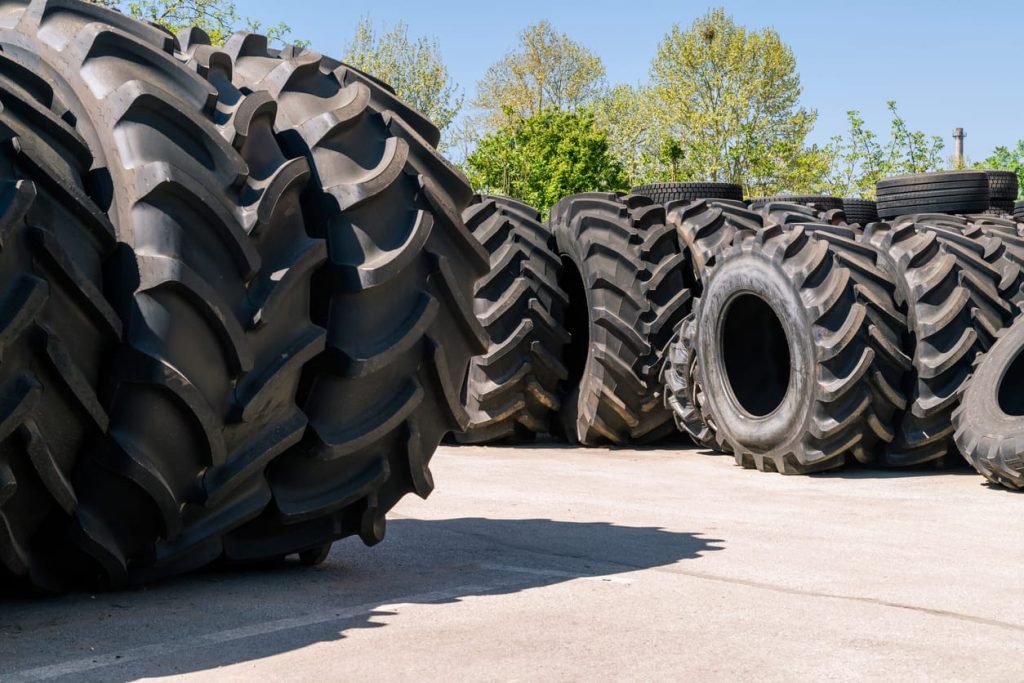
Shipping large tires works like any other freight move when it is planned right: the tires are palletized or stacked, secured with straps, protected from the elements, and hauled on a trailer matched to their size and weight. From a single loader tire to a full set of mining or monster truck tires, the process is the same four steps: choose the trailer, prepare and stack the tires, load safely, and book a carrier with verified insurance.
Ship A Car, Inc. arranges tire transport as part of our heavy equipment transport services, for one tire or a full commercial quantity.
Different Ways to Ship Large Tires
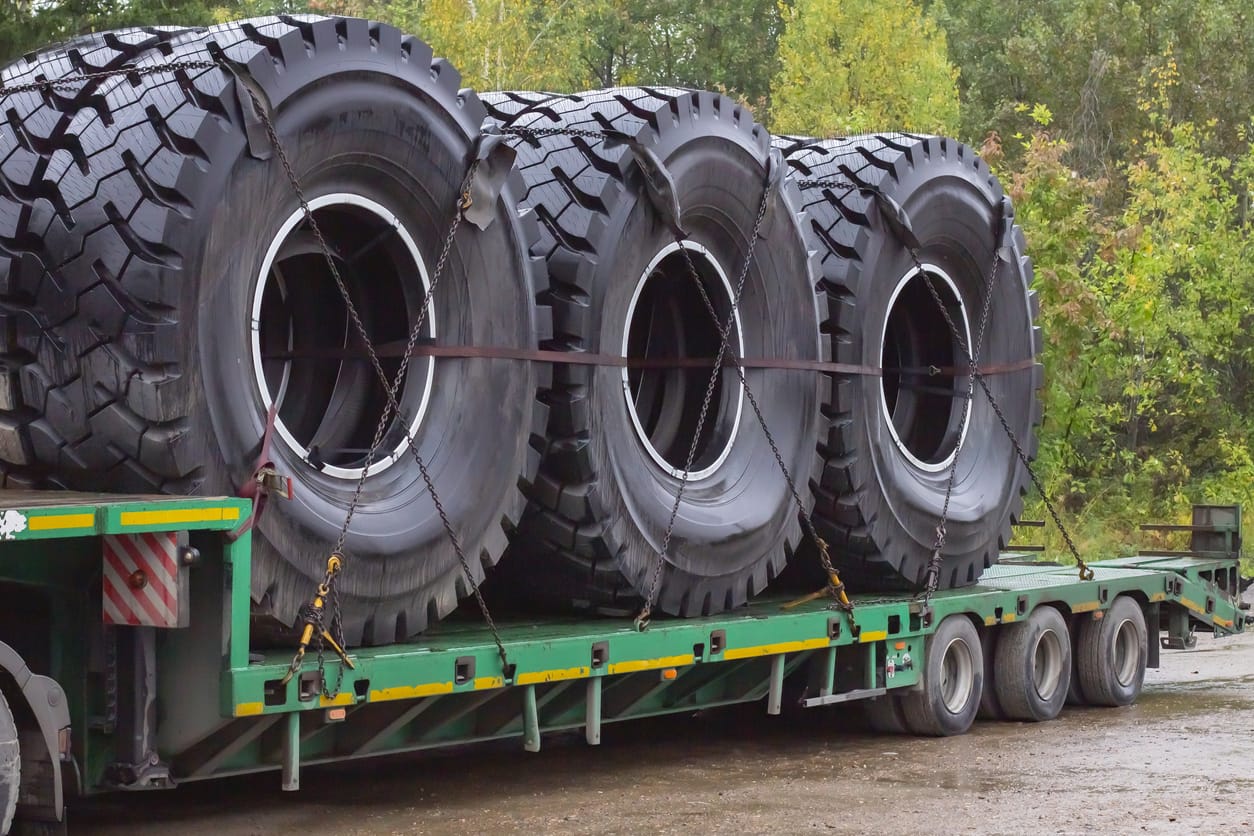
The trailer determines the shipment. Large tires ride on the same equipment classes as the machines they belong to, and the right pick depends on the tires’ diameter, quantity, and combined weight:
- Drop deck trailer
- Removable gooseneck trailer
- Double drop deck trailer
- Flatbed trailer
Each of these has different height, width, and weight allowances, which is what decides whether your load ships as standard freight or needs oversized handling. Our experts at Ship A Car, Inc match the trailer to your exact tire specifications when arranging large tire shipping, so you do not pay for more trailer than the load needs.
How Will My Tires Be Transported?
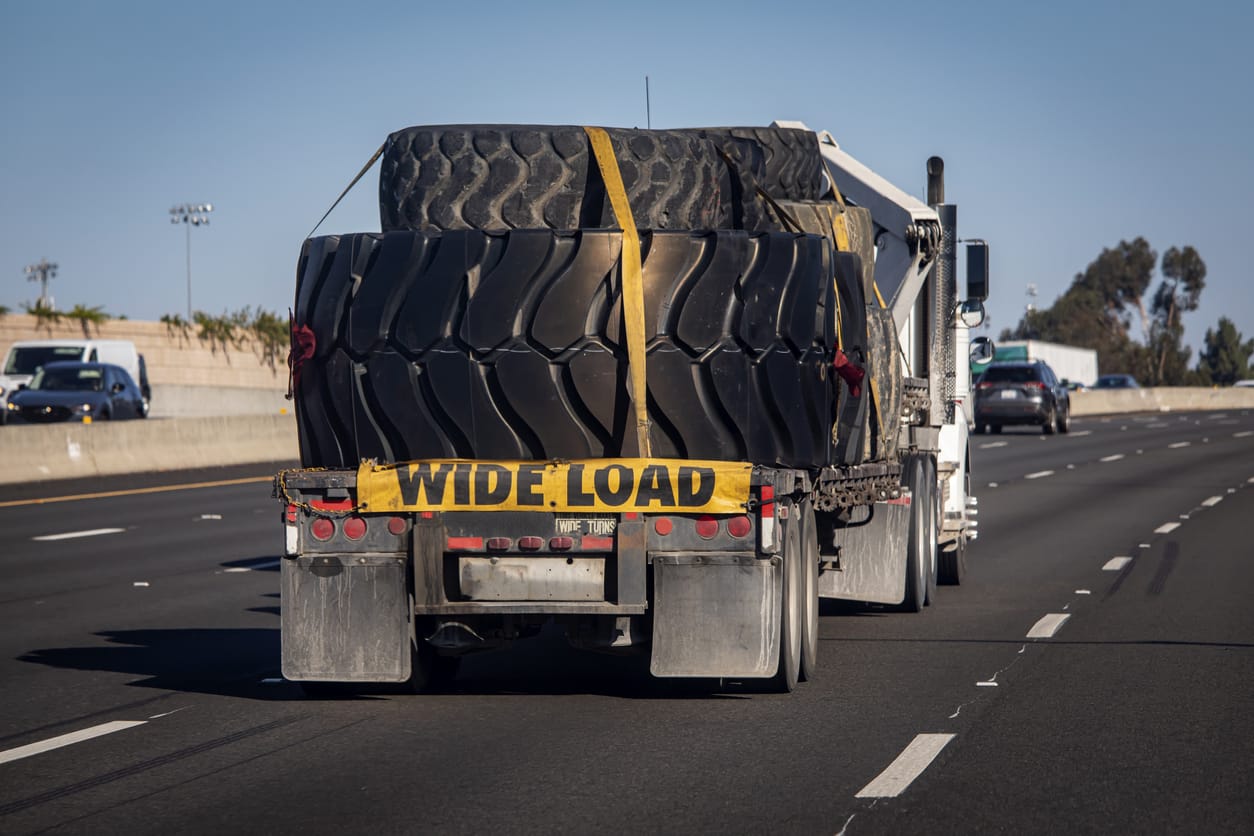
Once loaded, the tires are covered to protect them from weather and road grime during transit. Loose components such as spools, valves, and caps are removed and shipped in a separate container so nothing shakes free on the road.
For palletized shipments, air pressure is reduced, the tires are arranged and banded onto pallets, and everything is strapped to prevent shifting. Large single tires ship strapped upright or laced-stacked, depending on their construction and the carrier’s securement plan.
Making Sure Large Tires are Loaded Safely
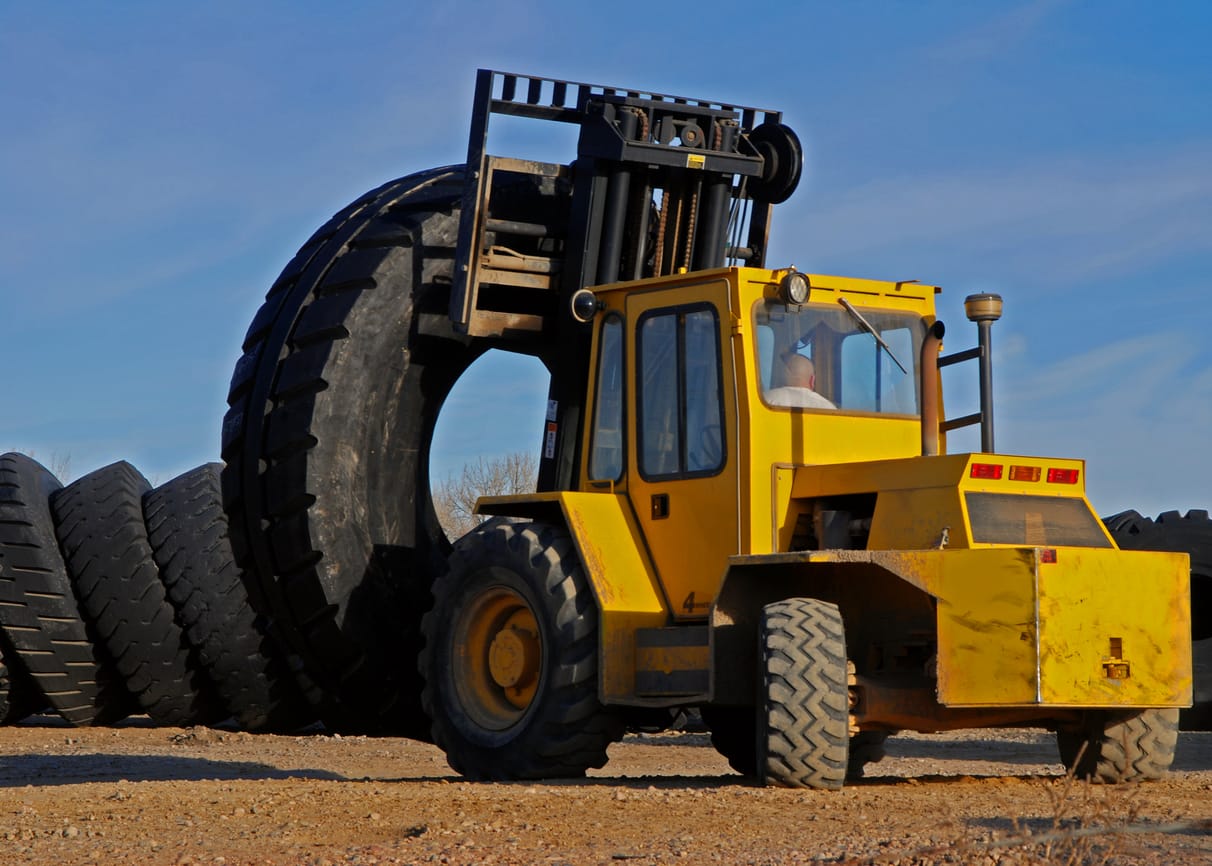
Loading is where tire shipments succeed or fail. Heavy tires move by forklift, and forklift errors damage cargo and hurt people, so the process follows firm rules:
- Use the right forklift. The machine needs a rated capacity above the load, clamps or attachments suited to gripping tires, and a mast height that works with the trailer deck. Four-wheeled forklifts carry heavy tire loads with far more stability than lighter equipment.
- Ensure everything is correctly secured. Before the forklift ever approaches, the trailer must be anchored: brakes engaged and wheels blocked if attached to a cab, and stable landing gear if not, so the deck cannot shift or tip during loading. The operator keeps the load low and shifted toward the machine’s rear for stability on the approach.
Choose the Right Transportation Company
Know what you are buying before you book. Ask for the service list and the price in writing, and read it before signing; a shipper unwilling to put the details on paper is telling you how the claim conversation would go later. A number far below every other quote is the classic setup for surprise charges.
Insurance is the non-negotiable: the carrier hauling your tires must hold cargo coverage adequate for the shipment’s value, confirmed before loading. If a hauler cannot cover the value of your load, find one who can (Ship A Car, Inc. verifies carrier insurance before every dispatch, and we are a licensed FMCSA broker, USDOT 2303542, MC 784930).

Finally, ask about the backup plan. Logistics change: a delivery site closes, weather shuts a route, a machine is not ready. An experienced heavy hauler plans for the unexpected so a hiccup does not become an expensive last-minute scramble. To arrange large tire transport with all three boxes checked, call (866) 452-3657 for a free quote.