How to Ship Forestry Equipment
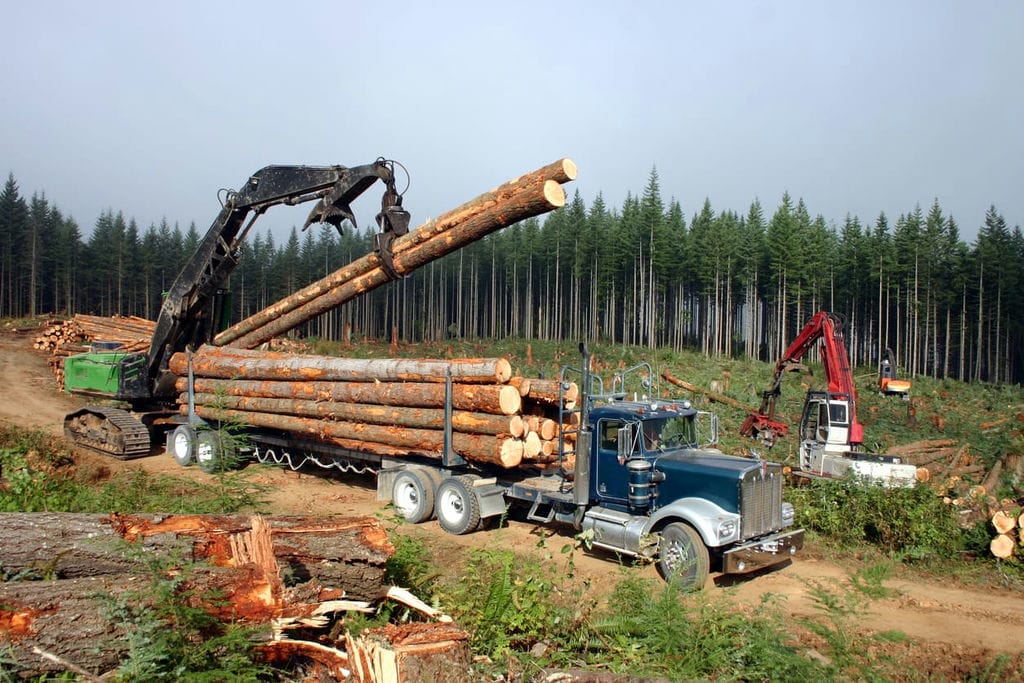
Forestry machines are heavy, tall and covered in mud, and the last of those three causes more trouble than the first two. A feller buncher or a harvester comes off a landing carrying soil, bark and slash in its tracks and undercarriage, and that material is both weight you are paying to move and a genuine road hazard. Clean the machine properly and half the problems on this page disappear.
What Actually Moves
The category covers several very different machines and they do not ship alike.
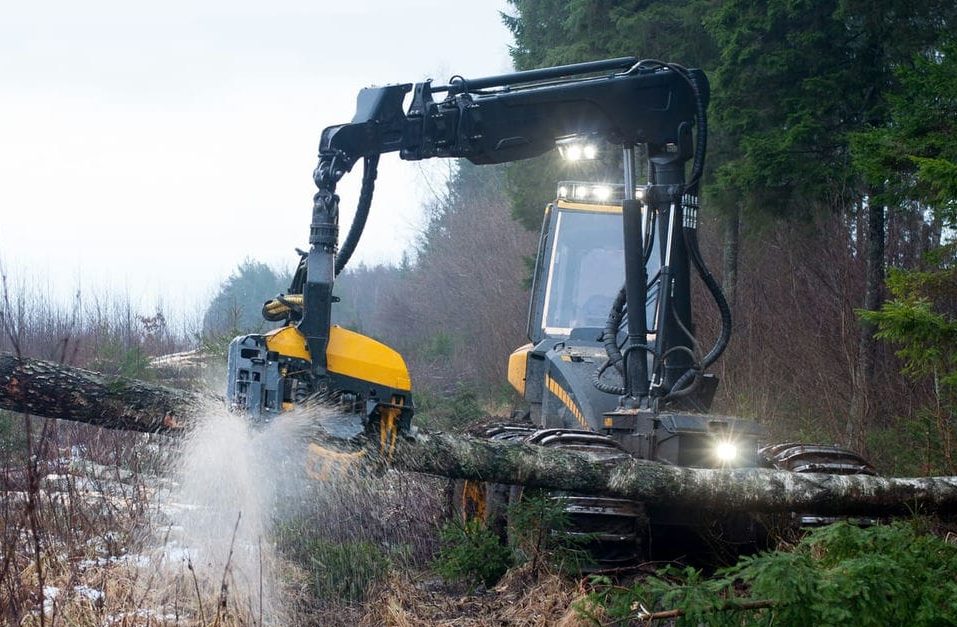
Feller bunchers and harvesters are the heavy end, frequently 50,000 to 80,000 pounds, tall because of the cab and boom, and often tracked. Forwarders and skidders are similar in weight, wheeled rather than tracked, and articulated in the middle, which changes how they are secured.
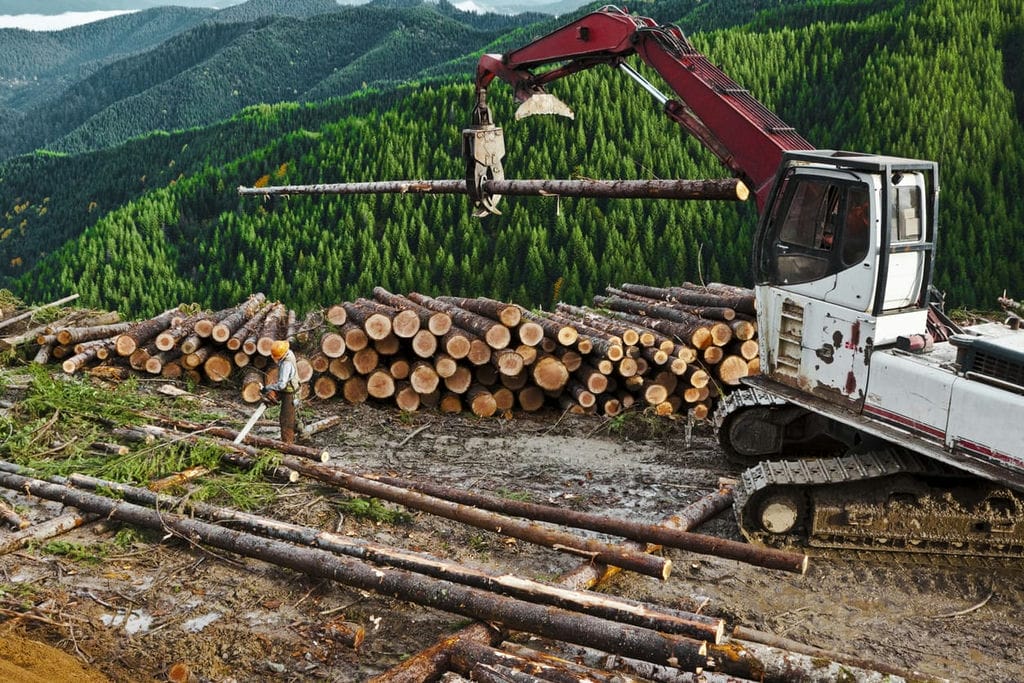
Knuckleboom loaders and delimbers are typically mounted on a carrier or a trailer chassis and can be closer to legal dimensions. Chippers and grinders vary enormously by capacity, and the largest horizontal grinders are superload territory.
Get the make, model and the manufacturer’s shipping weight and dimensions rather than an estimate. On a machine with a boom, the specification usually gives a transport configuration with the boom stowed, and that is the figure that matters.
Height Is the Constraint
Forestry machines are tall because the operator needs to see over the work, and that runs into legal height quickly.
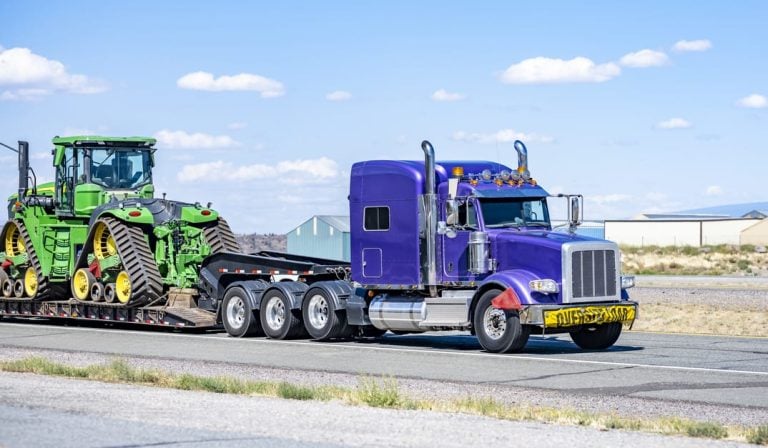
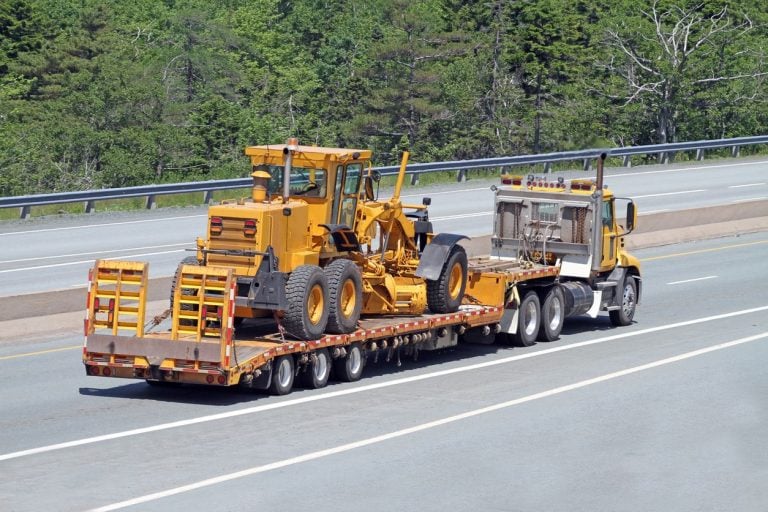
Legal height is 13 feet 6 inches measured from the road in most states, and a flatbed deck uses around 5 feet of it. A harvester with a 10 foot cab height is already over on a flatbed, so these machines travel on step decks and lowboys as a matter of routine.
Where the machine has a boom, cab guard or exhaust that can be lowered or removed, doing so is frequently what brings the load back inside a legal envelope. That is worth twenty minutes on the landing because it removes a permit, potentially an escort, and the routing restrictions that come with both. Our guide to wide and oversize loads covers the thresholds in detail.
Clean It Before It Loads
This is the step people skip and it causes three separate problems.
The first is weight. Mud packed into an undercarriage on a large tracked machine can add thousands of pounds, and that is weight you pay to haul and weight that can put an axle over at a scale.
The second is road safety. Material falling off a machine at highway speed is a hazard and it is an enforcement matter, not merely bad manners.
The third is biosecurity. Moving soil, seeds and plant material between regions spreads invasive species and pests, and some states and many landowners require equipment to be cleaned before it arrives. On interstate moves this is worth asking about specifically rather than assuming.
Pressure wash the tracks, undercarriage, radiator and deck. It is cheaper than the alternatives.
Getting to the Machine Is Half the Job
Forestry equipment is by definition not near a highway, and the access problem is the defining feature of these moves.
Logging roads are private, unpaved and built for log trucks rather than for a lowboy with a 90,000 pound load. Grades are steep, turns are tight, and surfaces soften dramatically after rain. A loaded lowboy that leaves the running surface is a recovery operation in a place with no recovery equipment.
Plan a route survey to the landing rather than to the nearest highway. Confirm the grade, the turning radius at the landing, whether there is room to turn a truck around, the bridge and culvert ratings on the way in, and what the surface does in current weather.
Where the machine can walk itself out to a better loading point, that is frequently the answer. A mile of tracked travel to firm ground is cheaper than a recovery.
Season Decides the Schedule
Timber operations run on ground conditions and so does the transport.
Spring thaw is the worst period in the north. Frost laws restrict weights on secondary roads as the ground loses bearing capacity, and logging roads themselves become impassable. Many operations shut down entirely during breakup, and equipment moves cluster on either side of it.
Wet seasons in any region do the same thing on a shorter timescale. Fire season in the west closes access outright at times, and that is not negotiable.
Build slack into any forestry equipment move and expect the date to be conditional on the ground.
Securing It Properly
Tracked and articulated machines each have their own requirements.
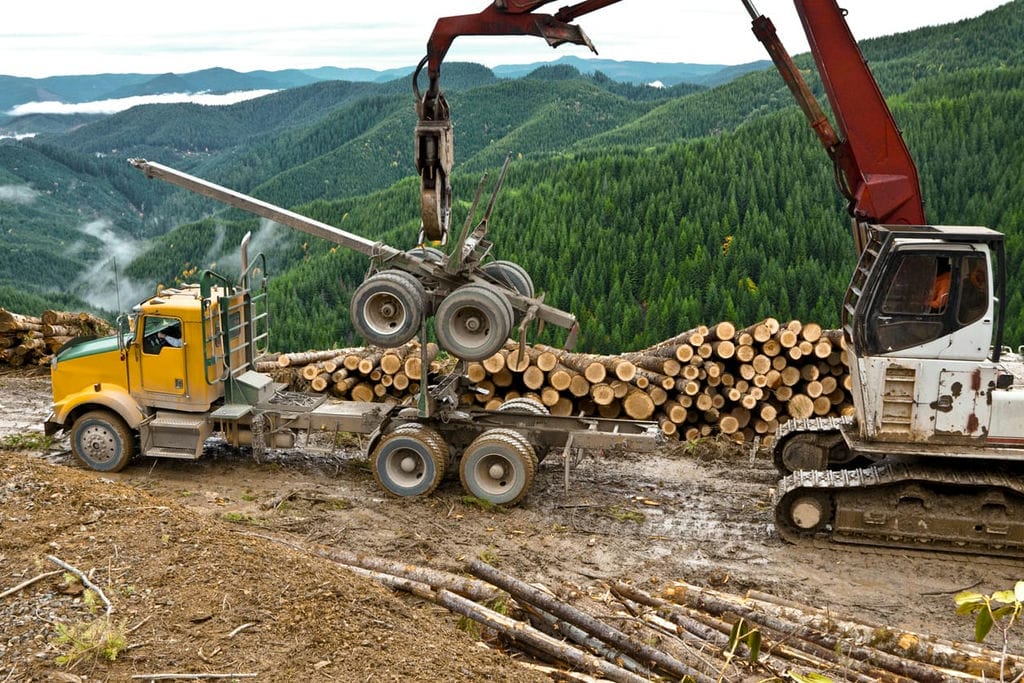
Use the manufacturer’s designated tie down points, and secure the machine at four points minimum with chains rated for the weight. Articulated machines, meaning skidders and forwarders, must have the articulation joint locked with the transport lock so the two halves cannot move relative to each other in transit.
Booms, grapples and heads are lowered, stowed and secured separately, since a boom that shifts changes the load’s height and its center of gravity at the same time. Blade and grapple attachments are lowered to the deck.
Drain what needs draining, disconnect the battery on a long move, and secure or remove anything loose from the cab.
Documentation
Used forestry equipment arrives with dents, scratches, worn paint and hydraulic weeps as standard, and that works against you at a claim unless you record the condition deliberately.
Photograph every side in daylight before loading, including the undercarriage, the glass, the lights, the cab interior and the hour meter. Get existing damage described specifically on the bill of lading rather than as “used condition, general wear”, which is the phrase that defeats claims.
Inspect again at delivery before signing, and note anything unexpected while the driver is present.
Common Questions
How much does forestry equipment weigh? Feller bunchers, harvesters, forwarders and skidders commonly run 50,000 to 80,000 pounds. Loaders and chippers vary widely.
Why does cleaning matter so much? Packed mud adds thousands of pounds, falls off on the highway, and spreads soil and pests between regions, which some states restrict.
What trailer will it need? Usually a step deck or lowboy. These machines are tall, and a flatbed deck plus a 10 foot cab is already over legal height.
Can a truck reach the landing? Sometimes. Logging roads are built for log trucks, not lowboys. Get a route survey, and consider walking the machine to firmer ground.
When should I avoid moving? Spring thaw in the north, wet periods anywhere, and fire season closures in the west.
Get a Quote
Call Ship A Car, Inc. at (866) 452-3657 for heavy haul and specialized freight with the machine’s make and model, its transport height and weight, and an honest description of the access at the landing, or request a quote through the specialized transport calculator.