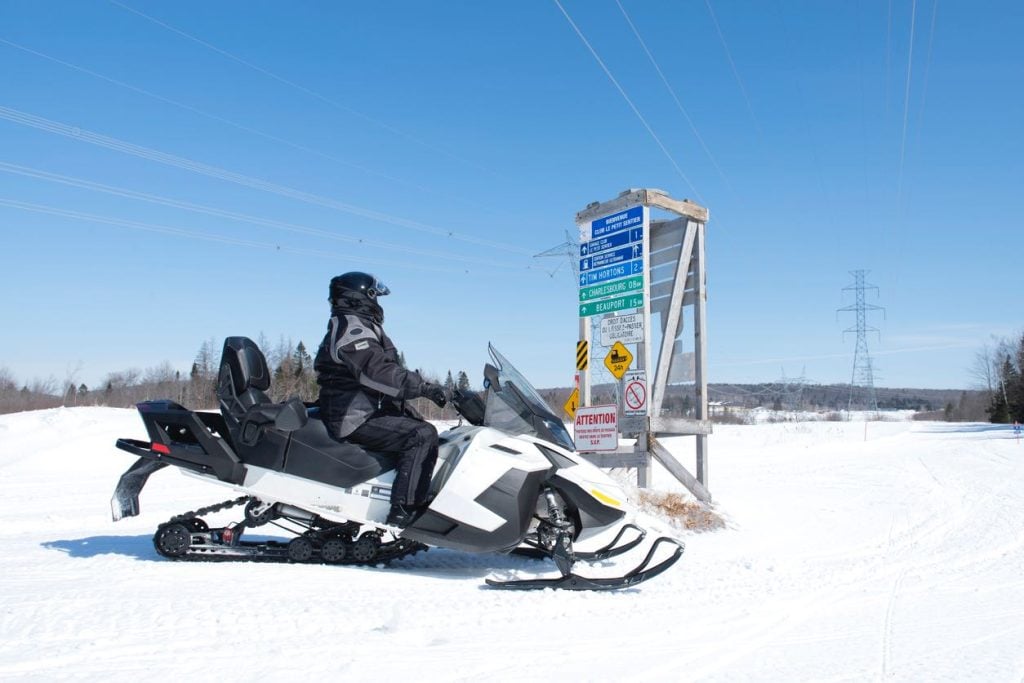
Shipping a Snowmobile
Snowmobiles are seasonal cargo, and that shapes the booking more than anything about the machine itself. Demand runs north and into the snow belt through autumn, then reverses in spring as sleds head home or to storage, and those two windows are when everyone wants the same trailers. The machine side is straightforward once you know two things: where a sled can and cannot be strapped, and what to do about carbide studs, which will mark a wooden deck and are the detail carriers care about most.
Book Around the Season, Not the Weather
The rush is not caused by snow, it is caused by everyone acting on the same calendar.
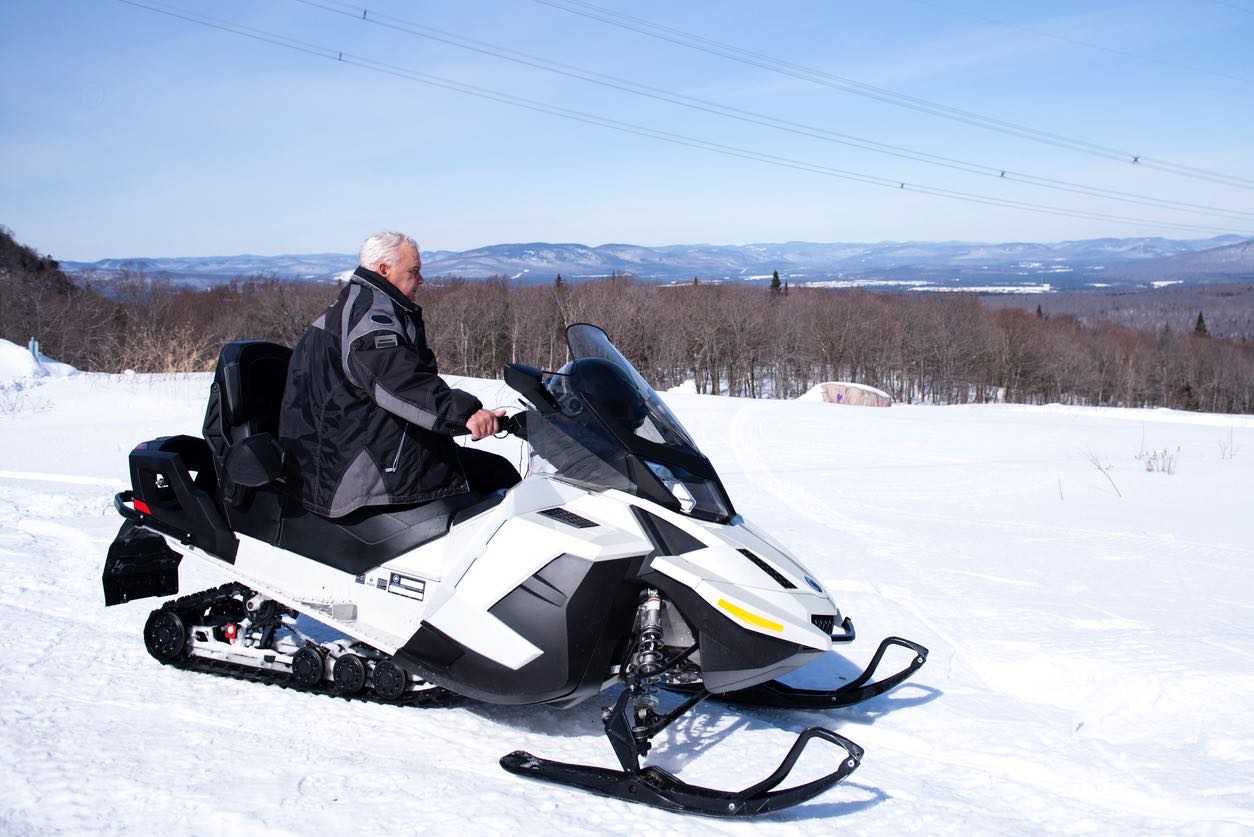
Autumn is heavy northbound, as sleds move to Michigan, Wisconsin, Minnesota, the Rockies and New England ahead of the season. Spring reverses it, with machines returning home, going to dealers for service, or heading to summer storage. In both windows capacity tightens and prices firm.
Three to four weeks of notice inside those windows is realistic. Outside them, one to two weeks is comfortable and rates are noticeably softer. Midsummer is the cheapest time to move a snowmobile, which is worth knowing if you are buying one out of season.
Open, Enclosed, or Crated
Three ways a sled travels, and the choice is usually easy.
Enclosed is the normal answer and what most owners choose. Snowmobiles have exposed bodywork, a windshield and a great deal of mechanical detail with nothing shielding it, so road spray and salt reach parts that matter. The premium over open is modest against that.
Open works for a short haul, a machine going for parts, or a sled whose cosmetics genuinely do not matter. It is cheaper and perfectly safe, it just arrives dirty.
Crated is for overseas shipment or something rare, and it is rarely necessary domestically.
If you are moving several sleds, ask about them together. Multiple machines on one booking is materially cheaper per unit than separate ones, and a trailer that takes one usually takes three or four.
Studs Are the Detail Carriers Ask About
Worth stating early because it decides how the machine is handled. Carbide studs on the track will bite into a wooden trailer deck, and picks or scratch pads on the skis will do the same.
Carriers handle this routinely with boards, mats or a metal deck, but they need to know in advance. Say whether the track is studded and whether the skis have carbides when you book, and the right equipment turns up. Discovering it at the curb is how a load gets refused.
Where a Sled Can Be Strapped
Securement is where avoidable damage happens, and a snowmobile has fewer safe points than a car.
The correct approach is straps at the front bumper or ski loops and at the rear bumper or tunnel, pulling the suspension down slightly so the machine cannot bounce. What you do not want is a strap over the hood, the windshield, the seat or any bodywork panel. Those are not structural, and a strap that seems fine in the yard will work at them over a thousand miles of vibration.
If your sled has aftermarket bodywork, a lifted rear or an unusual bumper, mention it. It changes where straps can safely go.
Preparing the Machine
- Reduce the fuel to a low level. It is weight, and some carriers require it.
- Remove the windshield if it comes off easily, or at least accept that it is the most vulnerable part. Wrap it if it stays on.
- Take off anything that unclips: mirrors, bags, GPS mounts, cargo racks and loose covers.
- Disconnect or tender the battery if the machine will sit for a while at the far end.
- Note any leaks honestly. A machine that marks a deck affects other cargo, and a carrier will refuse a load rather than take that on.
- Photograph everything in daylight, including the hood, tunnel, skis, track and windshield. Scratches on a sled are easy to miss and easy to dispute.
What It Costs
Snowmobiles cost less to move than cars because they take less room, but not proportionally less, since the handling work is similar. Expect roughly $300 to $650 for a regional move of a few hundred miles and $900 to $1,400 cross country, with enclosed adding to that. The figures above are planning estimates. In our own book since 2023, the middle half of ATV, UTV and snowmobile moves ran $700 to $1,100.
Two things move the number. A machine that does not start has to be pushed or winched rather than ridden on, which takes two people and adds cost. And a long touring sled with a extended track takes more room than a trail machine, so give the model rather than just “a snowmobile”.
At Pickup and Delivery
Walk the machine with the driver and get existing damage written on the condition report, including the state of the skis, the track and the windshield. Keep your own photographs.
At delivery, inspect before signing. Check the hood and tunnel at eye level, look at the skis and the windshield first because those are what handling damages, and start it if you can. Note anything on the bill of lading while the driver is present, since a clean signed report is your acknowledgement that it arrived as it left.
Common Questions
Open or enclosed? Enclosed for most sleds. There is no bodywork shielding the mechanicals, so exposure reaches parts that matter.
When should I book? Three to four weeks in the autumn and spring rushes, one to two weeks otherwise. Summer is cheapest.
Do studs matter? Yes. Tell the carrier, because studded tracks and ski carbides need boards or a metal deck.
Can you ship one that does not run? Yes, with winching. Say whether it rolls, because a seized track changes the job.
Can I ship several together? Yes, and it is considerably cheaper per machine than separate bookings.
Get a Quote
Call Ship A Car, Inc. at (866) 821-4555 with the make, model, whether it runs and whether the track is studded, or read more about powersports transport.