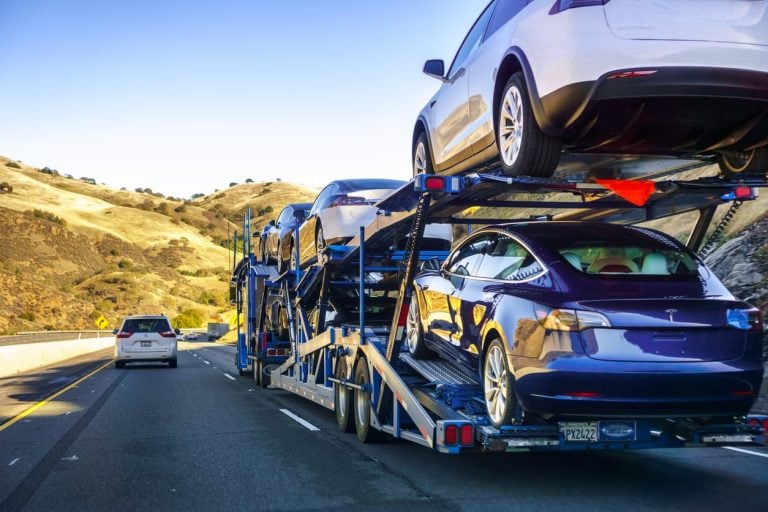
Shipping a Car from Washington DC to California
Around 2,700 to 2,900 miles, six to eight days in transit, and one thing to check before you book anything: whether California will register your car. The state sets its own emissions standards, but a car you registered back east before moving is accepted even if it was built to the federal specification for the other 49 states, as long as you bring proof of that registration and pass a smog check. The trap is a nearly new 49-state car bought out of state by someone already living in California, and it takes a few minutes to rule out.

Check Registration Before You Ship
California requires new residents to register within a limited period of establishing residency, and most vehicles need a smog check as part of that.
The emissions question catches buyers more than movers. A federal specification car that a California resident buys nearly new out of state, under 7,500 miles at purchase, cannot be registered; one you owned and registered in your home state before the move can be, with proof of that registration. If the car is a recent purchase, check the exact year, make and model against the current DMV guidance while it is still on the east coast and you still have options.
If the car is a lease or has a loan, tell the lender you are moving states as well, since registration in a new state usually involves them.
Where in California Changes the Job
California is nearly 800 miles top to bottom, and the destination matters more than people expect.
The major metros, Los Angeles, San Diego, the Bay Area and Sacramento, are all well served and a realistically priced load is assigned quickly. Rural Northern California, the far north coast and the eastern Sierra counties are a different matter, with fewer carriers passing through and longer waits for one that will take the detour.
If you are heading somewhere off the main corridors, either allow more time or arrange to meet the truck nearer a major route. That single decision often shortens the wait more than paying extra would.
Route and Timing
Expect six to eight days in transit once loaded, plus a few days to a week to get assigned on a sensible price.
Carriers generally run I-40 or I-70 westward depending on where they are collecting and delivering. In winter, snow across the Rockies and through the Sierra can close or slow the western end, and drivers may route further south through I-10 and come north through the Central Valley. That adds a day or two rather than creating a risk, and it is the main seasonal variable on this lane.
The DC End
Collection in the District itself needs a little thought. A car hauler is around 75 feet long and cannot work most residential streets in DC, and the same applies in much of Arlington and Alexandria.
The usual answer is a meeting point at a large lot just outside the dense core, which is quicker than waiting for a driver willing to attempt a narrow street. Arrange it when you book rather than on the day.
What It Costs
Our book holds too few Washington DC to California orders since 2023 to quote, but across orders between the DC area and California the middle half ran $1,300 to $1,750. The figures below are planning estimates.
Open transport for a standard sedan on this lane runs roughly $1,300 to $1,800. A full size truck or SUV adds meaningfully, and enclosed adds about a third on top.
A vehicle that will not start or roll adds roughly $100 to $250 for winching, declared at booking rather than discovered at the curb. And treat a quote well below the rest with suspicion, because a rate no carrier accepts leaves the car sitting in Virginia while your pickup window passes.
Preparing the Car
Wash it so existing marks are visible and photograph every panel in daylight, including the wheels, the roof and the lower bumpers. Leave about a quarter tank of fuel.
Empty the cabin and trunk, because personal items are not covered by cargo insurance and they shift in transit. Remove your E-ZPass, or it will register tolls across several states on the way. Fold the mirrors, disable a motion sensitive alarm, and hand over a key.
At delivery, inspect before signing. Compare against your photographs and the pickup condition report, check the lower bumpers and wheels first because those are what loading damages, and note anything unexpected on the bill of lading while the driver is still there.
Common Questions
How long does it take? Six to eight days in transit, plus a few days to a week to get assigned.
Will my car pass California registration? Yes, if you registered it in another state before moving and it passes a smog check, even with a 49-state label. The refusals are for nearly new 49-state cars bought out of state by people who already live in California.
Can the truck collect from my street in DC? Often not. A meeting point outside the dense core is faster and widens the pool of drivers.
Does winter affect it? It can. Rockies or Sierra snow may push carriers onto a southern route, adding a day or two.
What does it cost? Roughly $1,300 to $1,800 for a standard sedan on open transport, more for a large vehicle or enclosed.
Get a Quote
Call Ship A Car, Inc. at (866) 821-4555 with both zip codes and a realistic pickup area, or request an estimate for the lane through the quote calculator.