
How to Ship a Car From Chicago, Illinois
Chicago is the best connected city in the country for moving a vehicle, and that single fact does more for your price and your wait than anything else you can control. Every major east to west and north to south freight corridor passes through it, so carriers are constantly in the area with space to fill. What Chicago takes back is winter, and a downtown where a 75 foot hauler has nowhere to stop.

Why Chicago Prices Well
Carrier availability is a function of how much traffic already runs past your door, and no American city does better on that measure.
Interstates 90, 94, 55, 57, 80 and 88 all converge here, and the city is the country’s rail and freight hub as well. A truck moving between the coasts, or between the South and the upper Midwest, is very likely passing through. Your car joins a route that already exists rather than creating one, which is what a good rate looks like from the carrier’s side.
The practical effect is short assignment times. Ordinary Chicago lanes are usually covered within a few days, and popular runs to Florida, Texas, Arizona and California are among the most competitive in the country.
Where the Truck Can Meet You
Most of the metropolitan area handles a full size hauler without difficulty. The suburbs, Naperville, Schaumburg, Oak Park, Evanston and the rest, generally have streets a truck can work on.
The exceptions are predictable. Downtown and the dense North Side neighborhoods have narrow streets, permit parking, and a great deal of traffic behind any driver who stops. Many buildings have garages a big rig cannot enter. And the older viaducts on the South and West Sides carry posted clearances well under what a loaded upper deck needs, so a route that looks direct is sometimes impossible.
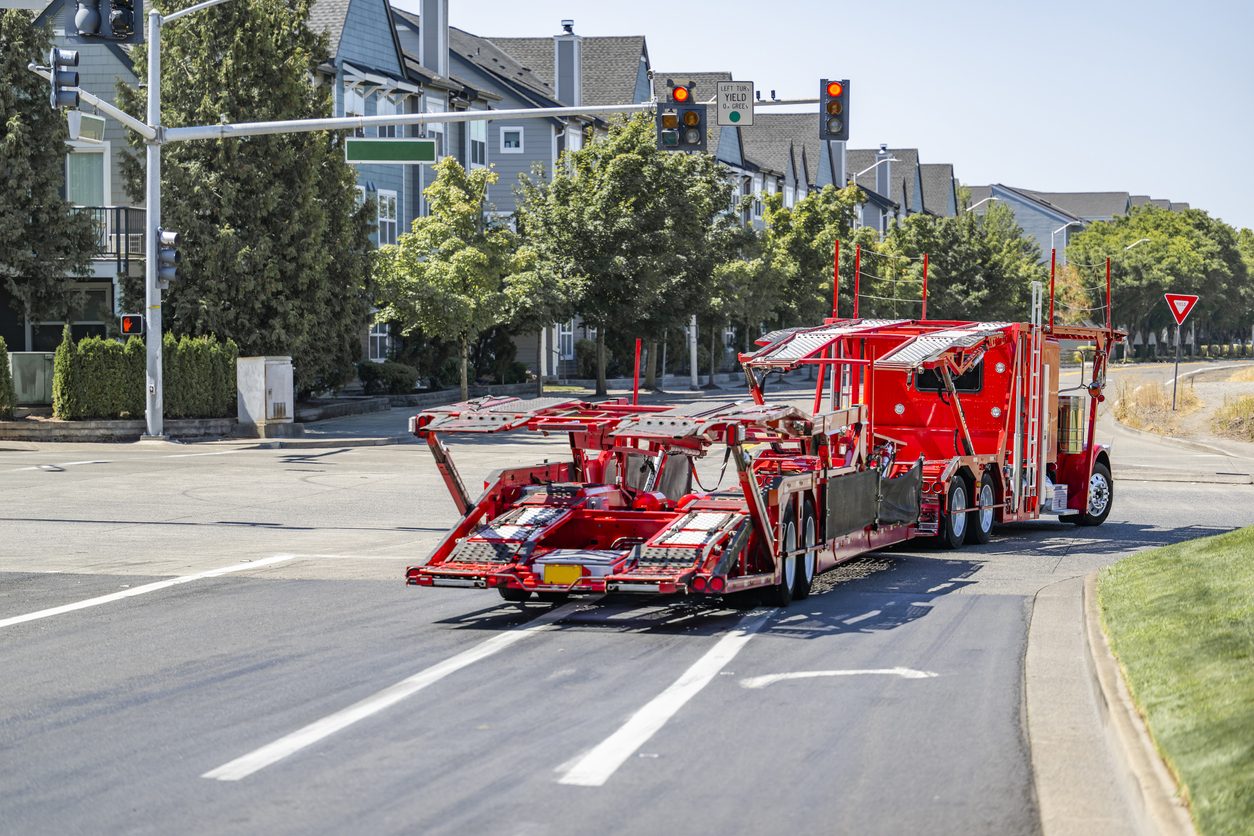
In any of those cases the answer is a meeting point, and Chicago has no shortage of large retail lots near interstate exits. Agree the location when you book rather than when the driver is two blocks away and circling.
Winter Is the Main Variable
From December through March, weather affects Chicago shipments more than anything else on this page, and it is a scheduling issue rather than a damage one.
Snow and ice slow trucks, and a storm anywhere along a route delays your car even when Chicago is clear. Lake effect snow can arrive quickly. Treat a February delivery date as a range rather than a promise, and build slack into any plan that depends on the car arriving by a particular day.
Snowbanks are the underrated problem. A plowed residential street loses several feet of width to piled snow, and a curb that works in July is unusable in January. That is the most common reason a Chicago winter pickup gets moved to a meeting point on the day, and agreeing one in advance avoids the scramble.
Road salt is heavy here. A car on an open trailer arrives coated in it, which is cosmetic on most vehicles and resolved by a wash. On a car with fresh paintwork, existing corrosion or real value, an enclosed carrier through the winter is worth the premium for that reason alone.
Check the battery before a winter pickup. A car that will not start on a cold morning cannot be loaded.
The Lanes That Matter
Chicago traffic runs in recognizable seasonal patterns and the pattern affects what you pay.
Florida and Arizona are the heavy snowbird lanes, southbound building through October and November and northbound spiking in March and April. Prices rise in both peaks and carriers fill early, so book three to four weeks ahead rather than one to two if your move falls in one of them.
California and Texas run steadily year round. Shorter regional moves into Michigan, Wisconsin, Indiana and Ohio are quick to assign because there is constant carrier traffic on those corridors.
Open or Enclosed
Open transport carries the overwhelming majority of cars in and out of Chicago and it is the right choice for an ordinary vehicle.
Enclosed costs about a third more and earns it in two situations here: a car with collector value, fresh paint or a wrap, and a winter move where you would rather the car did not spend three days in road brine. For heavy equipment rather than vehicles, see our Illinois heavy equipment shipping guide.
Preparing the Car
Wash it so existing marks are visible, then photograph every panel in daylight, including the wheels, the lower bumpers and the rocker panels, which are what loading marks. In winter that means washing the salt off first, since a gray film hides everything and an unclear condition report costs you the argument later.
Leave about a quarter tank of fuel. Empty the cabin and the trunk, since personal items are not covered by cargo insurance and they add weight. Fold the mirrors, disable a motion sensitive alarm, remove your toll transponder so you are not billed for the truck’s route, and hand over a key.
At delivery, inspect before signing. Compare against your photographs and note anything unexpected on the bill of lading while the driver is still there. If the car arrives after dark or in heavy weather, write on the paperwork that a full inspection was not possible before you sign.
Common Questions
How long does it take to ship a car from Chicago? Two to four days to the South or the East Coast, and five to seven to the West Coast, once the car is collected.
Why is Chicago comparatively affordable? Every major freight corridor passes through it, so carriers are constantly in the area and your car joins an existing route.
Can the truck come to my address? In most suburbs, yes. Downtown, the dense North Side, buildings with garages and any street with winter snowbanks usually need a meeting point.
When is it most expensive? October and November southbound, March and April northbound. That is the snowbird season to Florida and Arizona.
Should I ship enclosed in winter? Worth it for a valuable car or fresh paint, mainly to keep it out of road salt. An ordinary car is fine open, with a wash on arrival.
Get a Quote
Call Ship A Car, Inc. at (866) 821-4555 with both zip codes and your date range, or request an estimate for the move through the quote calculator.