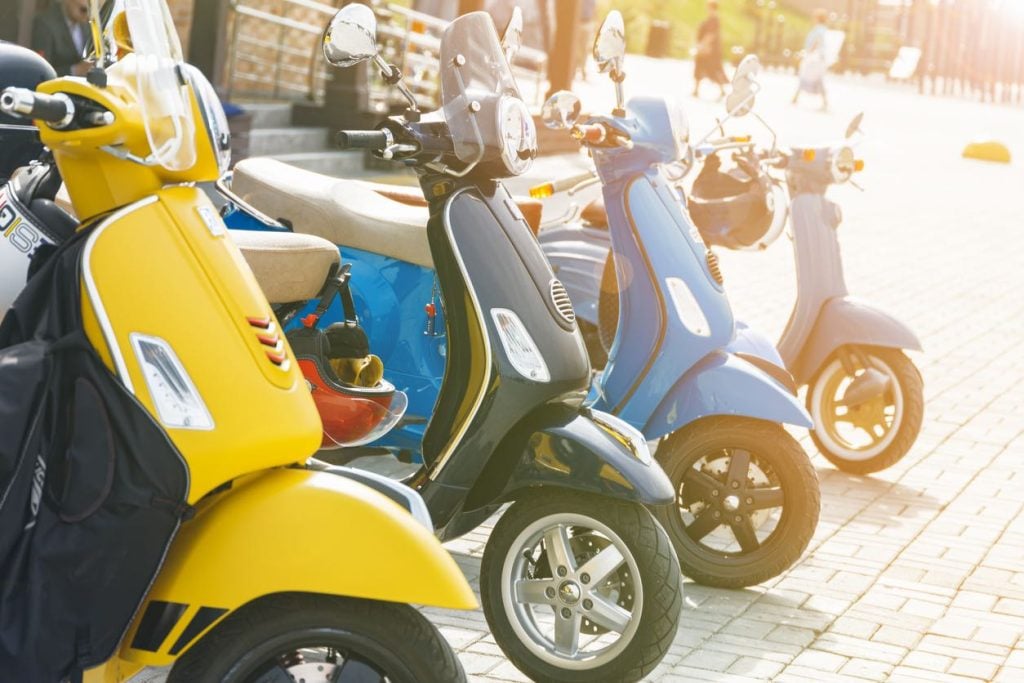
Are Mopeds Worth It? The Short Answer
For a lot of American commuters, yes. A new moped or scooter typically costs a small fraction of a car, sips fuel at a rate most cars cannot approach, and carries far lower insurance and registration costs in most states. The honest tradeoffs are weather, cargo space, highway capability, and safety. If your daily travel is mostly local miles in reasonable weather, the math below tends to favor two wheels; if your life includes interstates, winters, or car seats, a moped works better as a second vehicle than a replacement.
This guide runs the numbers: purchase price, fuel, insurance, and state-by-state costs, plus the downsides worth taking seriously before you buy.
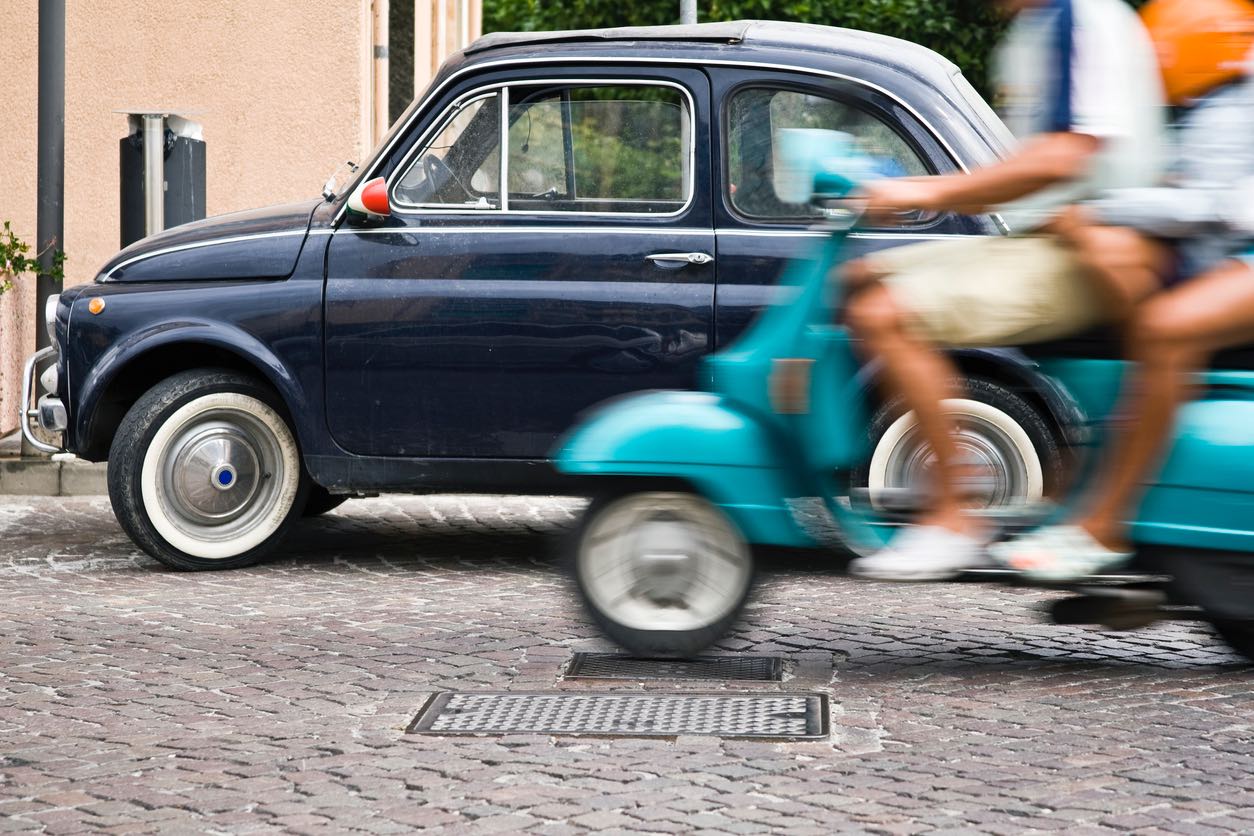
From Four Wheels to Two: A Transformational Tale
Take a hypothetical example: John’s family was raised in a suburban environment and always drove a standard two-car sedan, a configuration that many families feel is essential. John saw the globe change along with his viewpoint on transportation. He embraced a more environmentally friendly commute, cheerfully exchanging one of the family vehicles for the daily bus ride, supplemented by the occasional bike ride. However, the detours in life have their own agendas. His wife’s job moved, so her once-short commute became an arduous sixty-mile round-trip commute each day.
When presented with this additional obstacle, the family considered their choices. John continued to rely on public transportation and cycling, so the impending financial commitment of buying another car felt unnecessary and overwhelming. Then it hit him like a flash: how about switching to a motor scooter? Often called a moped, this little two-wheeled vehicle seemed like a ray of hope. It not only promised to close John’s transit gap, but it also represented affordable and environmentally friendly transportation, perfectly lining up with their changing objectives for a lifestyle.
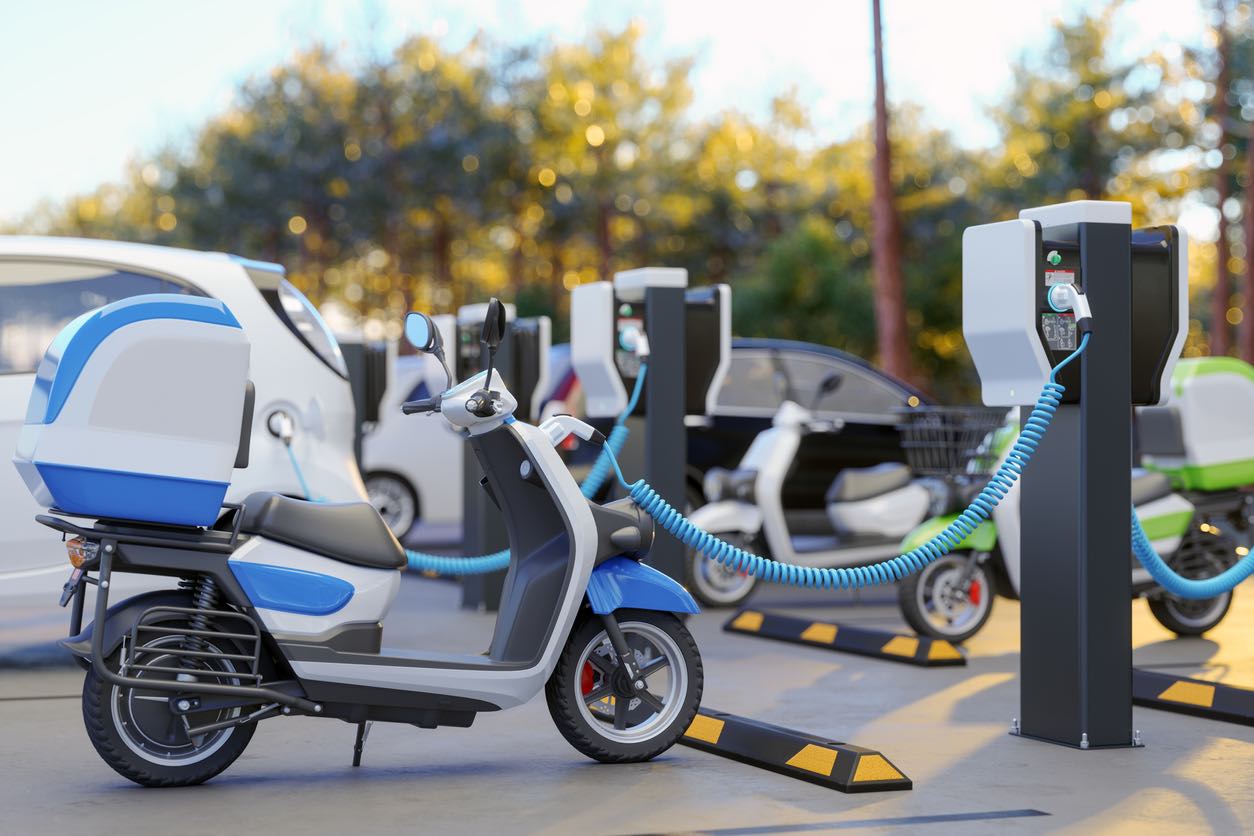
Driving Savings: Moped or Car? Which Will Your Wallet Thank You For?
It’s common to compare navigating the financial landscape of personal transportation to a game of chess. Every action has advantages and disadvantages. The age-old argument between cars and mopeds has gained traction lately because of shifting urban dynamics and growing environmental concerns. But there’s a financial component that’s hard to ignore, even beyond the allure of wide roads and two-wheelers. What is the true cost of your means of transportation, and which alternative is the most economical?
Now let’s remove the layers. Initially, the price of a motor scooter appears remarkably affordable. Many have found that they can get a pretty new used scooter for around $1,000. Conversely, even a reasonably priced used car, once monthly payments and interest are totaled over the life of a typical loan, can easily cost more than ten times that amount. Essentially, if you decide to go with a moped, the money that would have gone to car payments stays in your pocket from the very first month, and the savings grow with every ride. When seen in this context, the statistics present a strong argument in favor of the common scooter, propelling it from the margins of discussion to the forefront of affordable alternatives for getting around.
Moped Economics Across States: A Financial Deep Dive
Not only does the US have a broad range of landscapes and cultures, but it also has a hodgepodge of transportation-related laws and fees, especially with regard to mopeds. With its agility and lower operating expenses compared to its four-wheeled siblings, this two-wheeled wonder is becoming more and more recognized as a symbol of financial responsibility. But when we cross state lines, the financial picture of moped ownership takes on a variety of colors, with each state telling its own tale.
Now let’s get started in Michigan. The moped grabs notice in this instance because of its relaxed insurance requirements. Mopeds that meet the state’s legal definition are generally exempt from the no-fault insurance coverage required for cars, though riders should confirm the current rules before going without a policy. Although this reduces monthly financial restraints, riders should exercise caution as mishaps may result in significant out-of-pocket costs. More positively, moped registration fees are a small fraction of what standard passenger vehicles pay, which tips the economic scales in favor of mopeds.
In Florida’s sun-filled lanes, owners of mopeds must dance to a somewhat different beat. Florida generally does not mandate insurance for standard mopeds, though owners still have to follow the registration requirements established by the Florida Department of Highway Safety and Motor Vehicles. However, there is a catch to this financial independence: in the event that a moped rider causes an accident, they are solely responsible for paying for any associated damages.
Let’s shift our focus to California, which presents a varied experience. Insurance is required for enthusiasts who ride mopeds, but for those who prefer motorized scooters, insurance is completely optional. Residents may customize their decisions according to their risk tolerance and personal preferences thanks to this flexibility.
Lastly, New York City’s urban jungle offers a unique set of dynamics. There’s more to the scooter than meets the eye, despite its remarkable fuel efficiency and agility making it look like an ideal vehicle for city dwellers. Depending on the top speed of a scooter, New Yorkers may have to deal with a number of license, registration, and insurance requirements. What’s the most important lesson learned? The degree of regulation depends on speed.
Basically, knowing local moped laws is essential whether you’re speeding through Michigan, lounging on the beach in Florida, taking in the Californian atmosphere, or working hard in New York City. It not only guarantees adherence to the law but also clears the path for wise financial decisions.

Going Green and Saving Green: The Fuel Efficiency Phenomenon of Mopeds
With fuel costs and environmental concerns never far from drivers’ minds, potential purchasers now heavily consider a vehicle’s fuel economy when making their selection. In this situation, mopeds are the real winners. With a remarkable 100 miles per gallon, a 50cc engine’s remarkable mileage makes a statement rather than simply a statistic. Compared to a typical gas-powered automobile, this statistic is almost four times better, which may add up to big savings over time.
Furthermore, the money saved at the gas station isn’t the only factor here. A vehicle with lower fuel use has a smaller carbon impact. Choosing a moped may be a deliberate choice to help create a greener future in a world where people are becoming more cognizant of the climate problem and the value of sustainable living. Beyond the advantages for each person, driving change becomes a collaborative effort, which makes choosing a moped not only wise financially but also environmentally.
The Financial Lowdown: Why Mopeds are a Wallet-Friendly Choice in Today’s Market
Making wise financial decisions is crucial in a changing economic climate. Transportation, a major component of many spending plans, can be an absolute game changer when optimized. When you’re thinking about buying a car, it’s a good idea to think about the possibilities of other forms of transportation, such as mopeds. They frequently provide equivalent usefulness at far lower prices. Let’s examine the numbers to see how, with the present state of loan interest rates, a scooter may save more money over time than a car.
Insurance: With rising prices, monthly auto insurance premiums vary widely by state, driver history, and coverage level, and full coverage can run to several hundred dollars a month. But mopeds provide a welcome change of pace. Moped owners in states like Michigan, where separate moped insurance is generally not mandated, can avoid most of that recurring bill, which can add up to hundreds of dollars in savings on insurance alone each year.
Gas: Because fuel prices are always fluctuating, the typical car owner should budget around $80 to $200 per month for gas, again depending on the state you live in and the size of your gas tank. Fuel-efficient mopeds dramatically reduce this cost to only $20 to $30 per month. As a result, there are large savings and less carbon left behind.
Price & Financing: The initial cost of ownership can be challenging. Interested in a used vehicle? Decent used cars now routinely command five-figure prices. The monthly payments for today’s financing rates are contingent upon credit scores.
- Excellent Credit: The lowest available rates still translate into monthly payments of several hundred dollars over a multi-year loan.
- Average Credit: Mid-tier rates push the monthly payment and the total interest paid noticeably higher.
- Poor Credit: The highest rates add substantially to the true cost of the car over the life of the loan.
In contrast, mopeds provide a charming substitute. A moped may be purchased for around $1,000 up front, and owners won’t have to worry about making monthly payments. To put this in perspective, a car’s monthly outlay for loan payments and fuel alone typically runs well into the hundreds of dollars, depending on your credit, while a scooter’s running costs stay at $20 to $30.
When one accounts for potential hidden expenses, parking fees, vehicle washes, and upkeep, the actual cost of owning a car may increase significantly. In contrast, mopeds are an enticingly affordable choice for today’s astute customer due to the combination immediate and cumulative savings they provide.

Riding the Two-Wheel Wave: The Flip Side of Scooters
Mopeds provide the potential for cost savings as well as environmentally responsible transportation, but they are not without drawbacks. Safety comes first on the list. A moped’s thin profile and lack of a protective covering can make it more accident-prone than a car on the crowded streets of American cities. It is indisputable that riders are exposed to unexpected road hazards and other larger vehicles, even with helmets and other gear helping to reduce dangers.
Perception is the next component. In a culture where big vehicles and motorcycles are frequently used as symbols of authority and status, a moped may occasionally elicit sneers or jokes. Nonetheless, it’s important to note that mopeds are becoming more popular as stylish, ethical options as metropolitan areas get more crowded and as awareness of environmental sustainability rises. Their strong resale value further proves their continuing appeal. Therefore, even if they could occasionally make people chuckle today, the time when moped riders may finally have their comeuppance is not far off.

Concluding Thoughts & Shipping Solutions
With their seductive fusion of affordability and flair, mopeds are quickly becoming an essential part of today’s ever evolving transportation environment. Apart from the apparent cost advantages, they address the increasing need for eco-friendly and effective urban transportation. For many, the simple moped is an attractive option because of its lower carbon footprint and noticeable monthly savings, especially when used as an additional form of transportation in homes.
When the time comes for you to ship your beloved moped across states or just across town, Ship A Car, Inc. rises as the best-in-class option. Being the top vehicle transport company in the United States, they take great satisfaction in their wide range of services, which include luxury vehicles, golf carts, SUVs, utility trucks, and yes, even the beloved mopeds. Every vehicle is given the best care and attention possible to make sure it gets to its destination in perfect shape. No matter the distance, their broad network of carefully selected carriers powers their complete services, which guarantee a smooth shipping experience.
But why limit yourself to our word alone? Ship A Car, Inc. has demonstrated its superiority with an A+ rating from the Better Business Bureau, which is a testament to their everlasting commitment to quality and client satisfaction. If you’re on the fence about transporting your motor scooter, give SAC a shot. Experience a hassle-free shipping process where every aspect is planned with accuracy, professionalism, and a personal touch, from pickup to delivery. Let your moped journey with the best, and rest easy knowing it’s in the safest hands possible.
FAQs
- Is a moped an economical alternative to cars? Mopeds can be more cost-effective than vehicles in some situations thanks to their low starting prices, high fuel efficiency, and reduced requirements for insurance and registration payments.
- Can I trust Ship A Car, Inc. with my scooter? Absolutely! Ship A Car, Inc. offers a broad network of reliable carriers ready to transport any vehicle, even scooters, and has been given an A+ rating by the Better Business Bureau (BBB).
- Are there any cons to owning a moped? Safety is a primary issue, and some people may experience slight feelings of embarrassment when riding one. However, due to the economic benefits it offers, it makes for an ideal alternative mode of transportation.