How Location Affects What You Pay to Ship a Car
Two identical cars traveling the same 1,200 miles can be quoted hundreds of dollars apart, and the difference is almost entirely geography. Not distance, which people expect, but where each end of the trip sits relative to the routes carriers already run. Understanding that is the difference between accepting a quote and improving it.
Corridors, Not Miles
Carriers do not price a straight line between two points. They price a place on a route that already exists.
The interstate network carries the overwhelming majority of vehicle transport, and the busiest corridors, Interstate 95 down the East Coast, I-10 across the south, I-80 and I-90 across the north, I-5 up the West Coast, see constant traffic in both directions. A vehicle sitting near one of those is cheap to collect because a truck is passing anyway.
A vehicle two hours off the corridor is a different proposition. The carrier has to leave the route, burn fuel and hours, and come back, and every mile of that detour is unpaid unless it is priced in. That is why a shorter move can cost more than a longer one.
The practical test is not how far you are from the destination. It is how far you are from the nearest major interstate.
Urban, Suburban and Rural
Population density drives supply, and supply drives price.
A metropolitan area generates enough volume that carriers can fill a trailer locally rather than running partly empty. That is why major cities are consistently the cheapest places to collect from and deliver to, and why rates between two large metros are the best value per mile in the industry.
Rural pickups cost more for the opposite reason. There is no second vehicle nearby to make the detour worthwhile, so one customer carries the whole cost of it. In genuinely remote areas the wait for assignment stretches too, because fewer trucks pass at all.
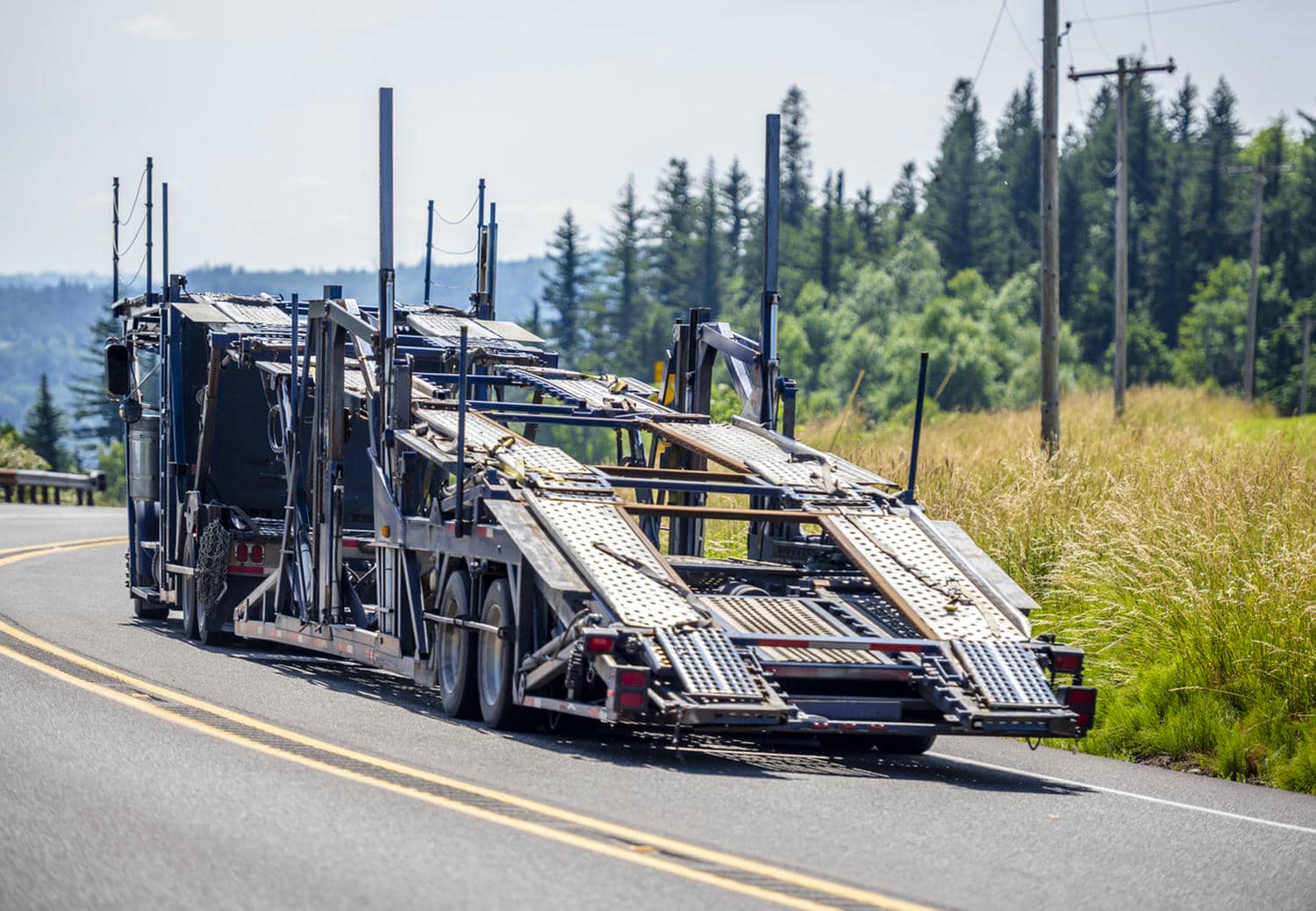
There is a wrinkle worth knowing: dense city centers can be expensive in a different way. Manhattan, downtown San Francisco and similar areas have nowhere legal for a 75 foot truck to stop, so the practical answer is a meeting point outside the core rather than a higher rate.
Direction Matters as Much as Distance
This is the factor most people never consider, and on some lanes it is the largest single influence on price.
Freight does not flow evenly. When far more vehicles move one way than the other, carriers fill easily in the busy direction and struggle in the quiet one, and rates diverge accordingly. The same route can differ substantially depending on which way you are going in a given month.
The clearest example is the snowbird flow. Southbound to Florida and Arizona in October and November is the expensive direction; northbound in the same weeks is cheap because trucks would otherwise return partly empty. In March and April it reverses completely.
When your dates can move, going against the seasonal flow is the single largest saving on a snowbird lane.
Access at the Address Itself
The last hundred yards can change a quote more than a hundred miles.
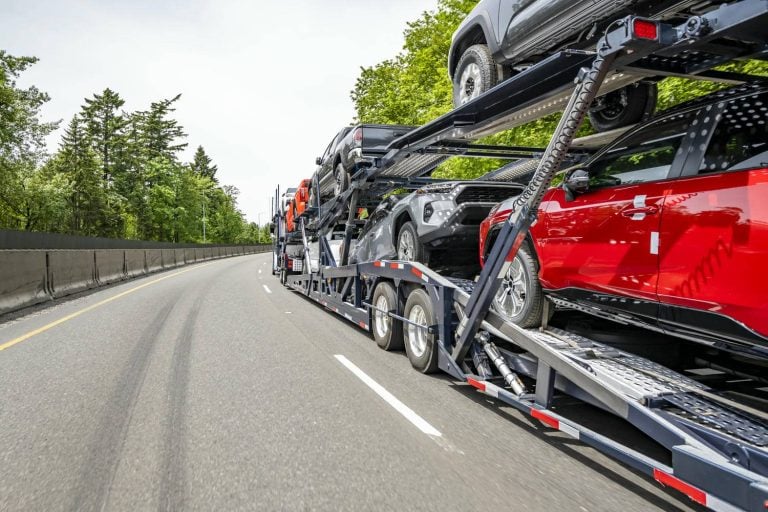
A loaded car hauler is around 75 feet long and 13 feet 6 inches tall. Narrow residential streets, cul-de-sacs with no turning room, low branches, weight-posted bridges, gated communities and condominium complexes are all places a full size truck cannot go or is not permitted to stop.
None of that makes the move impossible. It means the handover happens at a large lot nearby, which is a normal arrangement and costs nothing extra if it is agreed at booking. What does cost money is a driver arriving to find they cannot reach you, because that is a wasted trip somebody pays for.
Describe your access honestly when you quote. It is the cheapest accuracy available to you.
Terminals and Where They Help
If your address is the expensive part of your quote, a terminal is worth pricing as an alternative.
A terminal is a yard where vehicles are dropped and collected. Because it sits on a route carriers already run, and because they can consolidate several vehicles there, terminal to terminal is frequently cheaper than door to door for a rural address. You drive to the yard, or somebody does it for you, and the same in reverse.
The trade is convenience and time. You make two extra trips, and storage charges start accruing if you cannot collect promptly, which erodes the saving quickly. Ask what the free period is before you commit.
Terminals are also not everywhere. They cluster around major metros and freight hubs, which means the customers who would benefit most, those in genuinely remote areas, often have the furthest to drive to reach one. For most people door to door with an agreed meeting point is the better answer, and it costs nothing extra.
What Geography Does Not Change
Some things people attribute to location are actually about the vehicle or the equipment.

Size and weight are the vehicle’s, not the region’s: a full size truck takes more deck space and weight allowance than a sedan on every lane. Whether it runs is the vehicle’s too, and an inoperable car needs a winch and an equipped carrier wherever it is. Open or enclosed is your choice, and the premium of about a third applies everywhere.
State-level differences in fuel tax and permitting exist, but for an ordinary car on a standard trailer they are absorbed into the lane rate rather than itemized to you. They matter for oversize freight, not for a sedan.
How to Use Any of This
Three things are within your control and each is worth real money.
Quote from a corridor address if you can. If your home is well off the interstate, ask what a pickup at a large lot near the nearest major exit would cost; the difference is sometimes substantial and the drive is twenty minutes.
Give a range of pickup days rather than one. It lets a carrier fit you into a route already forming instead of building one around you.
And move against the seasonal flow where you can. Our guide to what affects the cost of shipping a car covers the non-geographic factors in more detail.
Common Questions
Why does a shorter move sometimes cost more? Because price follows corridors, not miles. A short trip that requires a long detour off the interstate can cost more than a longer one along it.
Are cities cheaper than rural areas? Consistently, yes. Volume lets carriers fill a trailer locally. Dense city centers are the exception, and usually need a meeting point rather than a higher rate.
Does direction really change the price? On seasonal lanes, substantially. Southbound to Florida in November and northbound in April are the expensive directions.
Can I lower the cost by meeting the truck? Often yes, if you are well off a major route. Ask what a pickup near the nearest interstate exit would cost.
Do state fees show up on my quote? Not as line items for an ordinary car. They are absorbed into the lane rate and matter mainly for oversize freight.
Get a Quote
Call Ship A Car, Inc. at (866) 821-4555 with both zip codes, your date range and an honest description of the access at each end, or request an estimate for the move through the quote calculator.