Should You Rent or Buy an RV?
The rent-versus-buy question has a numerical answer and almost nobody calculates it, because the costs that decide it are the ones that do not appear on a purchase price. Storage, insurance, maintenance, depreciation and the transport bill when you relocate are what separate people who enjoy owning an RV from people who sell one at a loss two years later.

Start With How Often You Will Use It
This is the number that decides it, and honesty here matters more than any other input.
Rental rates vary widely by class and season, but the arithmetic is straightforward: multiply a realistic weekly rate by the number of weeks you will genuinely travel in a year, and compare that against the full annual cost of ownership rather than against the purchase price.
The common failure is optimism. People buy planning six trips a year and take two. An RV used twice a year is an extremely expensive way to have two holidays, because the fixed costs run whether you use it or not.
The rough rule most owners arrive at: below three or four weeks of use a year, renting almost always wins. Above eight or ten weeks, ownership starts making sense. Between those, it depends on the other factors below.
The Costs That Decide It
Storage. The one people forget entirely. Most residential streets and many homeowners associations prohibit parking an RV, and covered storage costs real money every month whether you travel or not. Find out what it costs where you live before you buy.
Depreciation. A new RV loses value quickly, and the steepest part is early. Buying used lets somebody else take that, which is why experienced owners so often recommend it.

Maintenance. An RV is a vehicle and a building. It has an engine or running gear, and it has a roof, seals, plumbing, appliances and a water system that all need attention. Roof and seal maintenance in particular is not optional: water ingress is what destroys these.
Insurance and registration, which run annually regardless of use.
Tires. RV tires almost always age out before they wear out. A set replaced on date rather than tread is a recurring cost that surprises people.
What Renting Actually Buys You
Beyond the obvious.
Flexibility of type. A couple wants a small van; a family with four children wants a Class A. Renting lets you match the vehicle to the trip rather than owning a compromise.
No storage problem, no winterizing, no maintenance, and somebody else absorbing depreciation.
And the ability to try before committing. Renting the class you think you want, twice, is the cheapest possible way to discover whether you actually enjoy it and which layout suits you. A great many people find the answer is a smaller vehicle than they imagined.
Against that, renting has real friction: availability in peak season, mileage limits, generator hour charges, and the fact that the vehicle is never set up the way you would set up your own.
Renting Out Your Own RV
Peer-to-peer rental platforms have changed this calculation for some owners, and it is worth understanding what they actually deliver.
The pitch is that your RV earns while you are not using it, offsetting storage and depreciation. For owners in high-demand locations with a well-maintained, popular unit, that can genuinely work and can turn a marginal ownership case into a positive one.
The realities are less tidy. Rental use puts wear on a vehicle far faster than personal use, and it is wear from people who do not own it. Cleaning and turnaround between bookings is real work. Insurance has to be the right kind, because a standard personal policy generally does not cover commercial rental use. And demand is seasonal in exactly the weeks you probably wanted the vehicle yourself.
The honest framing: treat it as a small business rather than passive income. If you are willing to run it as one, it improves the numbers. If you expected the platform to handle everything, it usually disappoints, and a poorly maintained rental unit depreciates faster than the rental income covers.
The Transport Question Nobody Plans For
Specific to ownership and genuinely expensive when it arrives.
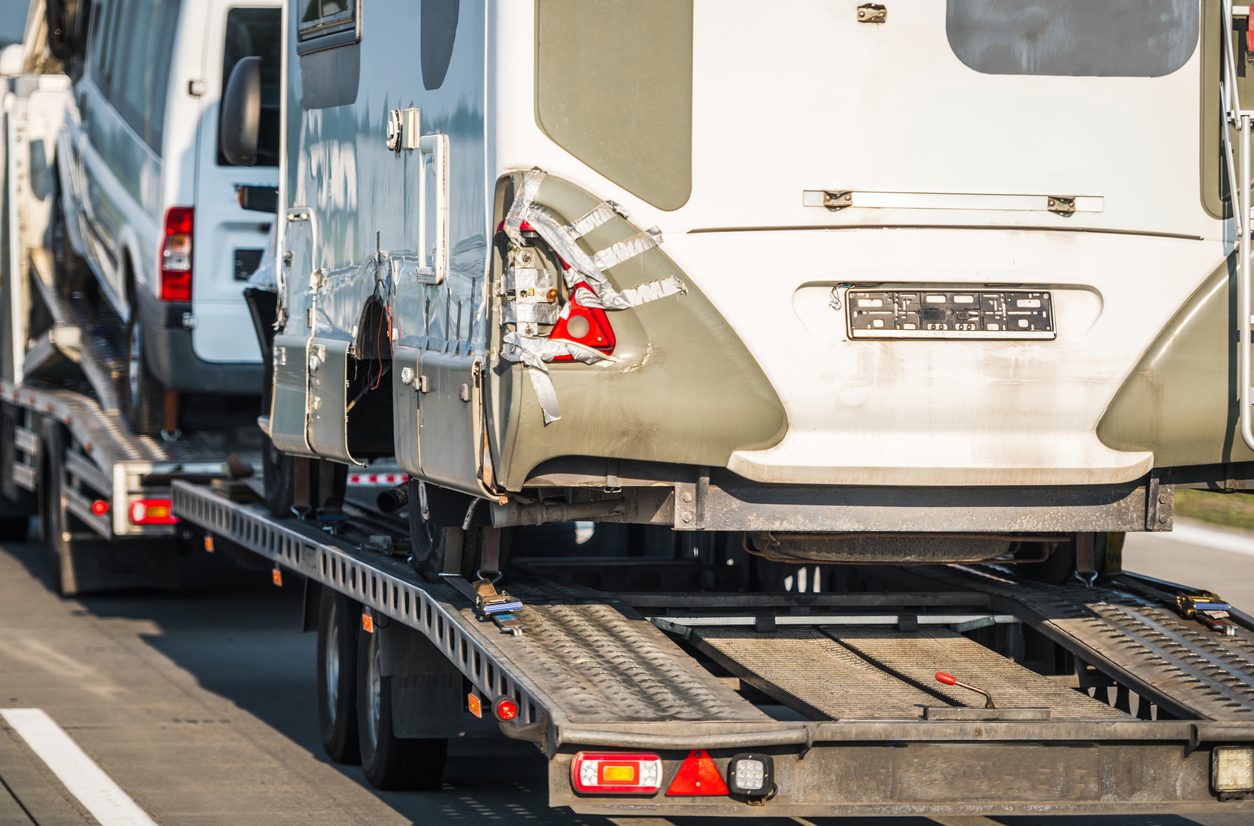
An owned RV eventually needs to be somewhere it cannot drive itself to: a relocation across the country, a purchase from a seller several states away, a unit that has broken down, or seasonal repositioning between a summer base and a winter one.
Driving it yourself works if it runs and you have the time. Where it does not, transport costs are meaningful, because many RVs exceed 8 feet 6 inches wide or 13 feet 6 inches tall on a trailer, which puts the move into permit territory with restricted movement hours.
Renters never encounter any of this. It is a real ownership cost and it belongs in the calculation, particularly if you buy from a distant seller because the price was good. Our guide to preparing an RV for transport covers what that involves.
Towable or Drivable Changes Everything
Worth settling separately, because it affects both cost and practicality.
A travel trailer or fifth wheel is cheaper to buy, has no engine to maintain, and leaves you with a normal vehicle at the destination. It requires a tow vehicle genuinely rated for it, which is where these plans usually fail: a mid size SUV rated to pull a boat is frequently not rated to pull a loaded fifth wheel.
A motorhome is simpler to travel in and more expensive to own, and you need a plan for local transport once parked, which is why so many owners tow a small car.
Common Questions
Where is the break-even? Roughly, below three or four weeks of use a year renting wins; above eight to ten weeks ownership starts to make sense.
What cost do people forget? Storage, followed by depreciation and roof and seal maintenance.
Should I buy new or used? Used avoids the steepest part of depreciation, which is why experienced owners usually recommend it.
Do I need a special tow vehicle? For a trailer or fifth wheel, almost certainly. Check the rating against the loaded weight, not the dry weight.
What if I buy one several states away? Budget for transport. Many RVs need a permitted move, which is a real cost renters never see.
Get a Quote
Call Ship A Car, Inc. at (866) 452-3657 for heavy haul and specialized freight with the measured height, width, length and weight and whether the unit runs, or request a quote through the specialized transport calculator.