
Intermodal vs OTR Freight Shipping
The choice between intermodal and over the road comes down to a single question: is your freight more sensitive to cost or to time? Intermodal puts the container on a train for the long middle portion of the journey and uses trucks only at each end. Over the road keeps it on one truck the whole way. Intermodal is usually cheaper on a long lane and almost always slower and less precise. Everything else is detail.

What Each One Actually Is
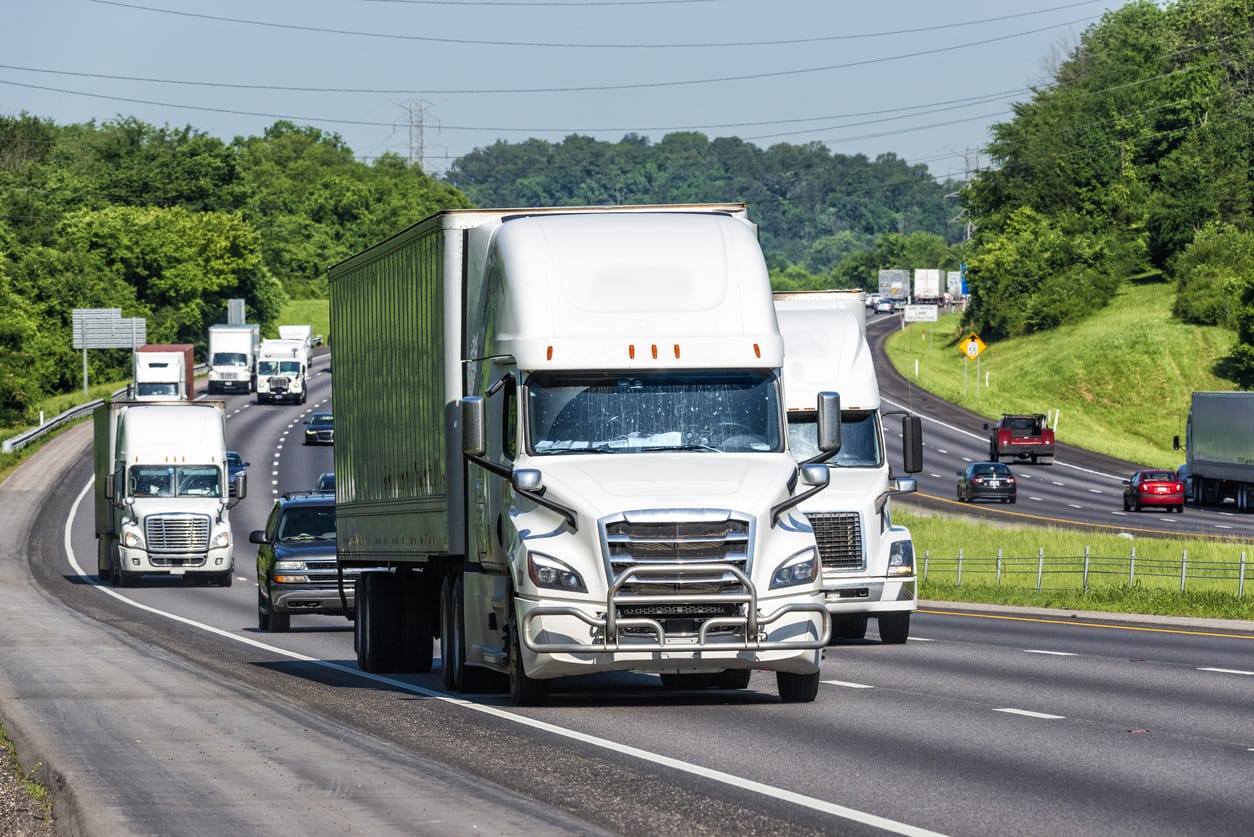
Over the road, usually shortened to OTR, is the arrangement most people picture. A tractor and trailer collect your freight and deliver it, and the same trailer carries it the whole distance. One carrier, one piece of equipment, one continuous move.
Intermodal splits the journey into three legs. A truck collects the container and takes it to a rail ramp, which is the drayage leg. The container travels by train for the long middle portion. A second truck collects it from the destination ramp and delivers it. The freight itself is never unloaded, which is the whole point: the container is the unit that moves, not the goods inside it.
That structure explains both the savings and the friction. Rail is dramatically more fuel efficient over distance, and every additional handoff is a place where time gets added.
Distance Decides More Than Anything
There is a rough threshold in this decision and it is worth knowing.
Below roughly 500 miles, intermodal rarely makes sense. The two drayage legs and the ramp handling consume most of the distance, and a truck simply drives it faster and often for less.
Past about 700 miles the arithmetic reverses. The rail portion becomes long enough that its efficiency dominates, and the fixed cost of the drayage at each end is spread across a much longer haul. On a genuinely long lane, coast to coast for instance, intermodal is frequently substantially cheaper than an equivalent truckload.
Between those figures it depends on the specific lane, the ramp locations and how competitive truck capacity is that week.

Transit Time and Predictability
Intermodal is slower, and more importantly it is less precise, which is often the bigger issue.
A truckload moves at highway speed subject only to hours of service rules, and a driver can generally tell you within a few hours when they will arrive. Intermodal adds ramp cutoff times, the train schedule itself, potential dwell at the origin and destination ramps, and the availability of a drayage carrier at each end.
The practical result is that intermodal typically adds one to three days over a comparable truckload on a long lane, and the arrival window is wider. If your receiver has a tight appointment or a production line waiting, that variability costs more than the freight savings are worth.
Where the Ramps Are
This is the factor people underestimate, and it can invalidate the whole comparison.
Intermodal only works well when both ends are reasonably close to a rail ramp. Drayage is priced by the mile and by the hour, and a long drayage leg erodes the rail savings quickly. Freight originating 150 miles from the nearest ramp and delivering 120 miles from another one is paying for two substantial truck moves before the train has done anything.
Major metropolitan areas are generally well served. Rural origins and destinations frequently are not, and for those OTR is often the only sensible answer regardless of distance.
What the Freight Itself Can Take
Rail handling is rougher than road handling, and packaging has to account for it.
Containers are lifted by crane on and off railcars, and trains produce impacts during coupling that a truck never generates. Freight that is well palletized, properly blocked and braced, and packaged for handling travels intermodal perfectly well. Freight that is marginally packaged and survives a truck ride will not necessarily survive a rail ride.
High value, fragile, or unusually shaped freight generally belongs on a truck, where it is handled once at each end and stays with one driver. Temperature controlled freight can move intermodal but the equipment and the monitoring need to be right.
Capacity and Cost Behavior
The two modes behave differently when the market tightens, which is a strategic point rather than a per shipment one.
Truckload pricing is volatile. When capacity is short, rates rise quickly and finding a truck at any price becomes the problem. Intermodal capacity is comparatively stable, because rail capacity does not fluctuate the way a fragmented trucking market does.
Shippers with regular volume frequently split the difference deliberately: intermodal for the predictable, long haul, cost sensitive freight, and truckload for the time sensitive and the awkward. That mix is more resilient than committing entirely to either.
What About Vehicles
Vehicles are worth mentioning because they follow this same logic in a specific way.
New vehicles moving from plants and ports to distribution centers travel by rail in enormous numbers, in purpose built multi level autoracks. It is the cheapest way to move a large volume of identical vehicles over a long distance, and it is why the industry uses it.
An individual vehicle is a different case. There is no practical way for one car to join that network, so a private vehicle moves on a car hauler, which is an over the road move. If you are shipping your own vehicle, the intermodal question does not really arise; the choice is open or enclosed transport instead. Our guide to heavy equipment transportation covers the equivalent question for machinery.
Choosing Between Them
Choose intermodal when the lane is long, both ends are near ramps, the freight is well packaged and durable, and a day or two of variability costs you nothing.
Choose over the road when the lane is short, the schedule is tight, either end is far from a ramp, the freight is fragile or high value, or the receiver has a firm appointment.
When it is genuinely close, price both. The gap varies by lane and by week, and a comparison takes one conversation.
Common Questions
Is intermodal always cheaper? No. It is usually cheaper past roughly 700 miles with both ends near ramps. On short lanes or with long drayage it can cost more.
How much slower is it? Typically one to three days on a long lane, with a wider arrival window because of ramp cutoffs and dwell.
What is drayage? The short truck moves at each end, between your dock and the rail ramp. It is priced separately and it is what makes or breaks the comparison.
Is rail rougher on freight? Yes. Containers are craned and trains produce coupling impacts, so packaging and bracing need to be sound.
Can I ship my car intermodal? Not practically as an individual. New vehicles move by rail in autoracks in bulk, but a single car ships on an over the road car hauler.
Get a Quote
Call Ship A Car, Inc. at (866) 452-3657 for freight with both zip codes, the commodity, the weight and your delivery window, and we will price the modes against each other, or use the specialized transport calculator.