Shipping a Car from New York to Phoenix
New York to Phoenix is around 2,400 miles, and it is one of the most heavily served corridors in the country. That works in your favor on price. What actually decides how the move goes is not the distance but the two ends: getting a 75 foot truck to your car in the New York area, and timing the trip against the seasonal traffic that runs to Arizona every winter.
Here is what to expect, what it depends on, and what to do before you book.

The Route and the Timeline
Most carriers run west across Pennsylvania and pick up Interstate 70 or Interstate 44 through the middle of the country, then drop onto Interstate 40 across New Mexico and Arizona before turning south for Phoenix. Some route further south through Texas depending on where else they are collecting and delivering.
Plan on roughly five to eight days in transit once the car is collected, on top of the pickup window. A driver is limited by federal hours of service rules to a set amount of driving per day, and the truck is also collecting and delivering other vehicles along the way, so the trip is not a straight run.
The pickup window matters as much as the transit time. Booking with a few days of flexibility at the origin end usually produces a faster overall move than insisting on a single date, because it lets the carrier fit your car into a load that is already heading that way.
Pickup in the New York Area Is the Hard Part
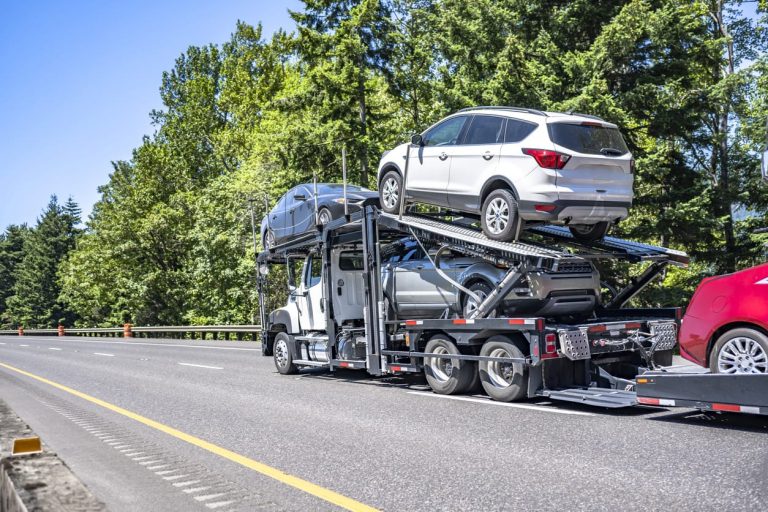
This is the detail that catches people out. A full size car hauler cannot operate on most streets in Manhattan, and in much of Brooklyn, Queens and the Bronx it is limited by narrow streets, parked cars, low branches, tight turns and no legal place to stop long enough to load.
The normal solution is a meeting point: a large parking lot, a shopping center, or somewhere on a wider road nearby where the truck can pull in safely. This is standard practice rather than a compromise, it costs nothing extra, and it is far better than a truck arriving on a street it cannot use.
If you are in New Jersey, Westchester, Long Island or the outer boroughs with driveway access, this is usually simpler. Either way, describe the pickup location honestly when you book: street width, overhead clearance, whether there is anywhere to stop. That single piece of information prevents most failed pickups.
Delivery in Phoenix Is Usually Easy
Phoenix is one of the more straightforward metropolitan areas in the country for car transport. The street grid is wide, the terrain is flat, and most of the residential development has the space a large truck needs.
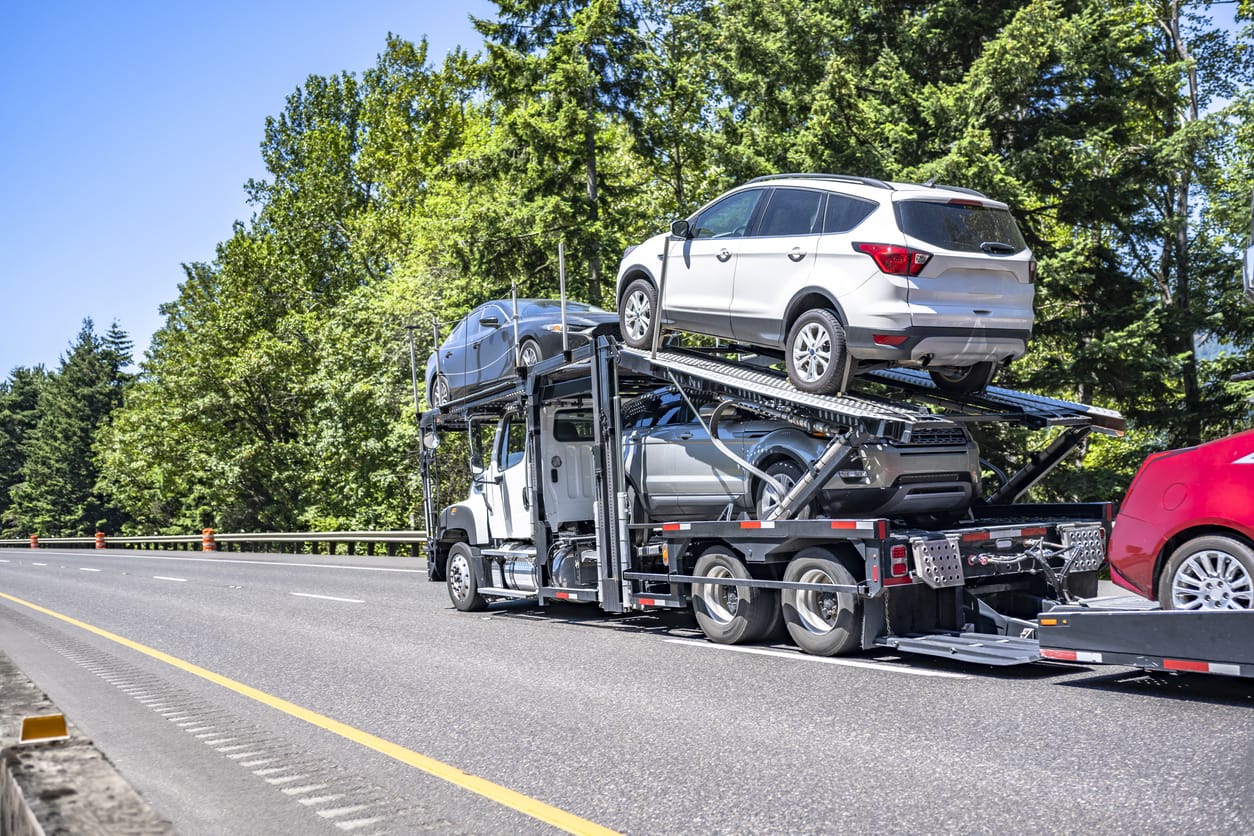
The two exceptions are gated communities, which frequently restrict commercial vehicle access and may require prior arrangement with the gate, and older central neighborhoods with narrower streets. Both are easily handled if flagged in advance.
Seasonality Moves the Price
Arizona is a major winter destination, and that creates a predictable pattern on this corridor.
From roughly October through December, demand heading south and west into Arizona rises as seasonal residents arrive, and rates on that direction firm up. From roughly March through May the flow reverses as people head north, and the northbound direction gets tighter while southbound softens.
If your dates are flexible, booking outside those peaks helps. If they are not, booking two to three weeks ahead during the peak matters more than it does the rest of the year, because carriers fill their loads earlier when demand is high.
Summer Heat and the Practical Details
Phoenix summers are genuinely extreme, and a few things follow from that.
Delivery at midday in July is unpleasant for everyone, and scheduling toward morning where possible is worth asking about. Check your tire pressures after arrival rather than assuming, since a large temperature change between origin and destination shifts them. And if the car will sit outside for a long period after delivery, a sunshade and attention to the battery are worth the small effort, because heat is harder on batteries than cold is.
None of this affects the transport itself. Cars travel this corridor year round without difficulty.
Open or Enclosed
Open transport is the standard choice and moves the large majority of vehicles on this route. It is exposed to weather and road debris in the same way that driving the car would be.
Enclosed is worth the premium for high value, collector, exotic or freshly restored vehicles, and for low clearance cars that need a lift gate rather than ramps. On a corridor this well served, the enclosed option is readily available, though it takes a little more lead time to arrange.
What to Do Before Pickup
Wash the car so existing marks are visible, then photograph every panel, the wheels, the roof and the odometer in daylight. Empty the interior completely, since personal items are not covered by cargo insurance. Leave about a quarter tank of fuel. Disable any toll transponder or remove it, so it does not register charges across several states.
At delivery, inspect before signing, in daylight if you can, and note anything on the bill of lading at the time. That document is what any claim rests on. What drives the price generally is covered in our page on what determines the cost of shipping a car.
Common Questions
How long does New York to Phoenix take? Around five to eight days in transit once collected, plus the pickup window.
Can the truck come to my street in the city? Often not. Meeting at a nearby lot with room to load is standard practice and costs nothing extra.
When is it cheapest? Outside the seasonal peaks, which run into Arizona in the fall and out of it in the spring.
Should I ship enclosed? Only for high value, collector or low clearance vehicles. Open transport is standard on this route.
Can I leave belongings in the car? No. Personal items are not covered by cargo insurance and add weight the carrier is not licensed to haul.
Get a Quote
Call Ship A Car, Inc. at (866) 821-4555 with both zip codes, your date range and a note on access at the New York end, or request an estimate for the move through the quote calculator.