Shipping a Car for the Season: A Snowbird’s Guide
The same trip costs meaningfully different amounts depending on which way you are going, and that is the single most useful thing to know about seasonal car shipping. In autumn every carrier heading south is full and every one heading north is running with empty slots. In spring it flips exactly. Same road, same distance, several hundred dollars of difference decided by nothing but the calendar and the direction of travel.
The Two Migrations
Seasonal demand is not gradual. It arrives in two compressed windows because everybody reaches the same decision at the same time.
From roughly October into December, vehicles move south toward Florida, Arizona, Texas and the Gulf. From April into May the whole thing reverses. Inside those windows the southbound leg in autumn and the northbound leg in spring are the contested directions, and that is where prices firm and pickup windows stretch.
The corollary is the useful part: the opposite direction is unusually cheap during each rush, because carriers would rather carry something back than run empty.
Book Before the Herd, Not With It
Three to four weeks of notice inside a rush window is realistic. One to two weeks is comfortable outside them.
The mistake is waiting until the weather turns, which is exactly when everyone else books. A week of extra notice costs nothing and is the cheapest speed available. If your dates are flexible by even a few days, say so, because a wider window matches far more routes than a single fixed day.
Gated and Age Restricted Communities
This is the snowbird specific problem, and it catches people every season.
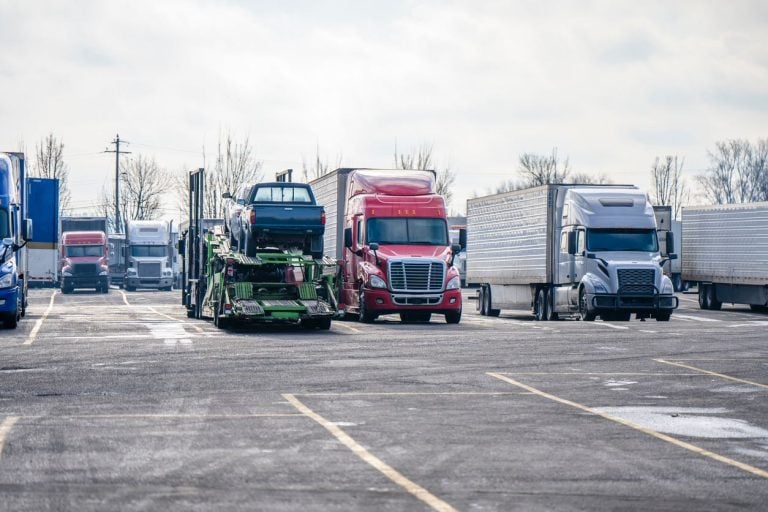
A car hauler is around 75 feet long. Most gated communities, and nearly all 55 and over developments, will not admit one, and many have low entry canopies, tight guardhouse turns or explicit rules against commercial vehicles. That is not a carrier failing; it is the community’s design.
The practical answer is a meeting point just outside, usually a large parking area within a few minutes. Arrange it when you book rather than at the gate, and if the community requires advance notice for a visitor, give it. Ten minutes of planning avoids a driver sitting at a barrier with your car on the deck.
Two Cars, or a Car and Something Else
Seasonal households often move more than one vehicle, and booking them together is materially cheaper per unit than two separate bookings.
The saving comes from the carrier’s side, since it is one dispatch, one route and two slots filled on the same trailer. It only holds if both vehicles are going roughly the same way at roughly the same time, which for a seasonal move they usually are.
Golf carts, motorcycles and small trailers can travel too, but they need declaring rather than mentioning on the day, because they change the equipment required.
The Car You Leave Behind
If a vehicle is staying put for the season rather than traveling, a little preparation prevents the classic return problem of a car that will not start.
Put the battery on a tender or disconnect it. Inflate the tires slightly above normal to reduce flat spotting. Fill the tank to limit condensation, and if the car sits outside, cover it. Nothing here is elaborate, and all of it is cheaper than a call out in April.
Insurance and Registration
Spending part of the year in another state does not usually change where a car is registered, but it can affect insurance, so it is worth a call to your insurer rather than an assumption.
For the transport itself, the carrier’s cargo insurance covers the vehicle in transit. Personal items left inside are almost never covered, which matters more on a seasonal move because people tend to fill the car for the trip. Take them out.
What a Seasonal Lane Costs
In our own book since 2023, the middle half of Florida orders ran $900 to $1,450. The figures below are planning estimates.
Open transport for a standard sedan runs roughly $1,000 to $1,400 on a 1,000 mile lane such as the Midwest to Florida, and $1,300 to $1,800 on a longer run like the Northeast to Arizona. A full size truck or SUV adds meaningfully to both.
Those are mid season figures. Inside a rush window the contested direction sits at the upper end or above it, and the opposite direction often sits below. That spread is the reason booking a few weeks early, or being flexible by a handful of days, is worth more here than on any ordinary lane.
Treat a quote far below the rest with suspicion in these windows especially. A rate no carrier will accept simply leaves the car where it is while the season fills up around it.
Common Questions
When should I book? Three to four weeks ahead inside the autumn or spring rush, one to two weeks outside them.
Why is one direction cheaper? Carriers price by demand. In autumn southbound is contested and northbound runs with empty slots; in spring it reverses.
Can the truck come into my community? Usually not. A 75 foot hauler cannot enter most gated or 55 and over developments, so plan a meeting point nearby.
Can I ship two vehicles together? Yes, and it is cheaper per vehicle than two separate bookings if they travel at the same time.
Can I leave belongings in the car? They are not covered by cargo insurance and add weight. Take them with you.
Get a Quote
Call Ship A Car, Inc. at (866) 821-4555 with both zip codes and your date range, or request an estimate for the lane through the quote calculator.