How to Ship a BMW X5
An X5 is a large, heavy, expensive SUV, and each of those three words affects the shipment differently. Large and heavy set the price. Expensive sets the question of which trailer, and on this vehicle that question is worth taking seriously in a way it is not on an ordinary crossover.
Size and Weight Set the Price
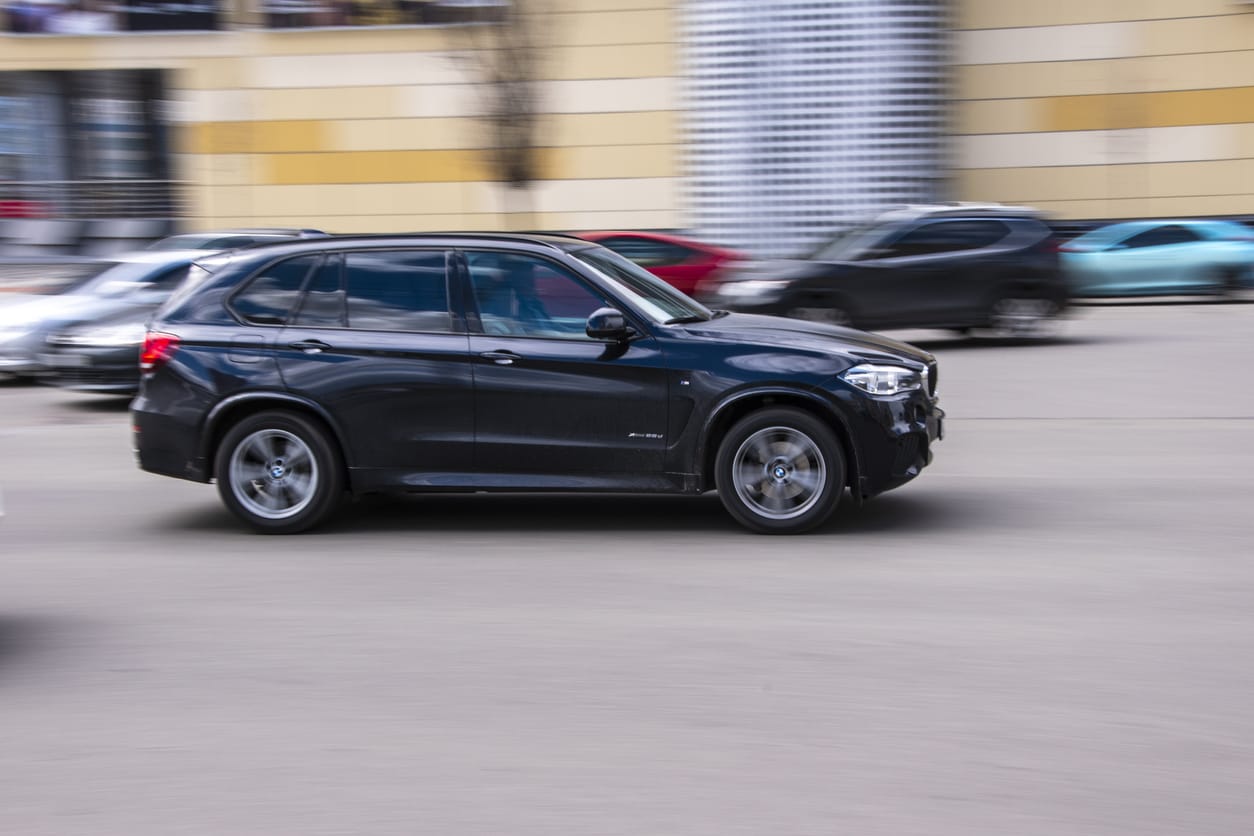
An X5 runs roughly 4,800 to 5,700 pounds depending on generation and engine, and the plug-in hybrid and the M variants sit at the top of that. It is around 16 feet long and a little over 5 feet 8 inches tall.
That weight is what matters. A carrier sells payload as well as deck space, and an X5 weighs meaningfully more than a mid size crossover, which is why it prices above one on the same lane.
Give the model year and the variant. An xDrive40i, an xDrive50e and an X5 M are three different weights, and quoting on the wrong one produces a number that changes later.
The Loading Details Worth Mentioning
Three things specific enough to tell the carrier when you book.
Air suspension. Many X5s have it, and it lowers the vehicle when parked or when set to certain modes. A vehicle that settles overnight on a trailer can end up sitting on something it was clear of at loading. Tell the driver it has air suspension, how to raise it, and make sure it is not left in a mode that lowers on shutdown.
Ground clearance on M and sport trims. An X5 M or a sport-suspension car with large wheels and low-profile tires sits lower than the standard vehicle, and the front apron can catch on a standard steel ramp. Say so and the driver will use extended ramps or a gentler deck position.
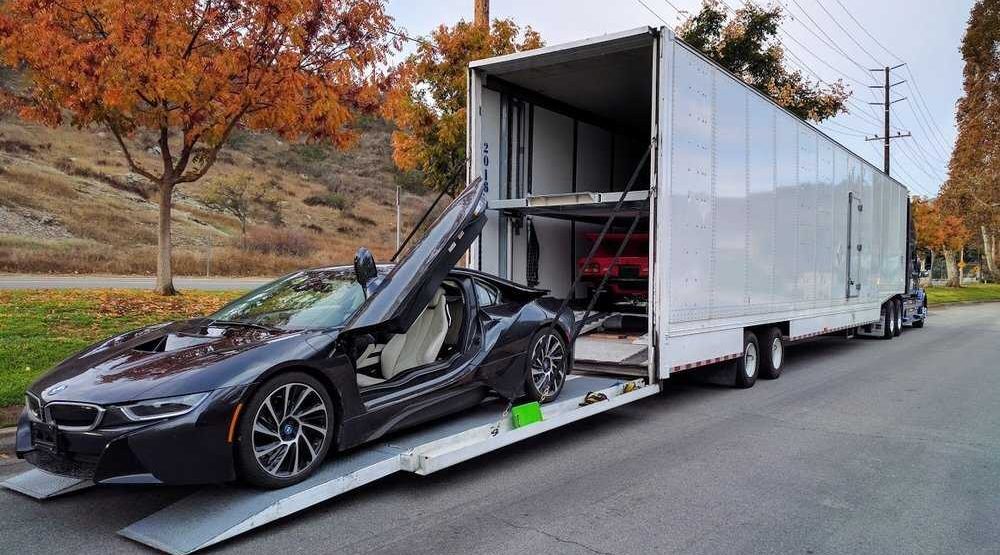
Large wheels. Twenty-one and twenty-two inch wheels with thin tires are easy to curb during loading and expensive to refinish. Photograph each one closely before pickup.
Open or Enclosed
This is the real decision on an X5 and the answer depends on the specific car rather than the badge.
Open transport carries the overwhelming majority of vehicles and it is entirely reasonable for an X5 with normal miles used as an everyday car. Road debris risk is real but modest, and the price advantage is significant.
Enclosed costs about a third more and earns it in specific cases: a nearly new car, fresh paintwork or a wrap, an X5 M where the wheels and paint are a large share of the value, or a long winter move where road salt is the concern.
The test worth applying is simple. Would refinishing one panel or one wheel represent a meaningful fraction of the car’s value? On a seven year old X5 with 90,000 miles, no. On a two year old M Competition, yes.
Enclosed carriers also generally carry higher cargo insurance limits, which is a second and separate reason on a more valuable example.
Preparing It
Wash it so existing marks are visible, then photograph every panel in daylight, including each wheel individually, the front apron, the lower bumpers and the rocker panels. On a car with large wheels those close shots are the most useful photographs you will take. Photograph the odometer.
Leave about a quarter tank of fuel. Empty the cabin and the trunk completely, since personal items are not covered by cargo insurance and they add weight.

Fold the mirrors, disable a motion sensitive alarm, and remove a toll transponder so you are not billed for the truck’s route. Note the tire pressures and any fluid leaks.
Hand over one key and keep the spare with you. A second key inside the vehicle can keep systems awake and drain the battery over several days on a trailer.
Buying One Remotely
A large share of X5 shipments are remote purchases rather than owner relocations, because a specific combination of trim, options and color is frequently several states away.
That creates a gap nobody fills by default. There is no independent record of the car’s condition before collection: the driver writes the report at pickup with no idea what the vehicle looked like an hour earlier, and the buyer sees it for the first time at delivery.
Ask the seller to photograph it properly before release, close up and in daylight, including each wheel individually and the front apron, and to send those rather than the listing photographs. On a used performance variant, ask specifically about curbing on the wheels and about any paint correction, because those are the two things that get quietly omitted.
Then make sure whoever receives the car understands they can decline to sign a clean bill of lading if something is wrong. A buyer who signs on trust and inspects afterward has given away the argument before it starts.
Insurance and the Handover
Ask what the carrier’s cargo limit is and whether it is per vehicle or per incident. A well-specified X5 can be worth more than a standard limit assumes, and per-incident limits are common, which matters on a full trailer.
Walk around the car with the driver at pickup rather than handing over the keys. The condition report on the bill of lading is written then and it is the document that settles a dispute.
At delivery, inspect before signing, in daylight if you possibly can, and compare against your photographs. Check each wheel, the front apron and the areas around the tie-down points first. Note anything unexpected on the paperwork while the driver is present, and if it arrives after dark or in rain, write that a full inspection was not possible. Our guide to what car shipping insurance actually covers works through the detail.
Common Questions
Why does an X5 cost more than a mid size SUV? Weight. Carriers sell payload as well as deck space, and an X5 is substantially heavier.
What should I tell the carrier? Model year and variant, whether it has air suspension and whether it lowers on shutdown, and whether it sits low.
Do I need enclosed transport? For a nearly new car, an M variant, fresh paintwork or a winter salt route, yes. For an everyday example, open is fine.
What gets damaged most often? Wheels, on a car with large diameter low-profile tires. Photograph each one closely before pickup.
Should I leave the spare key in the car? No. A second key inside can keep systems awake and drain the battery over several days.
Get a Quote
Call Ship A Car, Inc. at (866) 821-4555 with both zip codes, the model year and variant, and whether it has air suspension, or price the move with the instant calculator.