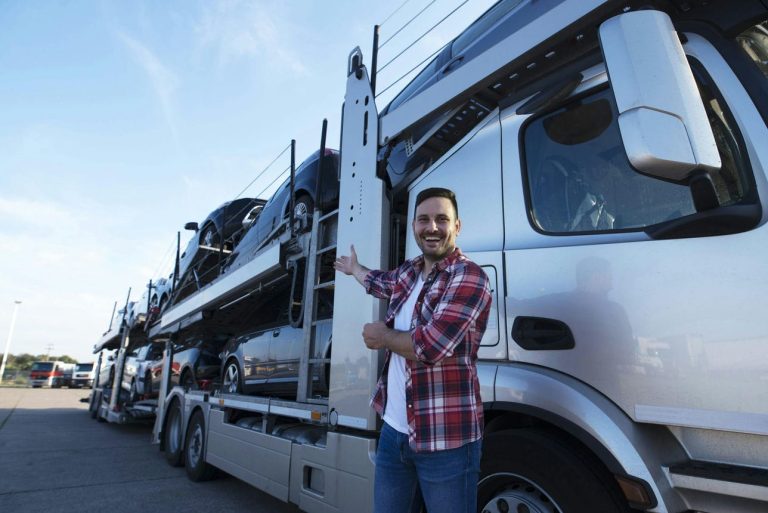
How Extreme Weather Affects Car Transport
Weather does not usually damage vehicles in transit; it delays them, and the delays have become harder to plan around. Storms that close an interstate, heat that changes when a driver can safely load, and flooding that makes a destination unreachable are the practical face of it. Understanding which ones actually move a delivery date is more useful than any forecast.

What Actually Stops a Truck
Four things, and only one of them is dramatic.
High wind. A car hauler is tall, flat sided and light for its size, which makes it one of the first vehicles restricted when wind advisories go up. Wyoming, the plains and mountain passes close to high profile vehicles regularly, and a driver will park rather than run into it.
Snow and ice. Interstates close with little notice, and a loaded hauler is among the first things to stop moving. Lake effect snow across the Great Lakes and sudden ice storms in the South are the two that catch schedules most often.
Flooding. This one changes the destination rather than the route. A carrier will not commit to delivering into an area it cannot reach, and after a major storm access can take days to restore.
Extreme heat. It rarely stops a truck outright, but it changes the working day. Steel ramps and decks become genuinely dangerous to work on, so drivers load and unload early or late, which shifts appointment times.
Hurricane Season Is Asymmetric
Worth its own section because it behaves unlike other weather.
Before a storm, everybody wants to move vehicles out of the same area at the same time, and capacity disappears within a day or two of a serious forecast. If you are shipping a car out ahead of a storm, the decision has to be made early rather than when the track is confirmed.
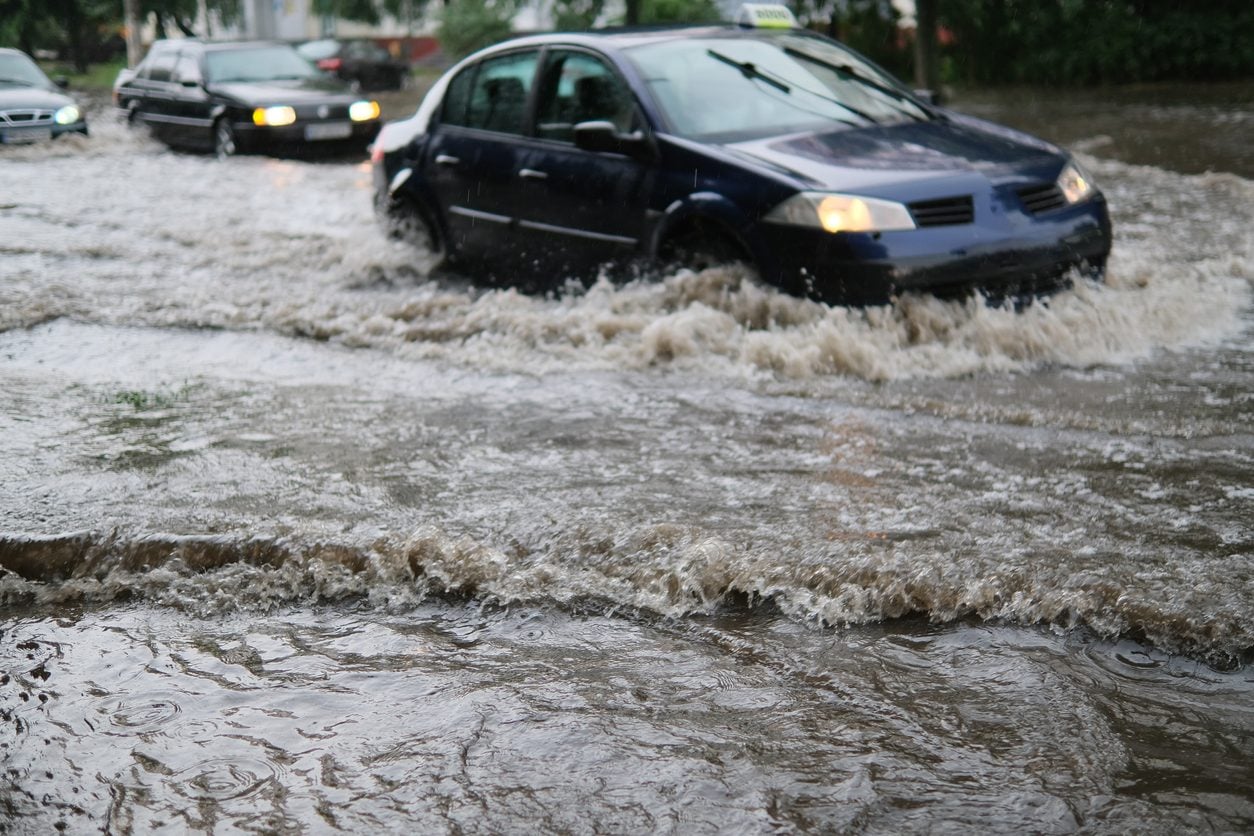
After a storm the problem reverses: roads are closed, fuel is short and the destination may be unreachable. That is a limitation of the situation rather than of the carrier.
One specific warning: never accept delivery of a vehicle that has stood in floodwater without a proper inspection, and do not assume a car that looks fine is fine. Water damage to electronics and drivetrains commonly appears weeks later.
What It Does to the Vehicle
Less than people fear, with two exceptions.
Open transport exposes a car to hail, which is the genuine weather risk to the vehicle itself and the one most likely to sit in an excluded or limited category on a cargo policy. On a hail-prone route in season, that is a real argument for enclosed.
Road salt is the other. A winter route across the northern tier means salt spray on the underside for the whole trip. On an ordinary car that is a wash away; on a collector vehicle it is a reason to pay for enclosed.
Sustained summer heat is hard on interiors rather than mechanicals, since the car is not running. Empty the cabin completely: aerosols, electronics, medication and anything pressurized do not survive an open deck crossing the Southwest.
Where the Weather Risk Sits on a Map
Some of this is predictable enough to route around, and knowing the pattern helps you judge whether an estimate is realistic.
The northern tier from the Rockies through the Great Lakes to New England is a winter problem from roughly November through March: snow, ice and the wind that closes Interstate 80 across Wyoming and Nebraska with little notice. Lake effect snow off Erie and Ontario is the most abrupt version.
The Gulf and southeastern Atlantic coasts carry hurricane exposure from June through November, with the practical squeeze in August and September.
The plains and the Midwest run a severe storm and tornado season from roughly March through June, and that is also the corridor where hail is most likely to find an open trailer.
The Southwest is a heat problem rather than a closure problem, most of the year in the low desert and severely from June through September, with monsoon flooding in arroyos as a secondary risk late in that window.
None of this means avoiding a region. It means that a July delivery estimate into Phoenix and a January one into Buffalo both deserve a wider window than the same lane in October.
How to Plan Around It
Four things that actually help.
Treat the delivery date as a range. On any route crossing weather in season, a day of variance is normal and is not a sign that anything has gone wrong. Plan so a late arrival is an inconvenience rather than a problem.
Give a range of pickup days. Flexibility lets a carrier schedule around a system rather than into it.
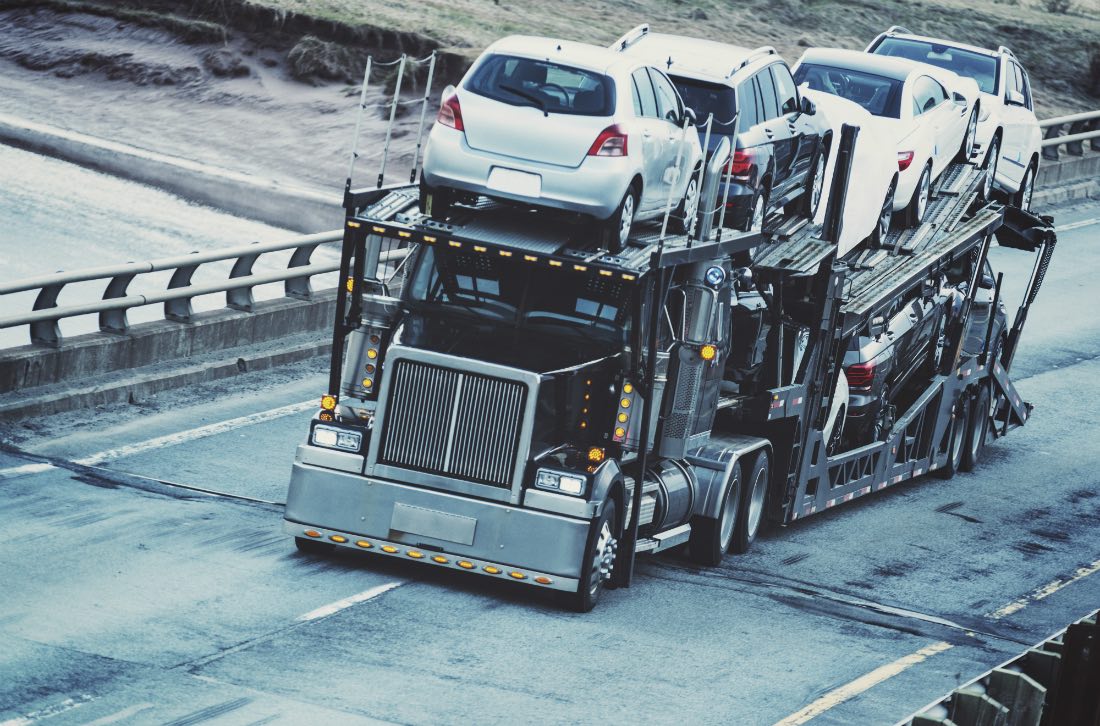
Book earlier in known seasons. Hurricane season on the Gulf and Atlantic coasts, winter across the northern tier, and spring storms across the plains are all predictable enough to plan around even though individual events are not.
Consider enclosed where the exposure is real. Hail season, a winter salt route, or a valuable vehicle are the cases where the 20 to 30 percent premium buys something specific.
Why a Delay Is the Right Outcome
Worth saying directly, because it is frustrating in the moment.
A driver who parks rather than running into a closed pass or a wind advisory is making the correct decision with your vehicle on the trailer. The alternative to a delayed delivery is not an on-time one; it is a driver taking a risk with 80,000 pounds and ten cars.
Judge a carrier on communication rather than on whether weather happened. Being told promptly that the load is held and where it is sitting is the service. Our guide to shipping in extreme weather covers the seasonal detail.
Common Questions
What most often delays a shipment? High wind and winter road closures. A car hauler is tall and light for its size, so it is restricted early.
Should I ship before a hurricane? Decide early. Capacity disappears within a day or two of a serious forecast, and afterward the area may be unreachable.
Does weather damage the car? Rarely, with two exceptions: hail on an open deck, and road salt on a winter northern route.
Does heat stop deliveries? Not usually, but it shifts loading to early or late in the day because steel ramps become dangerous.
What should I do about it? Treat the date as a range, give flexible pickup days, book earlier in known seasons, and consider enclosed where exposure is real.
Get a Quote
Call Ship A Car, Inc. at (866) 821-4555 with both zip codes and your date range, or price the move with the instant calculator.