Car Shipping for the Music and Entertainment Industry
Touring logistics run on fixed dates, and that single fact reshapes how vehicle transport has to be booked. A show does not move because a truck was late. When the delivery date is the load in date and there is no slack behind it, the ordinary advice about flexible pickup windows stops applying, and the job becomes about building enough margin into the schedule that a normal delay costs you nothing.

Build the Schedule Backward
Start from the date the vehicle has to be usable and work back, rather than forward from when it is ready to leave.
A realistic plan allows the transit time for the lane, plus a few days to a week to get assigned, plus a buffer of two to three days on top. On a cross country move that means booking a fortnight out and targeting arrival several days before you need it, not the morning of.
Delivery windows on ordinary auto transport are windows, not appointments. A driver held up by weather, a scale house or a delayed unload earlier in the route arrives a day late, and on a normal move that is a nuisance. Book so that a normal delay is absorbed rather than fatal.
Say What the Vehicle Actually Is
Industry vehicles are frequently not standard, and the modifications are what decide the trailer.
A lowered vehicle may not clear a standard ramp and needs a carrier with a low clearance setup or a liftgate. A sprinter or a converted van may be over height for an upper deck. A vehicle with a roof rack, a rear mounted spare, a wrap, or aftermarket bodywork changes the measurements the dispatcher is working from.
Give the measured height, the measured length, the weight and the ground clearance, plus whether it runs and drives. Guessing from a manufacturer specification is what produces a refused load on the day.
Enclosed Is Usually the Right Call Here
Enclosed transport costs roughly 20 to 30 percent more than open, and this is one of the categories where it genuinely earns it.
A wrapped or liveried vehicle is a piece of branding, and road grit and stone chips damage a wrap in a way that shows. Anything with an unusual finish, custom paintwork or low clearance belongs in an enclosed trailer for the same reason. Enclosed transport is also lower profile, which matters when a vehicle is identifiable.
An unmarked crew vehicle or a standard SUV does not need it, and paying for enclosed across a whole fleet when only two vehicles warrant it is a common way to spend money for nothing.
Venue Access Is the Constraint Nobody Plans For
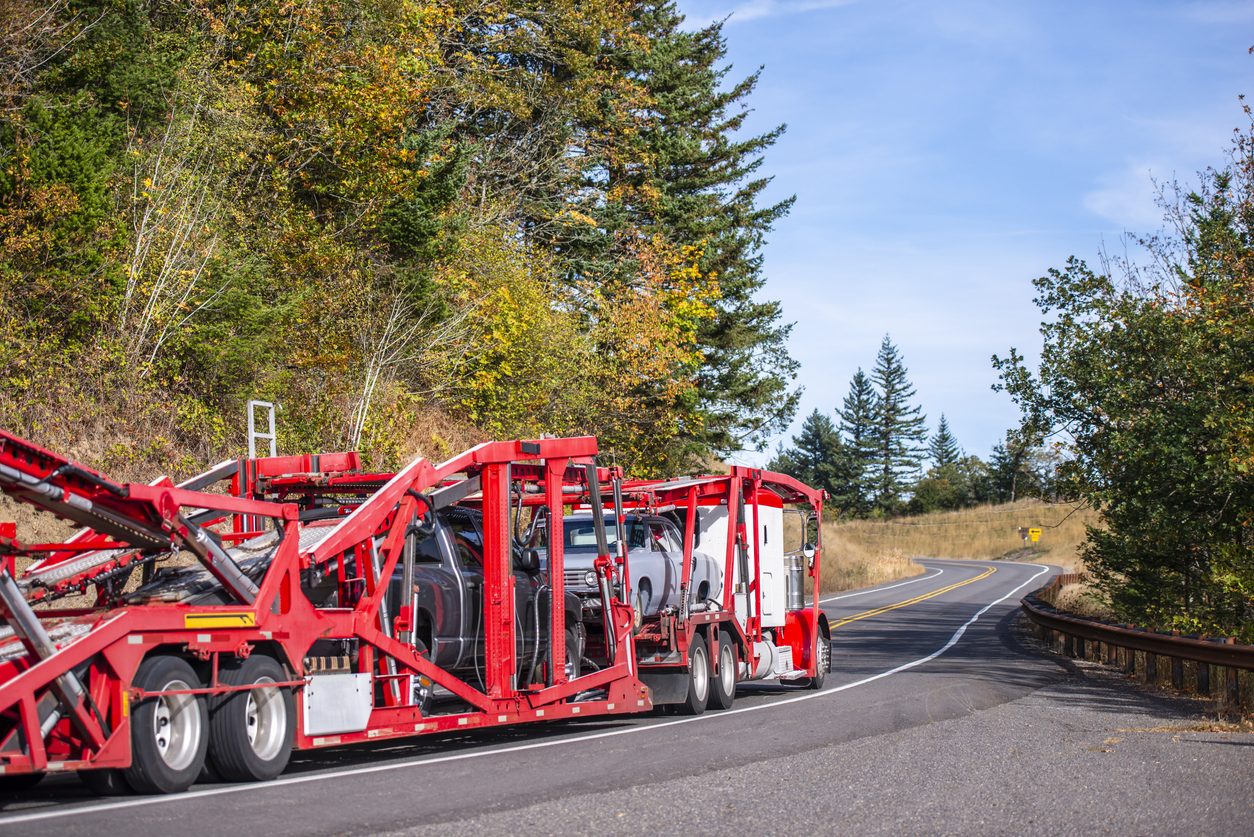
A car hauler is around 75 feet long, and arenas, theaters and festival sites are frequently worse for that than a residential street.
Loading docks are held for production trucks, back lots are staged tight, and urban venues often have no space at all for a transporter to stop and unload. Some sites restrict vehicle movement to specific hours around the show.
Plan a delivery point away from the venue, at a lot or a yard with room, and cover the last leg yourself. Working that out at the booking stage is straightforward; working it out with a driver parked on a city street outside a venue is not.
Moving Several Vehicles
Multiple vehicles between the same two points on the same dates ship more cheaply as one arrangement than as separate bookings.
Where the vehicles differ in type or requirement, they may still travel on different equipment, so tell us the whole set at once and let the routing be worked out around it. Splitting a fleet across separate bookings made on separate days is how you end up with vehicles arriving on four different dates.
Documentation, Because Claims Get Complicated
Photograph every vehicle in daylight from every angle before pickup, including wheels, lower bumpers and any wrap seams.
Personal items and equipment are not covered by cargo insurance, so instruments, gear and production equipment should not travel in the vehicle. Empty it and ship the equipment separately by a method that does cover it.
At delivery, inspect before signing, compare against the photographs, and note anything unexpected on the bill of lading while the driver is present.
Common Questions
Can you guarantee a delivery date? No auto transport can. Build a buffer of several days rather than booking to the day you need it.
Should I use enclosed transport? For wrapped, custom, low clearance or high value vehicles, yes. For standard crew vehicles it is usually unnecessary.
Can you deliver to a venue? Often not directly. A nearby lot with space is faster and avoids depending on dock access.
Can gear travel in the vehicle? It should not. Personal items and equipment are not covered by cargo insurance.
What do you need for a modified vehicle? Measured height, length, weight and ground clearance, and whether it runs and drives.
Get a Quote
Call Ship A Car, Inc. at (866) 821-4555 with your dates, the vehicle list and both locations, or price a single vehicle with the instant calculator.