Auto Shipping Near Me: What Local Actually Means
Searching for auto shipping near you is reasonable, but the answer is less local than it sounds, because almost nobody who ships a car uses a company based in their own town. What matters is not where the office is. It is whether trucks run your corridor, whether the company holds active federal authority, and whether a 75 foot truck can reach your address.
Why Proximity Is Not the Point
Interstate vehicle transport is a national network, not a set of local businesses.
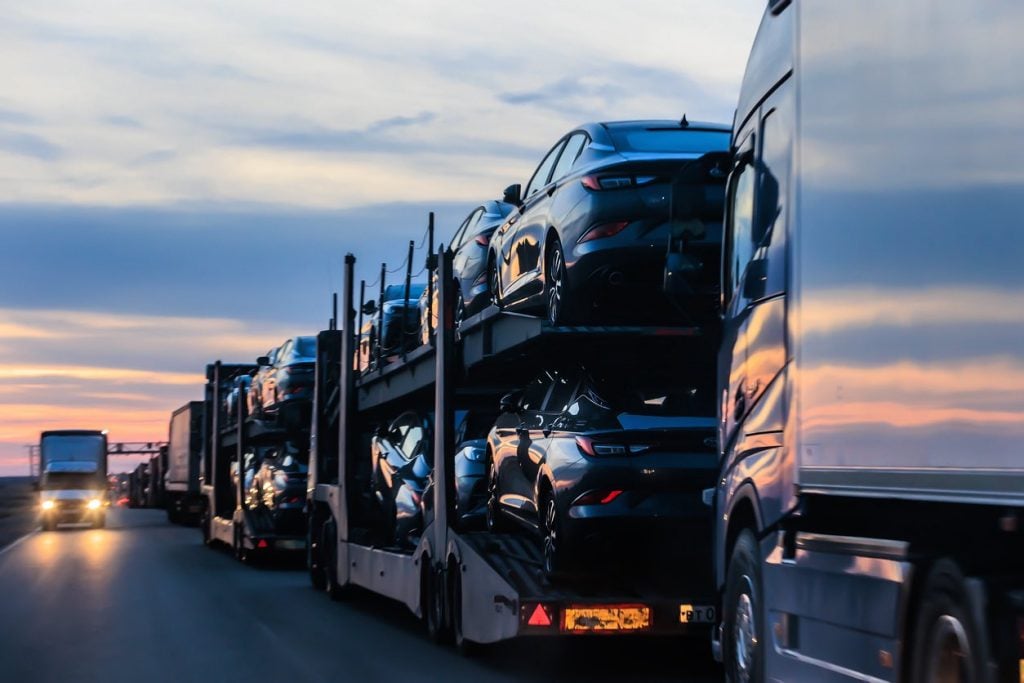
The company you book with arranges a carrier whose truck is already running your route. That truck might be based two states away and be passing through your area on a run that started somewhere else entirely. A broker three time zones from you can frequently get a truck to your door faster than a company down the road, because what counts is the route, not the address on the letterhead.
What a genuinely local operator can offer is short regional moves, where their own trucks work a defined area. For anything crossing state lines, network reach beats proximity every time.
What to Check Instead
Five minutes of public records tells you more than any amount of local reputation.
Every interstate carrier and broker must be registered with the Federal Motor Carrier Safety Administration. Carriers hold a USDOT number; brokers hold that plus an MC number and a surety bond. Ask for the number rather than the company name, because names change and numbers do not, then confirm the authority is active and the insurance on file matches what you were told.
On insurance, ask one specific question: what is the cargo policy’s per-vehicle limit. Liability cover is a separate policy that protects other people, not your car. For an ordinary vehicle the limit is never the constraint; for a valuable one it sometimes is.
What a Local Search Is Actually Useful For
None of this means proximity is worthless. It means it is useful for different things than people assume.
A short regional move, say under 300 miles, is genuinely local work. A carrier operating in your region with their own trucks can often do it quickly and cheaply, sometimes same week, because it fits between their longer runs.
Local knowledge of access is worth something too. An operator who works your area routinely already knows which streets take a full size truck, which gated communities admit one, and where the sensible meeting points are. That is real value, and it shows up as fewer surprises rather than a lower rate.
And if you would rather deal with somebody in your own time zone during a stressful move, that is a legitimate preference. Just judge them on the federal record and the quote rather than the postcode, because a local company with lapsed authority is worse than a distant one with a clean record.
Where the Truck Can Actually Stop
This is the part where your location genuinely matters, and it is worth being honest about at booking.
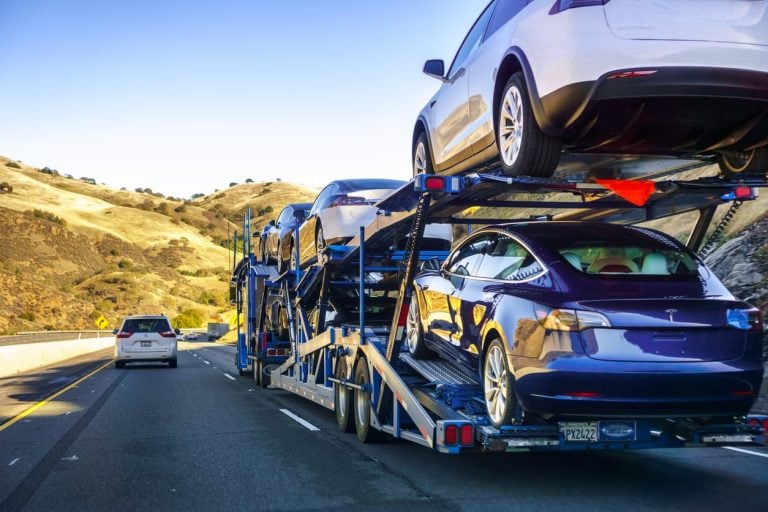
A loaded car hauler is around 75 feet long and 13 feet 6 inches tall. Narrow residential streets, cul-de-sacs with no turning room, low branches, gated communities, condominium complexes and dense city centers are all places a full size truck cannot go or is not permitted to stop.
The answer is a meeting point at a large lot nearby, usually a few minutes away. It is standard practice rather than a failure of service, and agreeing it in advance costs nothing. What does cost money is a driver arriving to find they cannot reach you.
Your distance from a major interstate matters too. A vehicle near a busy corridor is cheap to collect because a truck is passing anyway; one two hours off it requires a detour that somebody has to pay for.
Door to Door and Terminal to Terminal
Door to door means the driver gets as close to your address as the truck legally and safely can, with the meeting point caveat above. It is what most people choose and it is usually the simpler option.
Terminal to terminal means dropping the vehicle at a secure yard and collecting from another. It can be cheaper, particularly for a rural address, because the terminal sits on a route carriers already run. The trade is two extra trips and storage charges that start accruing if you cannot collect promptly, so ask what the free period is.
Open or Enclosed
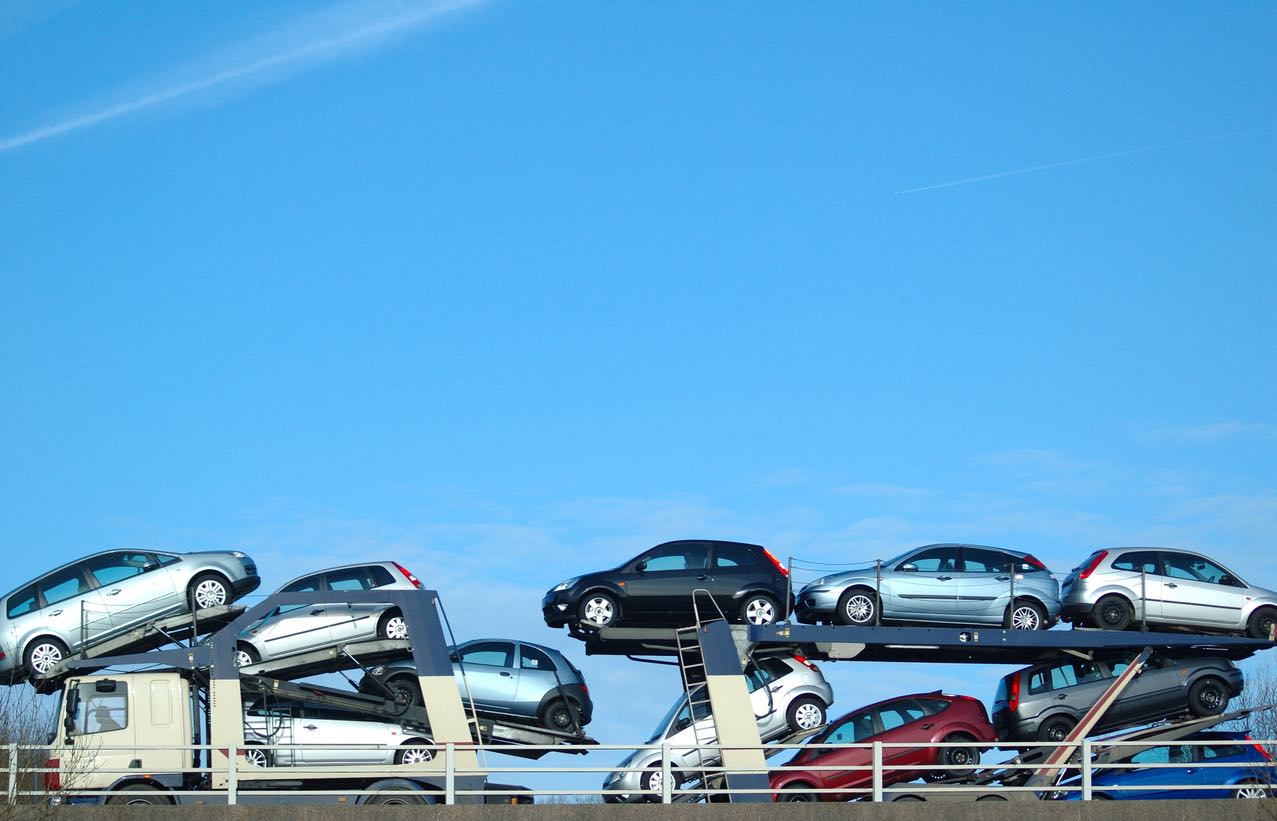
Open transport carries the overwhelming majority of vehicles and it is right for an ordinary car. Ten vehicles on a two level trailer is what keeps the price where it is.
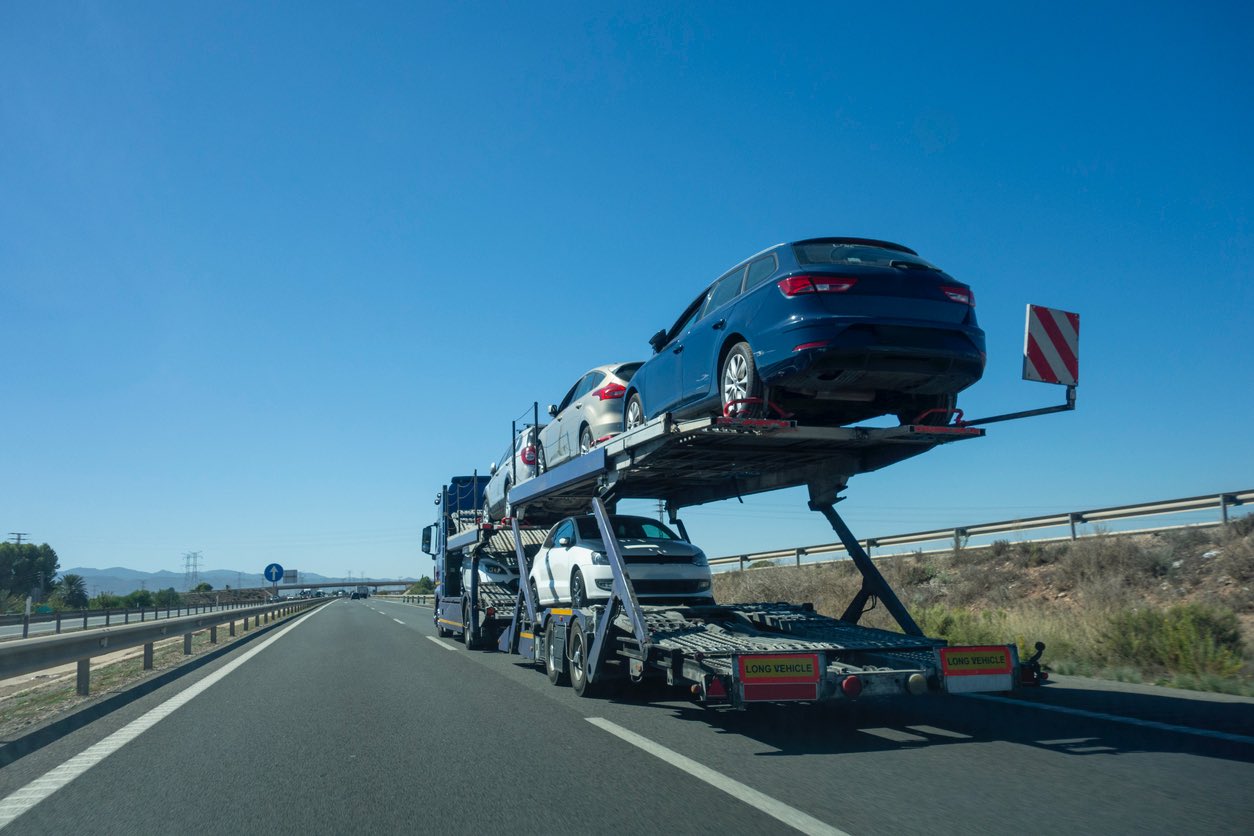
Enclosed costs about a third more and earns it on a collector vehicle, fresh paintwork or a wrap, a car low enough to need a lift gate rather than ramps, or a winter move where road salt is the concern.
Getting a Good Price Wherever You Are
Give a range of pickup days rather than a single date. It lets a carrier fit you into a route already forming rather than building one around you, and it usually costs less.
Book one to two weeks ahead in ordinary conditions, three to four in summer or around the seasonal snowbird peaks. And be wary of a quote well below every other one: carriers choose loads from a live digital board, and a below-market rate sits unaccepted while your dates slip and you have stopped shopping.
If you live well off a major route, ask what a pickup near the nearest interstate exit would cost. The difference is sometimes substantial and the drive is twenty minutes. Our first time car shipping guide walks through the whole process.
Common Questions
Should I use a company in my own town? Not necessarily. What matters is whether trucks run your corridor, and that is a national network rather than a local one.
How do I check a company is legitimate? Get the USDOT number, and the MC number for a broker, then confirm the authority is active and the insurance on file matches.
Will the truck come to my door? As close as it legally and safely can. Narrow streets, gated communities and city centers usually need a meeting point nearby.
Is terminal shipping cheaper? Sometimes, particularly for rural addresses. Factor in two extra trips and check when storage charges begin.
How far ahead should I book? One to two weeks normally, three to four in summer or the seasonal peaks, always with a range of pickup days.
Get a Quote
Call Ship A Car, Inc. at (866) 821-4555 with both zip codes, your date range and an honest description of the access at your address, or price the move with the instant calculator.