Shipping a Car by Sea
Almost nobody needs ocean shipping for a domestic move, and the people who search for it usually want one of four routes: Hawaii, Alaska, Puerto Rico or overseas. Everything within the continental United States travels by truck, because a car hauler is faster, cheaper and does not involve a port at either end. If your car is going from Ohio to Arizona, none of what follows applies. If water has to be crossed, it does.
RoRo and Container, and Why It Matters
There are two ways a car crosses water, and they behave differently.
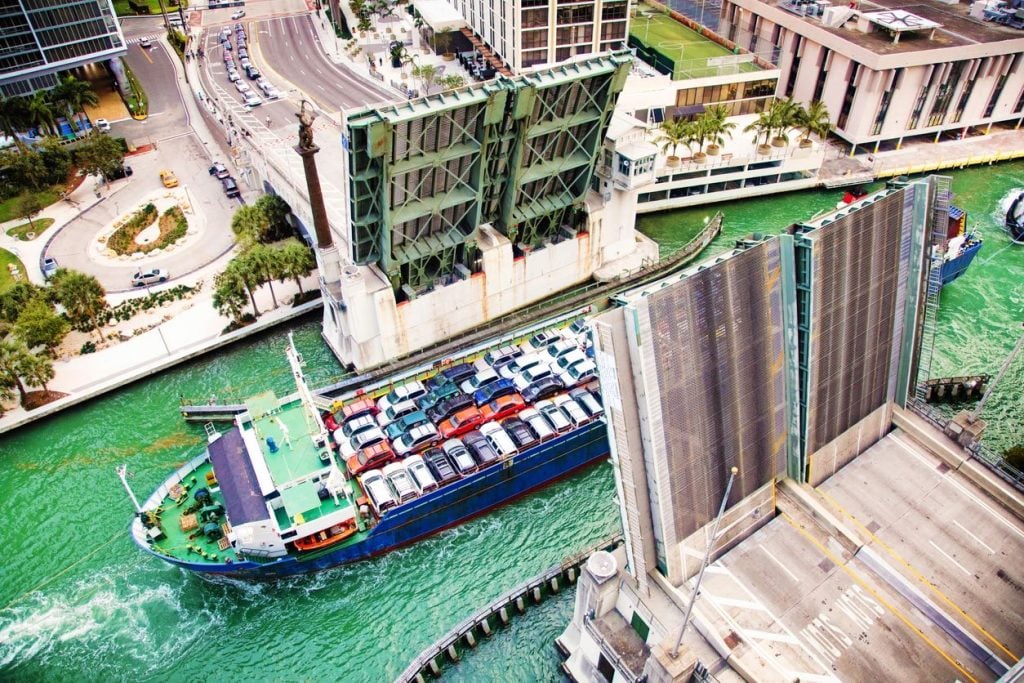
Roll on roll off is the common one. The vehicle is driven onto a purpose built vessel, secured to the deck, and driven off at the other end. It is cheaper, sails more frequently, and is what most people use. It also requires the car to run and drive, and it means the car is handled by port staff rather than sealed away.
Container shipping puts the vehicle inside a container, either alone or shared with other cargo. It costs more and sails less often, but it accepts non running vehicles, allows some personal effects on certain routes, and keeps the car sealed from loading to delivery. For a valuable or classic car, that is usually worth the difference.
A Modern Vessel’s Capacity
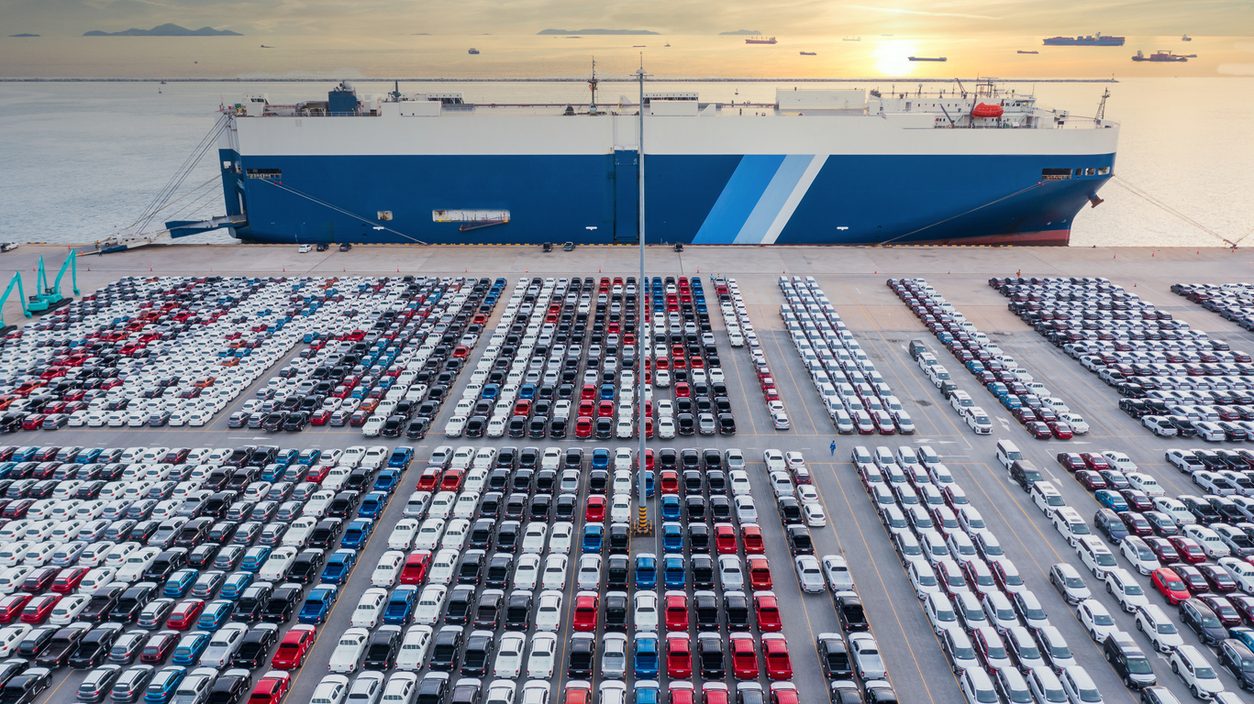
The question people ask most is how many cars a ship holds, and the answer is larger than most expect.
A large modern pure car and truck carrier holds in the region of 6,000 to 8,000 vehicles across a dozen or more decks, some of which lift to accommodate taller cargo. The largest vessels in service carry more. That capacity is why moving a car by sea is economical at all despite the distances involved.
It also explains the schedule. A vessel sails when it sails, on a fixed rotation, and a car that misses a sailing waits for the next one rather than leaving a day later.
The Land Legs Are the Part People Forget
An ocean move is almost always three moves: your address to the origin port, the sailing, and the destination port to your address.
The land legs are ordinary domestic auto transport, and they need booking around the sailing date rather than independently of it. Arriving at the port after the vessel has sailed means waiting for the next rotation and paying storage in the meantime. Arriving far too early means paying storage at the other end of the same problem.
Plan around the sailing and book the land legs to hit it. That is the single most useful thing you can do to keep an ocean move on schedule and on budget.
Preparation Is Stricter Than for a Truck
Ports and shipping lines enforce their own requirements, and a vehicle that does not meet them is refused at the gate.
Expect the car to need to be clean inside and out, essentially empty, and carrying no more than about a quarter tank of fuel. Alarms need disabling and a key has to be handed over. Personal belongings are generally not permitted on RoRo, though some container routes allow limited effects.
The paperwork matters as much as the car. You will need the original title, photographic identification, and, if there is a loan, the lienholder’s written authorization. That letter is routinely the slowest part of the process, so start it weeks ahead. International moves add customs documentation and, for the United States, an export filing that has to be lodged in advance of the sailing.
Hawaii, Alaska and Puerto Rico
These are domestic moves that happen to cross water, and they are the routes most of our customers actually need.
Each combines a mainland land leg with a sailing, most often RoRo, on a fixed schedule from a limited set of ports. Because the sailings are less frequent than a truck route, the schedule is set by the vessel rotation rather than by carrier availability, and booking early matters more than it does on the mainland.
Alaska has a road option as well, up the Alaska Highway through Canada, which is viable in summer and much less so in winter.
Common Questions
Do I need ocean shipping? Only for Hawaii, Alaska, Puerto Rico or overseas. Everything within the mainland goes by truck.
RoRo or container? RoRo is cheaper and more frequent but needs a running car. Container costs more, accepts non runners and keeps the car sealed.
How many cars does a carrier hold? A large modern vessel holds roughly 6,000 to 8,000 across a dozen or more decks.
Can I leave belongings in the car? Generally not on RoRo. Some container routes permit limited personal effects.
What paperwork do I need? Original title, photo identification, and the lienholder’s written authorization if there is a loan. Start that letter early.
Get a Quote
Call Ship A Car, Inc. at (866) 821-4555 with your destination and dates, or price the mainland leg with the instant calculator.