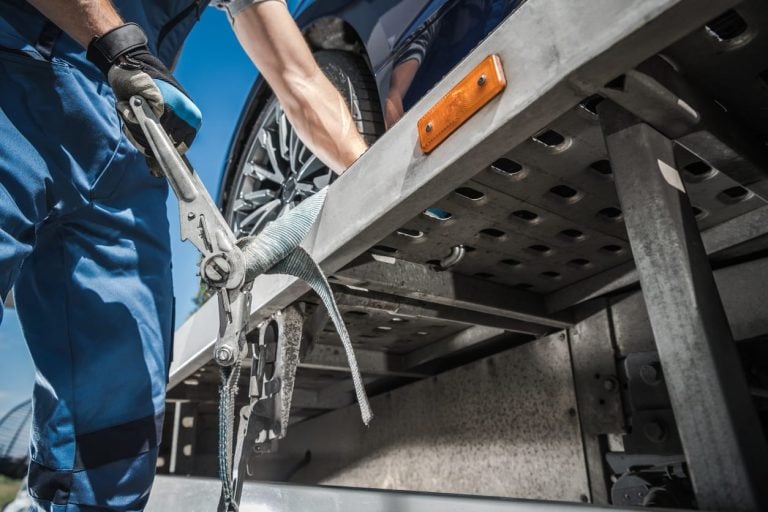
Auto Transport for Diplomats and Government Officials
Diplomatic and government vehicle moves fail for administrative reasons far more often than logistical ones. The truck part is ordinary. What is not ordinary is that the vehicle may be registered under a diplomatic plate, may be exempt from taxes it would otherwise owe, may be subject to a security protocol, and may be moving on a timetable set by a posting rather than by the owner. Get the paperwork sequence right and the rest is a normal shipment.
Establish the Registration Status First
This is the question that determines everything downstream, and it should be answered before anyone quotes.
Vehicles owned by accredited foreign mission personnel in the United States are typically registered through the State Department’s Office of Foreign Missions rather than through a state motor vehicle agency, and carry distinctive plates. That affects the documentation a carrier needs and the paperwork at delivery.
Government-owned vehicles, whether federal, state or municipal, are a different case again, usually moving under an agency’s own procurement and transport rules with their own required forms.
And a great many moves in this category involve a perfectly ordinary personally-owned vehicle belonging to someone who happens to work for a government. That is just a normal shipment, and it should be priced like one.
Say which of the three applies at the start. It is the single most useful thing you can tell a broker.
Domestic Moves Between Postings
Most of the volume here is domestic: a reassignment from Washington to a consulate, a state capital, or a regional office.
Logistically this is an ordinary door to door move. The complications that do arise are about timing and access.
Timing, because a posting date is frequently fixed and non-negotiable in a way that a household move is not. That removes the flexibility that normally saves money, so book earlier rather than expecting to negotiate later. Three to four weeks is sensible; more if the dates cannot move at all.

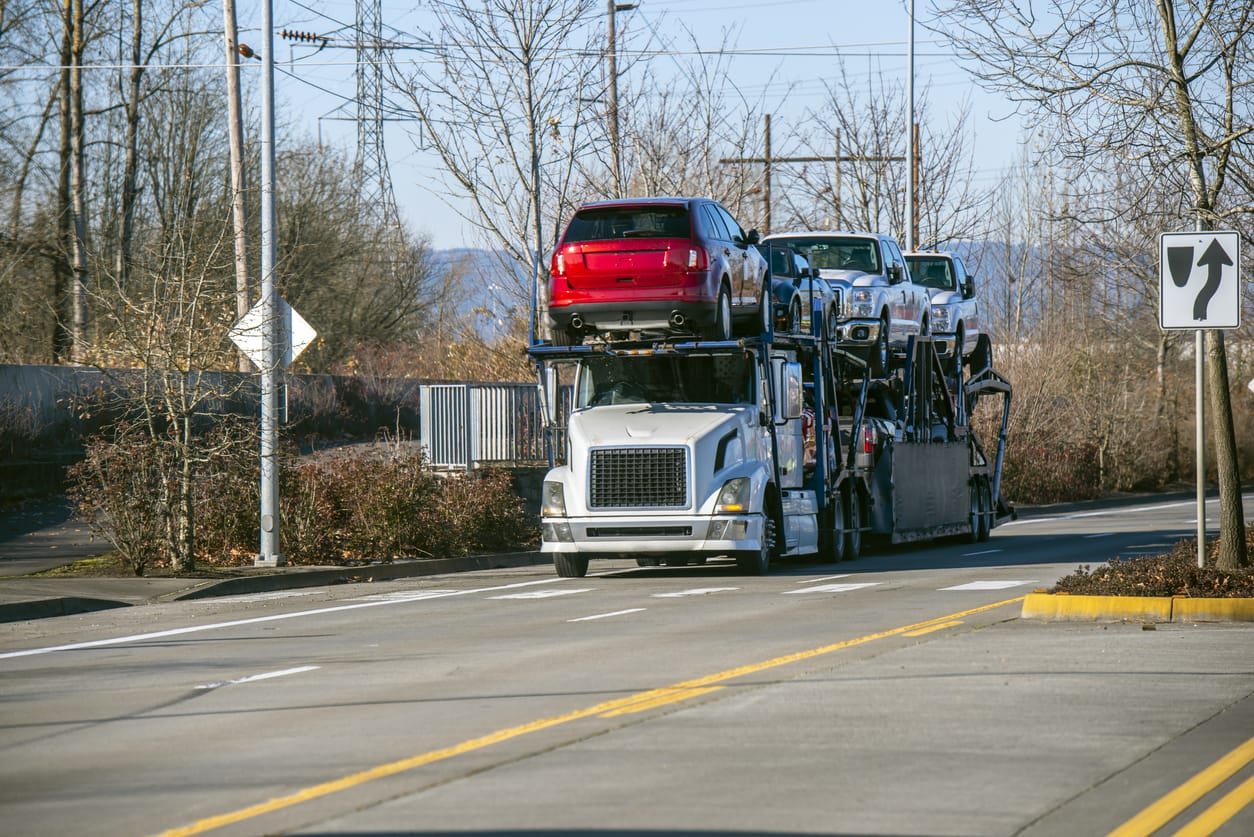
Access, because embassies, consulates, federal buildings and military installations frequently cannot take a 75 foot car hauler, and many will not admit one without advance clearance for both the vehicle and the driver. Establish that early. A meeting point at a large lot nearby is usually simpler than arranging site access, and it is a completely normal arrangement.
International Moves Are a Different Service
If the vehicle is leaving or entering the country, road transport is only one leg of the job.
An international move involves ocean freight or air freight, customs clearance at both ends, and compliance with the destination country’s import rules, which vary enormously and sometimes exclude vehicles outright on age or emissions grounds. Diplomatic status may exempt a vehicle from duties, but the exemption has to be documented in advance rather than claimed at the port.
The road legs, to the port at one end and from it at the other, are ordinary domestic transport. The rest is a customs and freight forwarding matter. Establish who is handling which leg so that nothing falls between two providers.
Security and Discretion
Some moves in this category carry a genuine security dimension, and it is worth being explicit about what transport can and cannot offer.
Enclosed transport is the practical answer to most of it. It keeps the vehicle out of sight for the whole journey, which matters if the vehicle is identifiable or the movement itself is sensitive. It costs about a third more and it is the reasonable default here rather than the exception.
What a standard carrier does not provide is a security detail, route secrecy, or any form of protective service. If the requirement goes beyond keeping a vehicle out of view, that is a specialist service and it needs to be arranged as one. Say so at the outset rather than assuming it is included.
Ordinary discretion, in the sense of not discussing a customer’s business, is a reasonable expectation of any professional carrier.
Armored and Modified Vehicles
Worth a specific note, because the numbers surprise people.

An armored sedan can weigh well over 8,000 pounds, roughly double a standard car of the same shape. That changes the deck position, the securement, and sometimes the trailer, and it means the carrier has to know before quoting rather than discovering it on arrival.
Run-flat tires, modified suspension and non-standard ground clearance all affect loading. Give the actual curb weight from documentation rather than the model’s published figure.
What to Have Ready
Proof of ownership and current registration, whichever authority issued it. Photo identification for whoever releases and whoever receives the vehicle. Written authorization if a third party is handling either end on your behalf, which is common in this category.
Insurance details, including confirmation that your own coverage remains in force during transit. And, for anything crossing a border, the customs documentation prepared in advance.
Then prepare the car as normal: photograph every panel in daylight, leave about a quarter tank of fuel, empty the cabin completely, and inspect against those photographs before signing anything at delivery. Our guide to what car shipping insurance actually covers explains the cargo policy.
Common Questions
Are diplomatic vehicles shipped differently? The transport is ordinary. The documentation is not, because registration is typically through the Office of Foreign Missions rather than a state agency.
Can the truck come to the embassy? Frequently not. Many sites cannot admit a 75 foot hauler without advance clearance. A nearby meeting point is usually simpler.
Is enclosed transport necessary? It is the reasonable default where the vehicle or the movement is sensitive, and it costs about a third more.
Do you provide security escorts? No. Standard transport keeps a vehicle out of view; protective services are a separate specialist arrangement.
What about an armored car? Give the actual curb weight in advance. Armoring can double the weight and changes the trailer and securement.
Get a Quote
Call Ship A Car, Inc. at (866) 821-4555 with both locations, the registration status of the vehicle and your date requirement, or price the move with the instant calculator.