
Shipping a Car from a Salvage Auction
The defining feature of a salvage purchase is that the car is already damaged, which turns the condition report from paperwork into the most important document of the transaction. On an ordinary shipment the report records a clean car so that any new mark stands out. On a salvage car it has to draw a line between damage that was there when you bought it and damage that happened on the truck, and that line is impossible to draw afterwards. Everything else, the winching, the storage clock, the release, follows familiar rules.
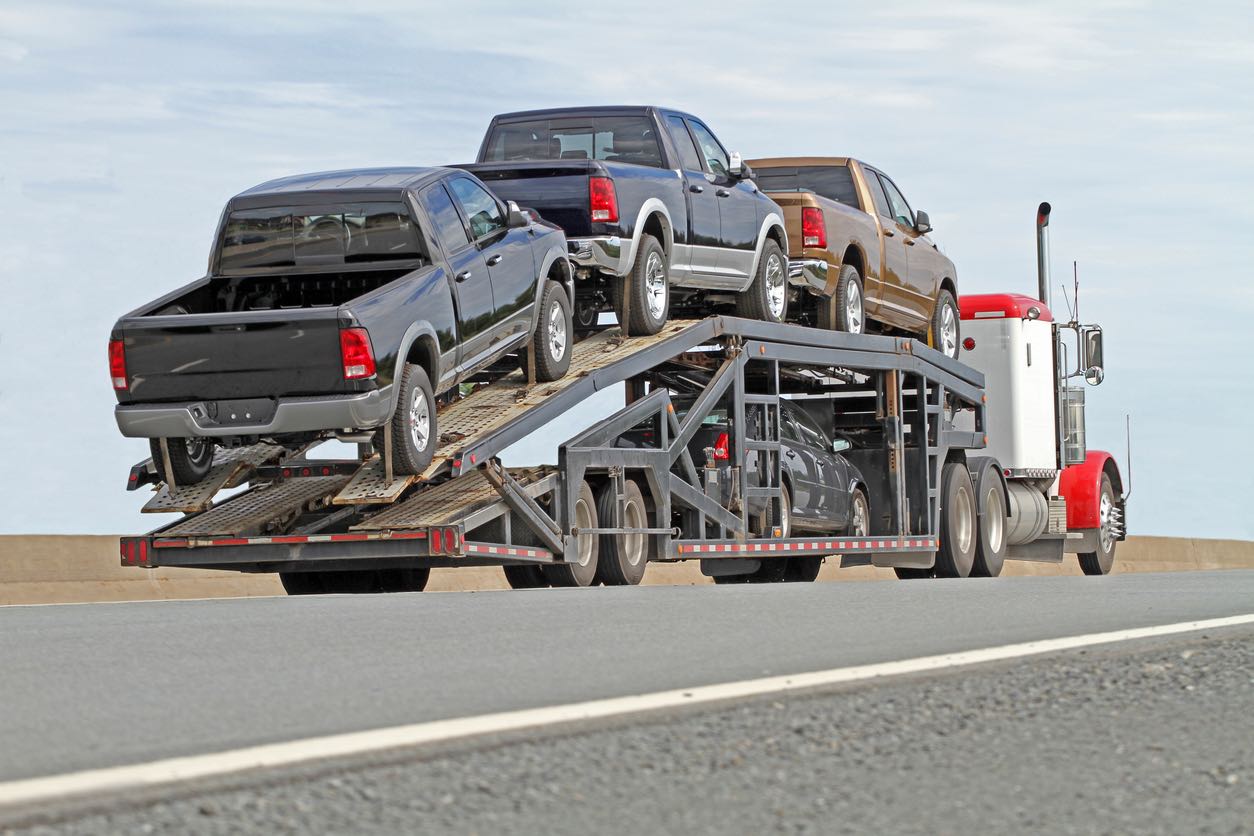
Document What You Bought Before It Moves
Start from the auction’s own photographs. Every major salvage auction publishes a detailed image set with the listing, and those images are timestamped evidence of the vehicle’s condition before you owned it. Save them rather than relying on the listing staying up.
Then insist the driver’s condition report is specific. “Front end damage” is useless on a car bought as front end damaged. What you want recorded is which panels, which glass, whether the wheels are straight, and anything that could plausibly be argued either way later, such as a scuffed rocker or a cracked mirror.
Ask for photographs at collection, not only at delivery. A carrier who moves auction vehicles regularly will do this without being asked, and it is worth confirming when you book.
Three Questions, Not One
Salvage vehicles are quoted badly more often than any other category because people answer “does it run” and stop there. Carriers need three separate answers.
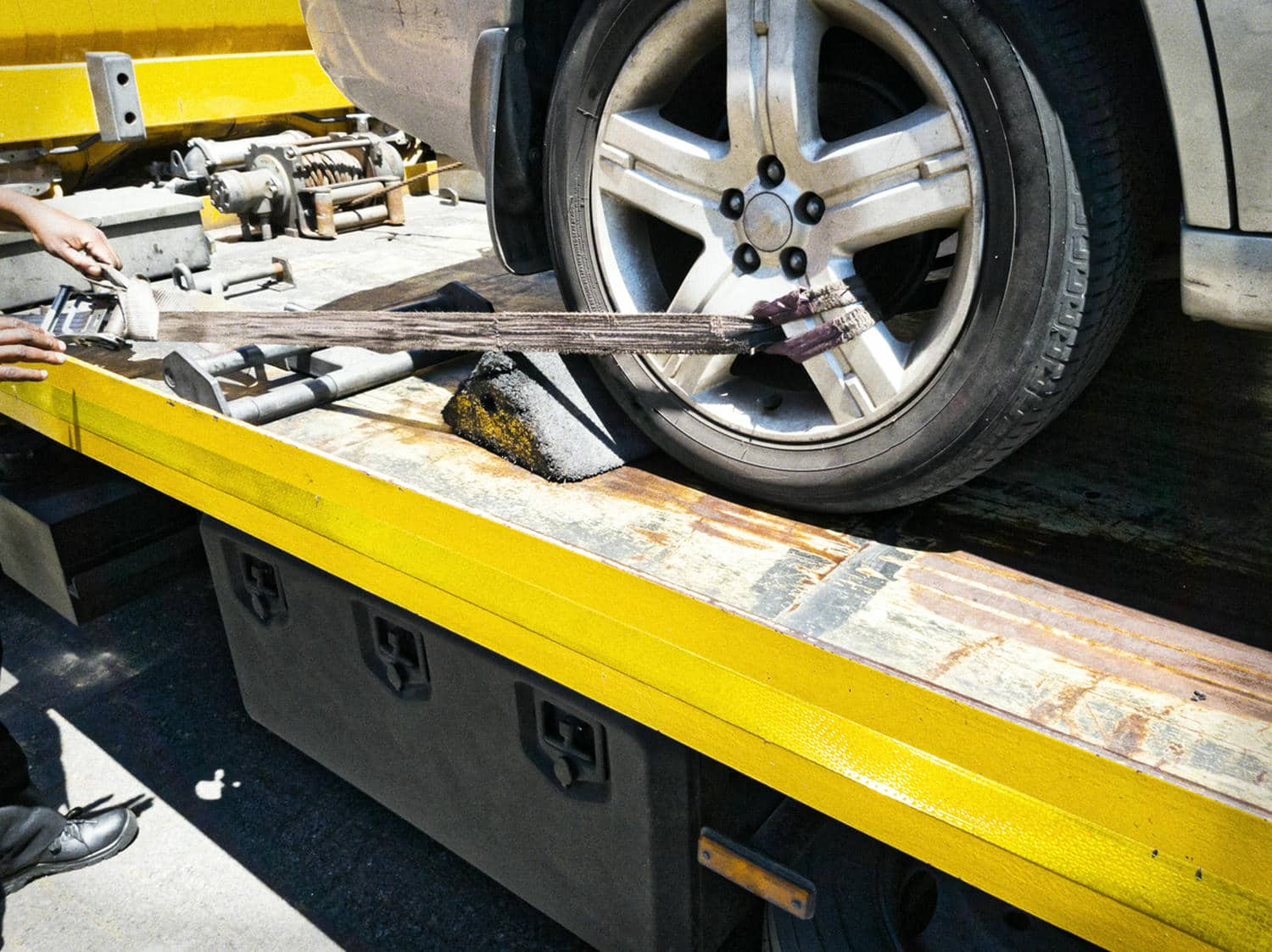
Does it start? Many do not, and that is expected. A car that does not start but rolls and steers is winched onto the deck, which adds roughly $100 to $250.
Does it roll? Seized brakes, a missing wheel or a collapsed suspension corner mean it cannot be pulled up a ramp at all. That needs different equipment, often a flatbed with skates.
Does it steer? A car that rolls but will not steer cannot be guided onto a deck, which changes the job again.
Answer all three honestly and the right truck arrives. Answer only the first and there is a fair chance the driver cannot load it, which costs you a day and a rescheduling fee.
The Storage Clock Is Shorter Than You Think
Salvage yards allow a short free period after the sale and then charge daily, and the free window is typically tighter than at a wholesale auction. Fees accrue quickly and they are charged to you, not to the carrier.
That inverts the usual booking advice. On an ordinary consumer move a wide pickup window gets the car onto a truck soonest and is worth taking. Here, a wide window can cost more in storage than it saves on transport. Find out the daily rate and the free period for that specific yard first, then decide how much flexibility is actually affordable.
Payment clearance drives everything. The yard will not release a vehicle until funds have cleared and a release is issued naming the transport company, so give your coordinator the lot number and location as soon as you have them and set the pickup window from clearance rather than from the winning bid.
Keys, Paperwork and Title
Do not assume there are keys. A significant share of salvage vehicles are sold without them, which matters for loading and for what happens at the far end. Say so when booking.
The release paperwork works as it does at any secured facility: the carrier needs the lot or stock number and authorization naming the transport company. A driver arriving without it will be turned away.
On title, transport and registration are separate problems. A salvage or rebuilt title does not affect the carrier’s ability to move the vehicle, but it does affect what you can do with it afterwards, and states differ considerably on inspection and re-titling requirements. Sort that out with your destination state rather than assuming the auction has handled it.
What It Costs
In our own book since 2023, the middle half of non-running vehicles, the usual state of an auction car, ran $750 to $1,400 against $850 to $1,500 for running cars on open carriers. Compared like for like on open transport only, our non-running orders ran $750 to $1,350: lower, because they skew to shorter lanes, not because winching is free. The distance tiers below come from our own bookings of running cars on open carriers between September 2025 and August 2026.
Transport itself is priced like any other move, on distance and vehicle size, with the non running surcharge on top. As a guide from those bookings, the middle half of running cars cost $350 to $550 under 300 miles, $800 to $1,150 around 800 miles and $1,450 to $1,800 coast to coast, and a non-runner adds roughly $100 to $250 for winching on top.
Where salvage moves get expensive is everything around the transport: storage while you arrange it, a wasted trip if the vehicle was described as rolling when it was not, and rescheduling if the release is not ready. All three are avoidable.
If you are buying at a dealer wholesale auction rather than a salvage yard, the release and arbitration rules differ, and our guide to auction vehicle transport covers those.
At Delivery
Inspect before signing, as always, but with a different question in mind. You are not asking whether the car is damaged, you know it is. You are asking whether anything changed.
Compare against the auction photographs and the pickup report side by side. Check that loose panels and glass are where they were, that nothing has shifted or detached in transit, and that the wheels and suspension are as described. Note any difference on the bill of lading while the driver is present.
Common Questions
Can you ship a car that does not run? Yes. Say whether it starts, rolls and steers, because those are three different jobs.
How soon should it be collected? As soon as payment clears and a release is issued. Storage at salvage yards accrues quickly.
Do I need keys? Not necessarily, but tell the carrier in advance if there are none.
Does a salvage title affect transport? No. It affects registration at the destination, which is a separate matter to resolve with your state.
What protects me from disputes? The auction’s own photographs plus a specific condition report at pickup. Together they establish what was already damaged.
Get a Quote
Call Ship A Car, Inc. at (866) 821-4555 with the yard location, lot number and whether the vehicle starts, rolls and steers.