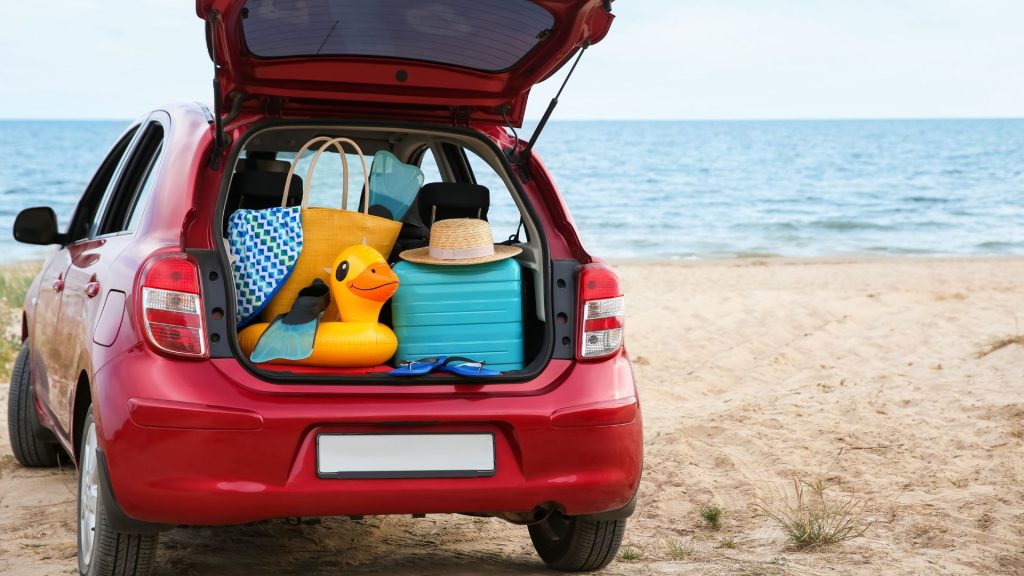
Shipping a Car to a Vacation Destination and Back
Shipping a car for a vacation is a round trip, and that single fact changes almost everything about how it should be arranged. It is a different problem from a one way relocation or a snowbird move, because you are booking two legs with a gap in the middle and the return leg is the one that goes wrong.
Here is when it makes sense, how to arrange both directions, and what to do about the car while you are not using it.

When It Beats the Alternatives
Be honest about this, because often it does not.
For a one or two week trip, renting at the destination is usually cheaper and simpler. Shipping wins in a specific set of circumstances.
A long stay. Beyond roughly three or four weeks, rental costs accumulate past the cost of shipping both ways. A month or a season changes the arithmetic entirely.
You need your own vehicle. Towing a boat or trailer, carrying specialized equipment, a vehicle modified for accessibility, or child seats already correctly fitted. A rental does not substitute.
You want the car you enjoy. A convertible for a coastal summer or a sports car for a mountain trip. Not a financial argument, and a perfectly good reason.
The drive is the problem. Two days each way with children, or a route you have no wish to repeat, is four days of vacation spent in transit.
Book Both Legs, but Not Both at Once
This is the part that separates a smooth trip from a stranded one.
Book the outbound leg with a normal window. For the return, understand that a firm date months ahead is not something a carrier can genuinely commit to, because it cannot know where its equipment will be. What you can do is establish the return route with the same company, confirm they serve it in that season, and book the return properly two to three weeks before you need it.
The failure mode to avoid is assuming the return will be as easy as the outbound. Popular vacation regions have strongly directional demand: capacity floods in at the start of a season and out at the end, and the direction you need may be the thin one.
Seasonality Runs Against You in Both Directions
The awkward truth about vacation shipping.
You want to arrive when everyone else does and leave when everyone else does, which is precisely when the lanes are busiest and priciest in your direction. Summer to the coasts and mountains, winter to the sunbelt.

Two things help. Shifting your shipping dates a week or two off the peak, even if your travel dates are fixed, because the car does not have to travel when you do. And flexibility of a few days at each end, which is worth more than any negotiation.
The one advantage you have over a relocating customer is that your car can arrive before you or after you. Use it.
Where the Car Goes at the Destination
The question people forget until the carrier asks for a delivery address.
A vacation rental may not permit a large delivery vehicle, a hotel will not store a car for a month, and a resort may have restrictions. Sort this before booking, not after.
The workable options are usually: delivery to the rental property if access permits and the owner agrees, delivery to a nearby lot where you collect it, or a paid long term parking facility. Confirm in writing that whoever controls the property is expecting it.
Also confirm who can receive the vehicle. If the car arrives before you do, someone has to inspect it and sign the bill of lading, and a signature from someone who did not inspect it is how claims are lost.
Leaving a Car Standing for Weeks
If the car sits at either end for an extended period, treat it like a stored vehicle.
The battery is the main casualty. Modern cars draw current even switched off, and several weeks is enough to leave one flat. A battery tender is the answer where power is available; disconnecting the negative terminal is the alternative, with the caveat that some vehicles need a relearn procedure afterward.
Then: correct tire pressures before it stands, a fuel stabilizer if it will sit more than a couple of months, the parking brake off with chocks instead if it is standing very long, and a cover only if it is a soft breathable one and the car is clean. A cover over a dirty car in wind is an abrasive.

Insurance and Registration While It Is Away
Two quick checks that are easy to overlook on a temporary move.
Tell your insurer where the vehicle will be garaged and for how long. A temporary relocation is not usually a problem, but an unreported long stay in a different state can complicate a claim, and premiums are priced by garaging location.
Check that registration and inspection do not expire while the car is out of state, since renewing remotely is more awkward than renewing early. And keep proof of insurance in the vehicle rather than at home.
What to Do Before Each Leg
The same discipline both directions, and the return leg is the one people rush.
Wash the car so marks show. Photograph every panel, both bumpers, the wheels, the roof and the odometer in daylight. Empty the interior completely, since personal items are not covered by cargo insurance. Leave about a quarter tank. Remove or disable a toll transponder.
At each delivery, inspect before signing and note anything on the paperwork at the time. Do it for the return leg too: a car that has sat at a beach for a month has a different starting condition than it did in April, and photographs taken before the return trip protect you on that leg specifically. What drives the price is covered in our page on what determines the cost of shipping a car.
Common Questions
Is shipping a car for vacation worth it? Beyond roughly three or four weeks, or when you need your own specific vehicle, yes. For a one week trip renting is usually cheaper.
Should I book the return trip in advance? Establish the route and confirm the company serves it, then book the return two to three weeks before you need it. A firm date months ahead is not something a carrier can genuinely hold.
Where should the car be delivered? Somewhere you have confirmed in advance: the rental property if access and the owner permit, a nearby lot, or long term parking.
What if the car sits for a month? Use a battery tender, set tire pressures beforehand, and add fuel stabilizer if it will stand a long time.
Do I need to tell my insurer? Yes. Premiums are priced by garaging location and an unreported long stay elsewhere can complicate a claim.
Get a Quote
Call Ship A Car, Inc. at (866) 821-4555 with both zip codes, your outbound and return date ranges and the delivery arrangement, or price the move with the instant calculator.