How to Ship a Ford Transit
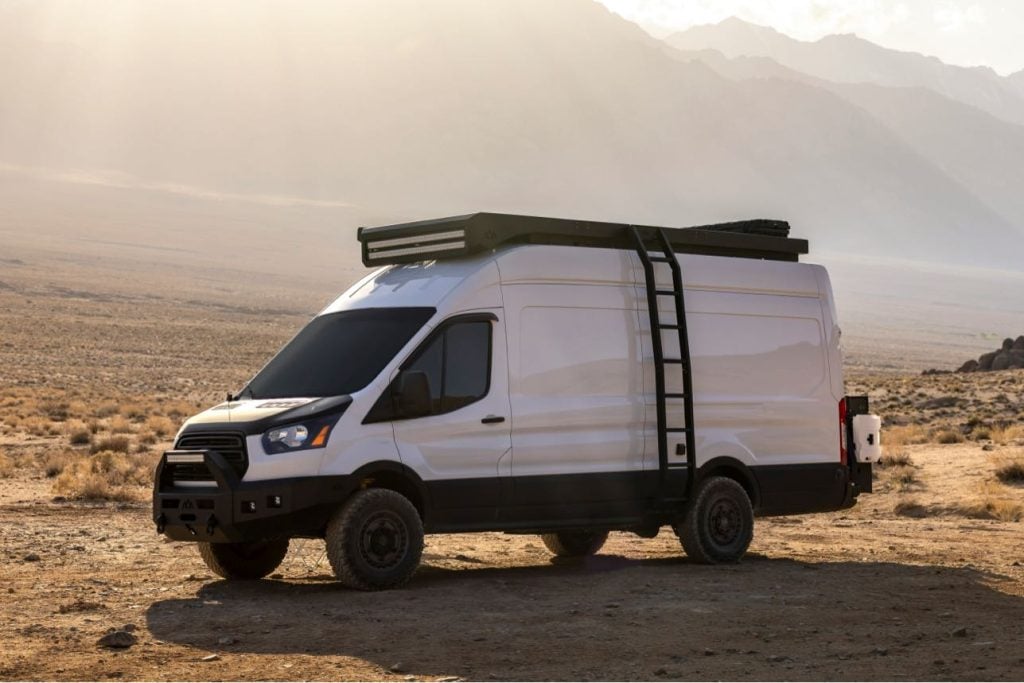
A Ford Transit is not one vehicle, it is a range that runs from something the size of a large SUV to something taller than a legal trailer deck allows, and the roof and wheelbase you have decide everything about the shipment. A low roof regular wheelbase van ships like an ordinary vehicle. A high roof extended van is close to 110 inches tall and 264 inches long, and that changes the trailer, the deck position and the price.
Establish Which Transit You Have
Give the configuration when you book, because it changes the quote more than anything else about the van.
Transit is sold in three roof heights and three body lengths, and the combinations matter. A low roof runs around 83 inches tall. A medium roof is about 100 inches. A high roof reaches roughly 110 inches, which is over 9 feet before it is on anything.
Length runs from about 219 inches for a regular wheelbase to around 264 inches for an extended wheelbase with the long body. Weight ranges from roughly 4,300 pounds for a light passenger configuration to well over 6,000 for a loaded high roof cargo van, and the Transit chassis cab and cutaway variants go further again.
State the year, the roof height, the wheelbase, the body length and whether it is a cargo, passenger or chassis cab version. Those five facts let a carrier price it correctly the first time.
Height Decides the Deck and the Trailer
This is the constraint that separates a Transit from an ordinary vehicle shipment.
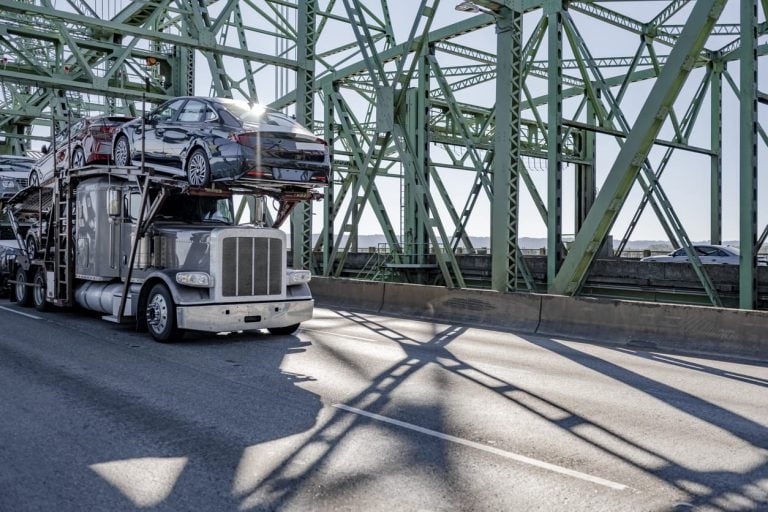
Legal height is 13 feet 6 inches measured from the road in most states. A car hauler’s upper deck sits high, and a high roof Transit at over 9 feet cannot go up there. It takes a lower deck position, which is the space a carrier would otherwise use for another tall vehicle, and that reduces what else can be loaded.
On a low roof van the picture is easier and it can often travel on an upper deck like a large SUV. Medium roof sits between the two and depends on the specific trailer.

Measure the actual van rather than quoting a brochure figure, particularly if anything is fitted to the roof. Roof racks, ladder racks, air conditioning units, vents, solar panels and light bars all add height, and on a high roof van there is no margin left to absorb them.
Upfits Change the Vehicle
Transits are bought to be modified, and most of them are by the time they move.
Commercial upfits mean shelving, bulkheads, interior racking, ladder racks, roof vents and sometimes a generator. Those add weight, and shelving loaded with tools adds a great deal more.
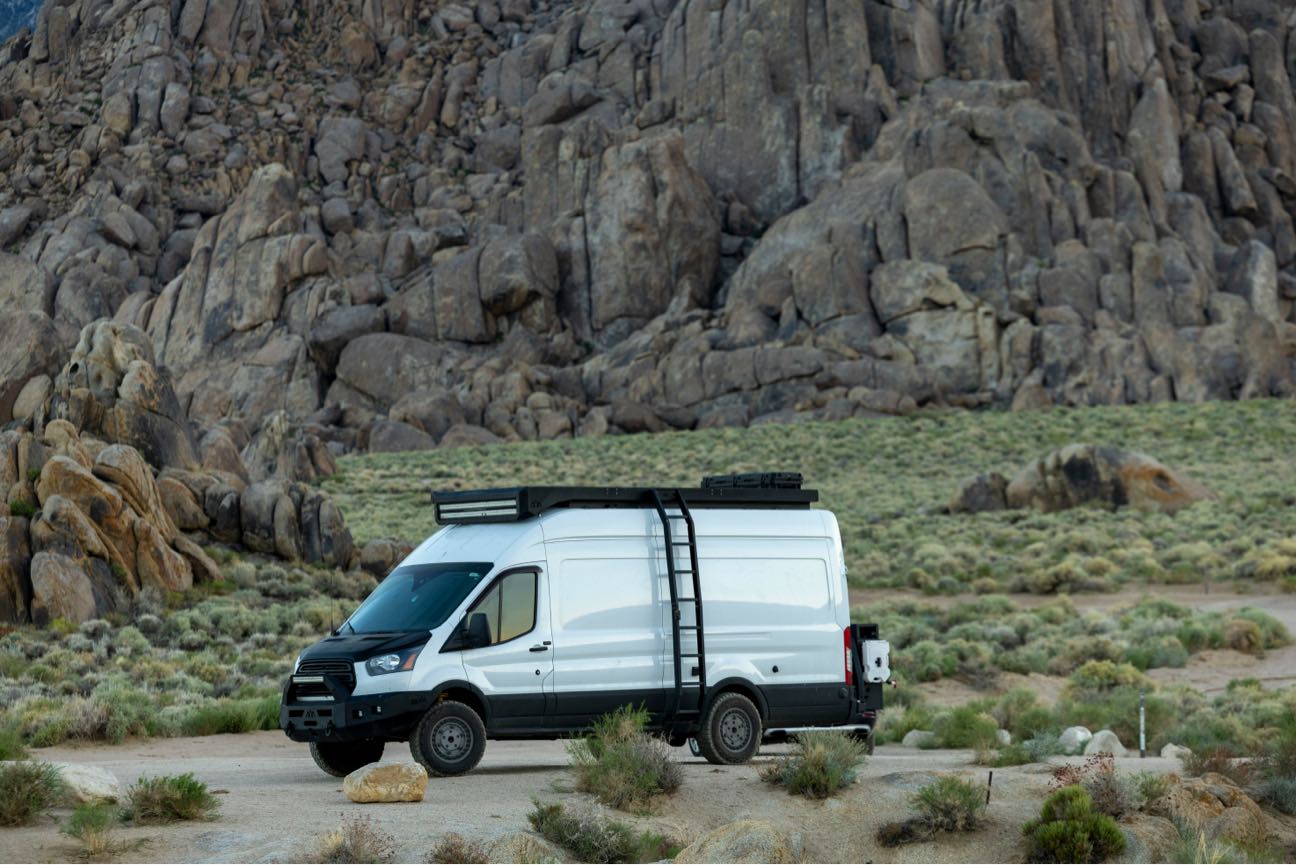
Camper conversions are the other large category and they add the most. Solar panels, roof vents, water tanks, batteries, insulation and cabinetry can take a van well past its original curb weight and change the height meaningfully.
Wheelchair accessible conversions add a lift or ramp and frequently a lowered floor, which changes ground clearance at the rear.
Declare the upfit. A van quoted as a standard cargo Transit and presented as a fully converted camper at 7,000 pounds is a quote that has to be redone at the roadside.
Empty It Properly
A work van is the hardest vehicle in this category to empty, and it is the one where it matters most.
Personal items and tools are not covered by cargo insurance regardless of where they sit. They add weight the carrier has not accounted for, and in a van with shelving they are also a projectile risk if anything shifts.
Empty the shelving completely. Remove or securely fasten anything loose. If a ladder rack is staying, make sure the ladders are off or properly strapped, because a ladder that works loose at highway speed is a serious hazard.
On a camper conversion, drain the fresh and waste water tanks. Water is heavy, it moves, and on a winter route it can freeze and split a fitting. Secure cabinet doors, latch the fridge and remove anything on a surface.

What It Costs Relative to a Car
Expect a low roof Transit to price somewhat above a large SUV, and a high roof extended van considerably above that.
The reason is deck economics rather than a surcharge. A hauler works to an 80,000 pound gross limit and a finite number of positions, and a tall van occupies a lower deck slot that could otherwise take another tall vehicle. The driver carries fewer units, so each one costs more.
Availability is good, though. Transits are among the most common commercial vans in the country and carriers move them constantly, so assignment is usually quick on a standard configuration. Our comparison of truck and car shipping explains the same arithmetic on pickups.
Open or Enclosed
Open transport is right for almost every Transit and it is what commercial operators use as a matter of course.
Enclosed is worth considering in two situations: a high value camper conversion where the build is worth more than the van, and a vehicle with fresh paintwork or a full wrap carrying business identity. Be aware that a high roof van may not fit inside a standard enclosed trailer, so confirm the interior height rather than assuming.
Preparing It
Wash it so existing marks are visible, then photograph every panel in daylight, including the roof if anything is mounted up there, the wheels, the lower body and the rear doors.
Leave about a quarter tank of fuel. Fold the mirrors, disable a motion sensitive alarm, remove a toll transponder and hand over a key. If the van has a high roof, tell the driver the measured height rather than the model name.
At delivery, inspect before signing. Compare against your photographs, check the roof and the upper body corners specifically because those are what a low clearance strikes, and note anything unexpected on the bill of lading while the driver is present.
Common Questions
How tall is a Ford Transit? Roughly 83 inches low roof, 100 medium and 110 high roof, before anything mounted on top.
Does a high roof cost more to ship? Yes. It cannot use an upper deck, so it occupies a lower deck slot and the carrier moves fewer vehicles.
Do I have to empty the shelving? Yes. Tools are not covered, they add weight, and loose items in a shelved van are a hazard if anything shifts.
Can a camper conversion ship? Yes. Declare the modified weight and height, drain the water tanks and secure the interior.
Will it fit in an enclosed trailer? A low roof usually will. Confirm the interior height before booking enclosed for a high roof van.
Get a Quote
Call Ship A Car, Inc. at (866) 821-4555 with the year, roof height, wheelbase, any upfit and the measured overall height, or request an estimate for the move through the quote calculator.