How to Save Money on Car Shipping
Season, direction and the vehicle move the price far more than negotiating does, and flexibility on dates helps a carrier fit your car in. A carrier fills a truck with seven to ten cars and leaves when it is full. A load with a wide pickup window fits into a truck that is already going; a load with a single fixed date has to be built around. That difference shows up in how fast a carrier is found, which no amount of haggling with a broker can match.
Give a Window, Not a Date
A pickup window of five to seven days will price better than a single day, and it will get assigned faster too.
The reason is straightforward. Dispatchers build routes forward, filling a truck as it moves. A load that can go on any of several days fits into a route being built right now; a load that must go on the 14th has to wait for a truck that will be in the right place on the 14th. Fewer trucks qualify, so the rate has to rise until one accepts.
If your dates are genuinely fixed, say so and pay for it knowingly. If they are not, say that instead, because it is worth more than you would guess.
Open Transport, Unless There Is a Reason
Enclosed transport costs about a third more than open, and for most vehicles it buys very little.
Open carriers move the overwhelming majority of vehicles in this country, including nearly every new car delivered to a dealership. The car is exposed to weather and road grit, which is what it is exposed to when you drive it.
Enclosed earns its price on genuinely valuable, rare, low clearance or freshly restored vehicles, where a stone chip is a real loss. On an ordinary daily driver it is money spent on reassurance rather than on risk.
Book Ahead, but Not Too Far
Two to three weeks ahead is the useful window for most lanes.
Booking earlier than that does not lower the price, because carriers do not commit that far out; the load simply sits until it is close enough to be dispatched. Booking inside a week is where you start paying for urgency, and inside 48 hours you are paying whatever it takes to pull a truck off its plan.
The exception is peak season on peak lanes, where capacity genuinely runs out and booking further ahead secures a slot rather than a price.

Meet the Truck Somewhere Sensible
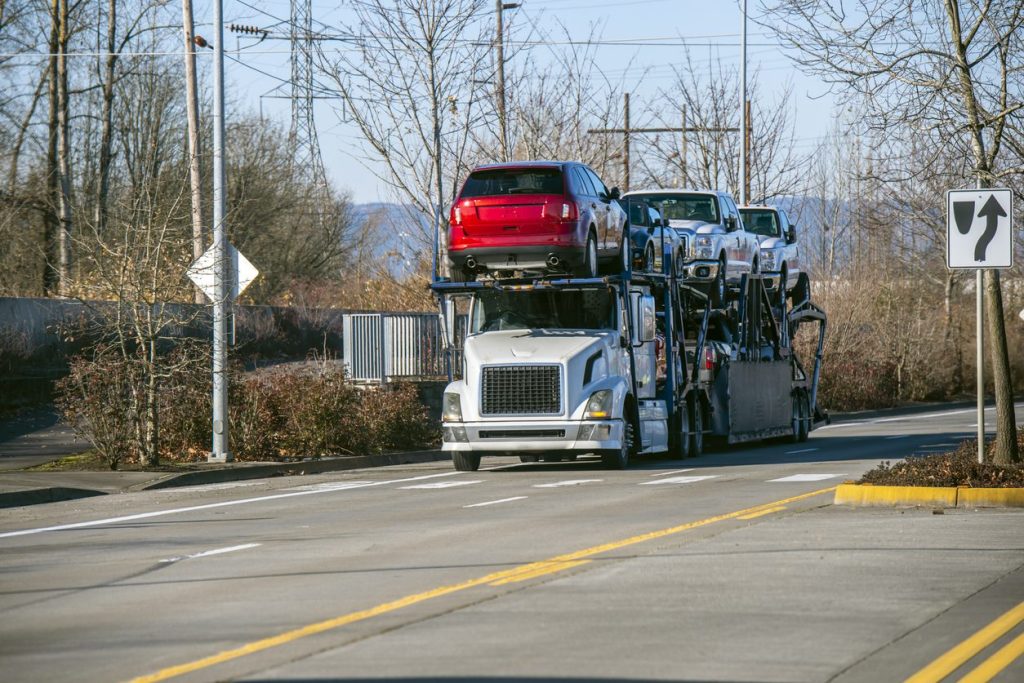
A car hauler is around 75 feet long and cannot work narrow streets, low bridges, gated communities or tight cul de sacs.
When a driver cannot reach your door, the options are to wait for one willing to try, or to meet at a large lot nearby. The second is faster and cheaper, because it widens the pool of drivers who can take the load rather than narrowing it.
The same logic applies at the other end. Two accessible meeting points on a lane will often price better than door to door on the same route, and cost you twenty minutes each way.
Understand the Seasons
Prices on a given lane move with direction, not just with the calendar.
Southbound to Florida and the Southwest runs hot from October into December; northbound runs hot from March into May. Summer is the busiest overall period because of relocations and school calendars. On any lane and in any season, the quiet direction is cheap because carriers need loads to fill the return trip.
If your move can shift a fortnight either side of a peak, that is often the single largest saving available.
Get Three Quotes, and Read Them
Comparing prices only works if the quotes describe the same job.
Ask each one whether the price is all inclusive, when payment is taken, what the pickup and delivery windows are, and what happens if no carrier accepts at that rate. The last question is the useful one, because an unrealistically low quote is not a saving; it is a load that sits unassigned while your dates pass and the price is revised upward.
If two quotes cluster and one sits far below, the outlier is usually the one to be careful with.
Small Things That Add Up
Declare the vehicle accurately. A car described as running that will not start adds a winch fee at the curb, and a modified or oversized vehicle discovered on the day can mean a refused load.
Empty the car, since personal items are not covered by cargo insurance and weight above the allowance can be charged. And ship more than one vehicle together if you have the option, because a second car on the same truck between the same two points is cheaper than two separate bookings.
Common Questions
What saves the most money? A flexible pickup window. It outperforms negotiating on almost every lane.
Is enclosed worth it? Only for valuable, rare, low clearance or restored vehicles. Open transport moves nearly every new car sold.
How far ahead should I book? Two to three weeks for most lanes; earlier only in peak season on peak routes.
Does door to door cost more? It can. If a truck cannot reach your street, meeting nearby is faster and often cheaper.
Should I take the cheapest quote? Not automatically. Ask what happens if no carrier accepts at that price.
Get a Quote
Call Ship A Car, Inc. at (866) 821-4555 with both zip codes and your date range, or request an estimate for the lane through the quote calculator.