Vehicle Shipping for the Oil and Gas Industry
Oil and gas transport is defined by where the equipment has to end up rather than by what it weighs, and that is what separates it from ordinary heavy haul. A machine going to a well site is going to an unpaved lease road that may not have existed last year, in a county with its own permit rules, on a schedule set by a rig that costs more per day standing still than the transport costs in total. Plan the last five miles first.
What Moves in This Sector
The range is wide and the handling requirements are not similar across it.
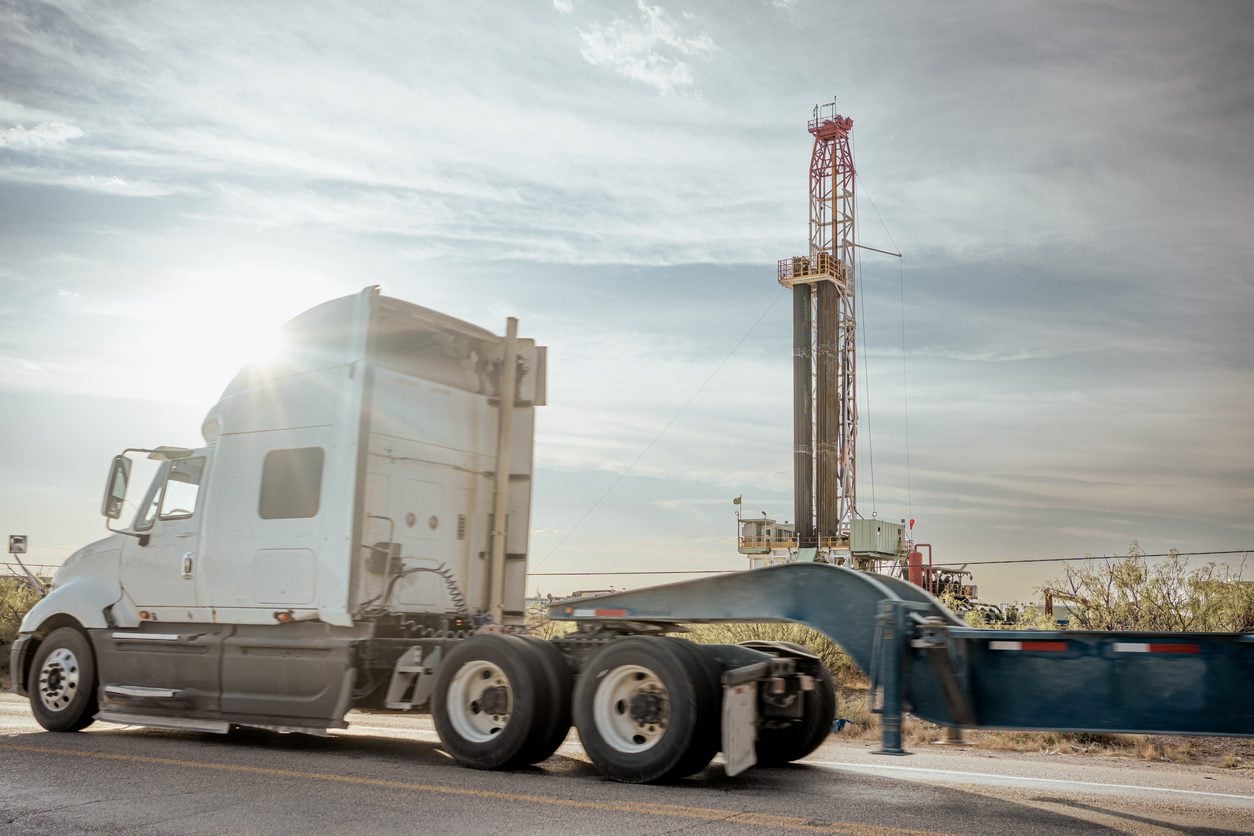
Rig components are the heavy end: masts, substructures, drawworks, mud pumps and tanks. A drilling rig does not move as a unit. It is broken into loads, and a full rig move is dozens of them, sequenced so that the pieces arrive in the order the crew needs to reassemble them.
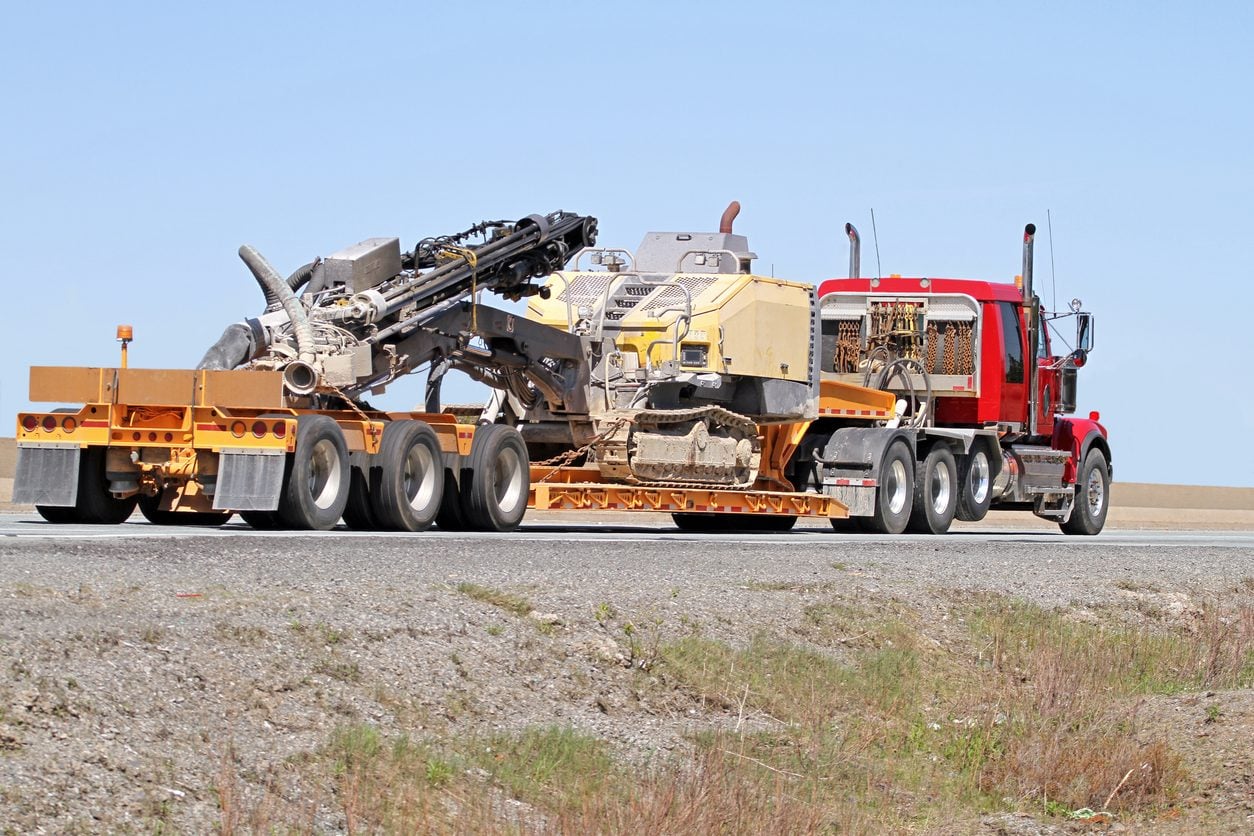
Production and service equipment sits in the middle: separators, pumping units, compressors, wellheads, coiled tubing units and frac equipment. Most travels on flatbeds, step decks or lowboys and much of it is oversize.
Then there is the fleet side, which is genuinely vehicle shipping: crew trucks, service bodies, water trucks, vacuum trucks and light plants being relocated between basins as activity shifts. That work looks more like ordinary vehicle transport and it moves in volume when a play heats up.
Lease Roads Are the Constraint
This is the part that separates oilfield work from general heavy haul and it is where jobs actually fail.
Well sites are reached by private lease roads that are frequently caliche, gravel or graded dirt. They are built for the operator’s own traffic and not necessarily for a 100 foot combination carrying 90,000 pounds. Rain turns them to mud, and a loaded lowboy that sinks is a recovery operation rather than an inconvenience.
Turning radius is the other issue. A long multi axle combination needs room to swing into a pad entrance, and a gate placed for a pickup does not accommodate one. Cattle guards, culverts and low water crossings all have load ratings that nobody has usually checked.
Get a route survey done to the pad rather than to the highway. Confirm the gate width, the approach angle, the surface, whether the ground will carry the equipment in current weather, and where a truck can turn around once it is empty. The company representative on site knows all of this and will tell you if asked.
Permits Multiply in This Work
Oilfield loads are oversize more often than not, and the permitting is layered.
State permits apply as normal past 8 feet 6 inches wide, 13 feet 6 inches high measured from the road, or 80,000 pounds gross. On top of that, producing counties in the major basins frequently issue their own permits for movement on county roads, and those roads are often the only way to reach the site.
Some counties also impose seasonal or weather triggered restrictions, closing unpaved roads to heavy traffic after rain to protect the surface. That is a real scheduling risk in the spring and after storms, and it is not something a carrier can negotiate around.
Where a load crosses into superload territory, the engineering review and the lead time expand accordingly. On a rig move that is planned months out, this is manageable. On an urgent equipment replacement it is the schedule.
Time Is the Expensive Variable
The economics here are different from most freight and it changes what you should optimize for.
A drilling rig standing idle costs a great deal per day. Against that number, the difference between a cheap carrier and a reliable one is trivial, and the right decision is almost always the arrangement that is most certain rather than the one that is cheapest.
That is why rig moves use dedicated fleets, sequenced loads and coordinated crews rather than spot market trucks found one at a time. If you are moving a rig, the sequencing is the service you are buying.
Safety Requirements Are Stricter
Operators impose requirements on carriers entering their sites that go well beyond standard trucking compliance, and they are checked at the gate.
Expect requirements around driver training and site orientation, personal protective equipment, journey management, and in many cases a contractor safety qualification through one of the industry verification systems. Some sites require specific vehicle equipment such as spark arrestors, and most restrict where you may stop, idle or use a phone.
Confirm what the specific operator requires before dispatch. A truck turned away at the gate for a missing qualification is a wasted day for everybody, and on a sequenced rig move it delays every load behind it.
Hazardous Materials Where They Apply
Most equipment transport in this sector is not hazmat, but some of it is, and the distinction needs making early.
Equipment containing residual product, tanks that have held hydrocarbons, and anything with a radioactive source used in logging tools all bring hazardous materials rules, placarding, driver endorsements and documentation into scope.
Drain and clean what can be drained and cleaned, and declare what cannot. Discovering the classification at a roadside inspection is the expensive route.
Preparing Equipment for the Move
Give an accurate weight from a certified scale where possible, including everything traveling with the item: fluids, attachments, counterweights and tools. Give the measured height from the ground to the highest fixed point.
Reduce the envelope where you can, since removing a boom, a counterweight or wide pads can bring a load under a threshold and remove a permit and an escort along with it.
Secure or remove anything loose, and photograph the equipment in daylight from every side before it loads, including the undercarriage and any existing damage. Get that damage described specifically on the bill of lading. On used oilfield equipment, which arrives with wear as standard, a general description of “used condition” is what defeats a claim later. Our guide to heavy equipment transportation covers the preparation process in more depth.
Common Questions
What is the hardest part of an oilfield move? The last few miles. Lease roads, gate widths, turning room and ground conditions decide whether the load arrives.
Do I need county permits as well as state? Frequently yes, in the producing basins, because county roads are usually the only route to the site.
Can a rig move as one load? No. A drilling rig is broken into many loads and sequenced so pieces arrive in reassembly order.
What safety qualifications will a carrier need? Operator specific site orientation, PPE, and often a contractor safety verification. Confirm before dispatch rather than at the gate.
Is any of this hazmat? Some. Residual product, tanks that have held hydrocarbons and radioactive sources in logging tools all trigger hazardous materials rules.
Get a Quote
Call Ship A Car, Inc. at (866) 452-3657 for heavy haul and specialized freight with the equipment description, measured dimensions and weight, the site location and the lease road conditions, or price it with the specialized transport calculator.