Can You Lay a Vertical Air Compressor on Its Side?
It is the first question everyone asks, so here is the straight answer: it depends on what is inside the pump. A brand-new, never-oiled compressor, or an oil-free model, can generally ride on its side for a trip home from the store. An oil-lubricated compressor that has been run should travel upright whenever possible. Tip an oiled unit over and the crankcase oil migrates where it does not belong: into the cylinder, past the valves, and toward the air intake. Start it up like that and you are looking at fouled valves, oil in your air lines, or a pump that will not build pressure until it has been serviced.
If an oiled compressor must be laid down, or already has been, stand it upright at its destination, give the oil time to settle back into the crankcase, and check the oil level and condition before the first start. When in doubt, drain and refill the oil; it is the cheapest insurance in this whole process.
How to Move a Vertical Air Compressor, Step by Step
1. Release the pressure and drain the tank
Before anything moves, empty the machine. Bleed the tank to zero pressure, then open the drain valve at the bottom of the tank and let the condensate out. A pressurized tank is dangerous to strap down, and the water sloshing inside a drained-but-wet tank promotes rust and adds weight exactly where you do not want it.
2. Confirm what kind of pump you have
Check the manual or the pump housing: oil-lubricated or oil-free. That single fact decides whether laying it down is an option or a repair bill, per the rules above.
3. Protect the vulnerable parts
Gauges, the pressure switch, the regulator, and copper or poly lines are the first casualties in transit. Wrap them with moving blankets or foam, and never let a strap bear on any of them.
4. Use a ramp and a hand truck for smaller units
For a compressor riding in a pickup bed, a loading ramp plus a heavy-duty hand truck is the safe way up and down; strap the tank to the hand truck frame before you roll. If the unit is too heavy to control on a ramp or is already bolted to a pallet, stop there and think trailer with a ramp gate, liftgate service, or a forklift at both ends.
5. Palletize it upright and strap the tank, not the plumbing
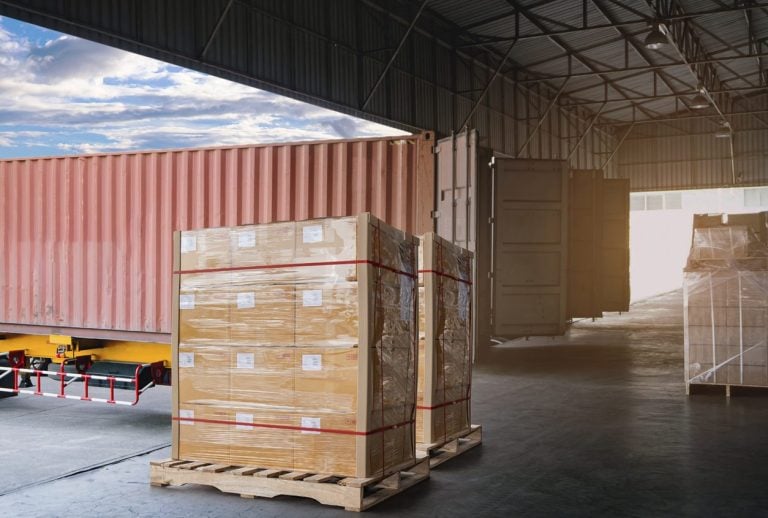
The professional standard for a big vertical unit is simple: bolt or band it upright to a pallet, then ratchet-strap over the tank body in at least two places. The pallet spreads the weight, gives a forklift something to grab, and keeps the machine vertical for the whole ride.
6. Optional: pull the pump for a laydown move
If the unit absolutely must travel on its side, removing the pump and motor assembly from the tank sidesteps the oil problem: drain the pump oil, unbolt the assembly, and transport it upright separately while the empty tank rides flat.
7. Or hand the whole problem to a freight professional
Past a certain size, the honest answer is a liftgate-equipped freight carrier. Ship A Car arranges air compressor shipping nationwide: proper palletizing guidance, carriers with liftgates and forklift access, and coverage for commercial units that cannot afford a rough ride.

Quick Answers
How long should a tipped compressor sit upright before running?
Long enough for the oil to fully settle back into the crankcase; give it real time upright rather than minutes, and always verify the oil level and look for milky or contaminated oil before the first start. If anything looks off, change the oil first.
Do I really need to drain the tank before moving it?
Yes, twice over: bleed the air pressure for safety, and drain the condensate so you are not shipping water that rusts the tank from the inside and shifts weight in transit.
What does it cost to ship an air compressor?
Freight pricing depends on weight, dimensions, distance, and whether liftgates are needed at either end. Get a real number in minutes with our freight shipping cost calculator, or use the form on this page and a freight coordinator will price the exact move.