Shipping an Exotic Car: What to Settle Before You Book
For a car that cannot simply be replaced, the conversation before booking matters more than the trailer. Enclosed transport is the easy part of this decision and it is where most articles stop. The parts that actually determine whether an exotic arrives correctly are four specifics: what value is declared and what the carrier’s policy will actually pay per vehicle, how the car gets onto the deck, where the straps are allowed to touch it, and how carefully it is inspected at each end. Settle those four and the rest is ordinary logistics.
Settle the Declared Value First
This is the single most important question and the one people ask last.
Ask for the cargo limit per vehicle, not the policy total, and ask to see the certificate rather than accepting a figure verbally. A policy written for a load of six cars is not the amount available for yours, and standard cargo coverage is sized for ordinary vehicles. On a car worth several hundred thousand dollars, the gap between the declared value and the per vehicle limit is the real exposure, and it exists on an enclosed trailer exactly as it does on an open one.
If the value exceeds the limit, that is a conversation to have before booking. Options exist, including supplemental coverage arranged for the shipment, but they have to be arranged in advance rather than discovered after an incident.
Loading: Lift Gate, Not Ramps
Approach angle is the practical reason exotic cars need enclosed transport, and it has nothing to do with weather.
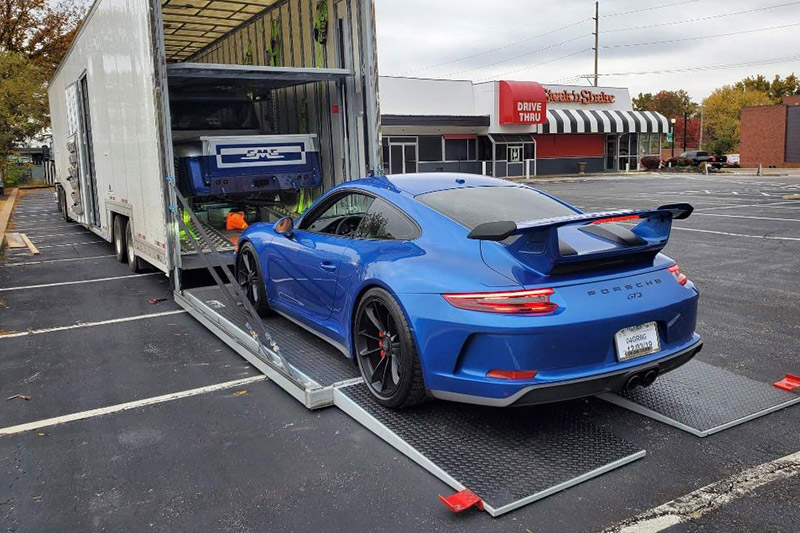
A front splitter, a low air dam or a serious lowering setup will contact a ramp before the wheels reach the deck. Enclosed carriers commonly load with a hydraulic lift gate, which raises the car flat and removes the angle entirely. That is an engineering answer rather than a luxury one, and it applies to cars nobody would call collectible.
If your car has a front axle lift system, tell the driver and show him how it works. If it has a transport or trailering mode that changes ride height or disables the suspension, say so. Drivers who move these cars regularly will ask, but do not assume the question will come.
Where the Straps Are Allowed to Touch
Securement is where avoidable damage happens, and the standard for a high value car is specific.
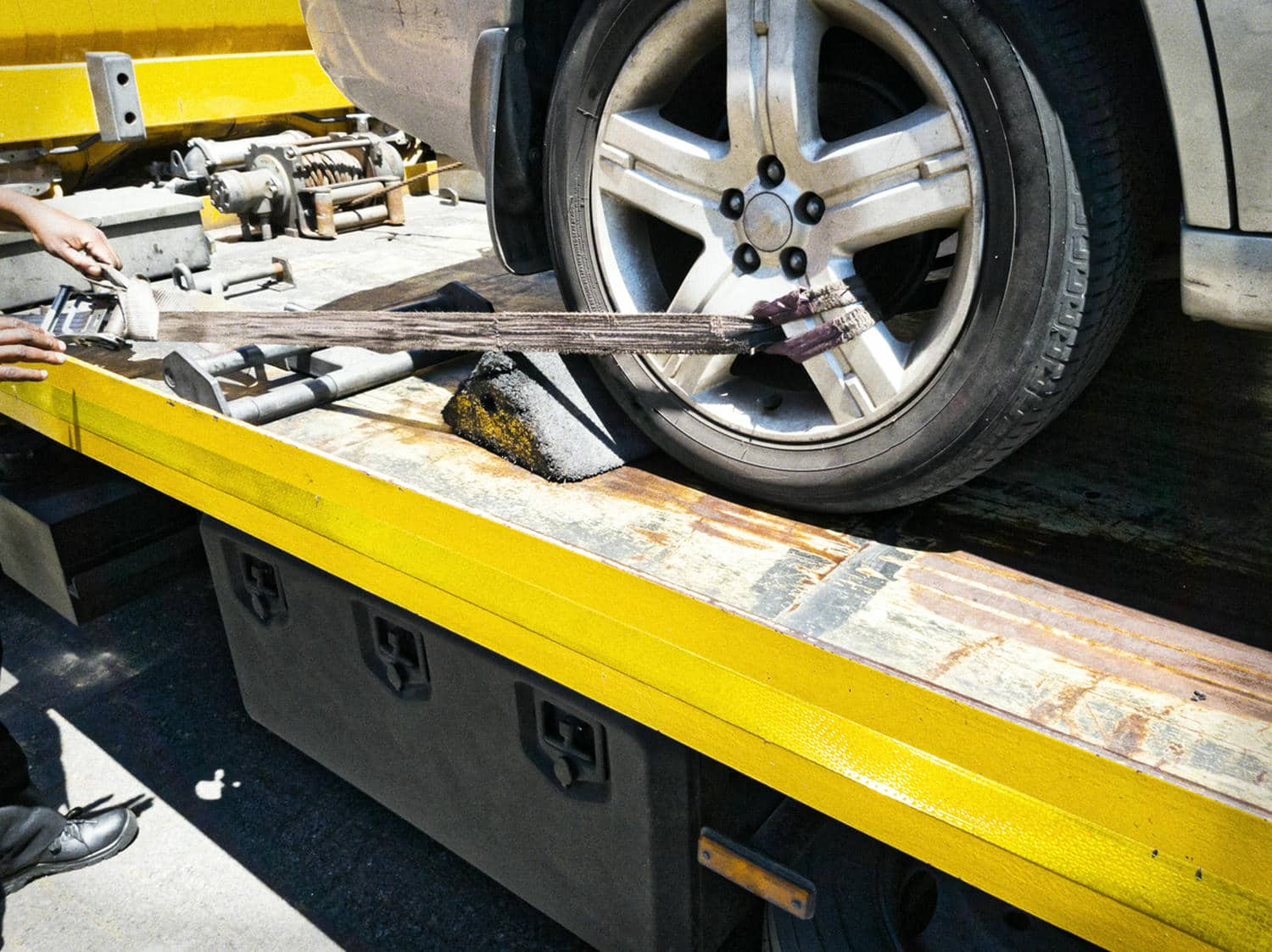
What you want is soft straps over the tires, pulling down through the wheels, so the load path runs through the suspension the way the car was designed to carry it. What you do not want is anything hooked to suspension arms, subframes or bodywork. On a car with carbon fiber or aluminum structures that is not a preference, it is how components get bent, and the damage is often invisible until someone measures it.
If your model has designated tie down points, or a known place that must never be used, tell the carrier when you book rather than at the curb. Owners frequently know this better than a driver meeting the car for the first time.
Shared or Dedicated
Enclosed comes in two forms and the difference in price is significant, so it is worth asking which you are being quoted.
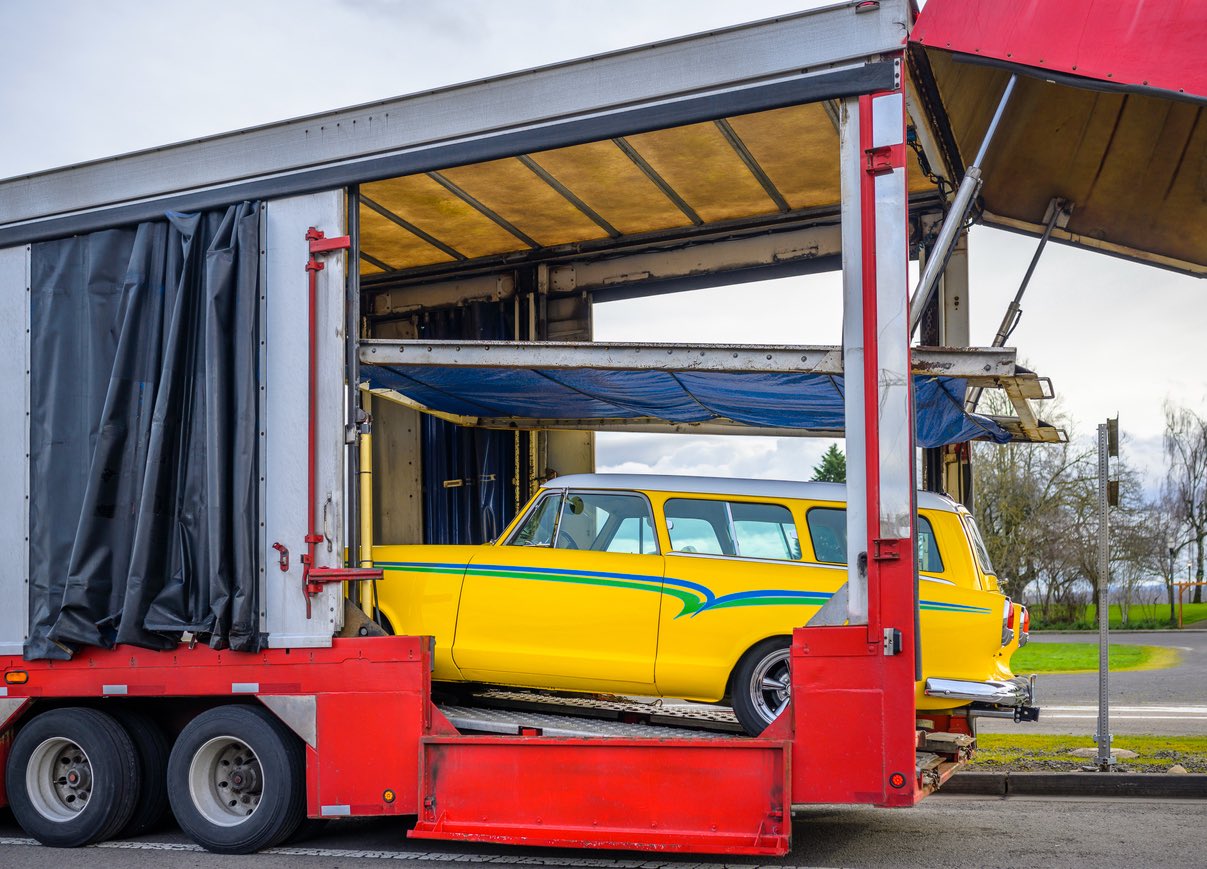
Shared enclosed puts your car in a trailer with two to six others. It is the normal choice, it is considerably cheaper, and the vehicles around yours are generally also cars people are careful with.
Dedicated or single car transport means the trailer carries your vehicle alone. It costs a great deal more and it buys two things: no other cars handled around yours, and a schedule set by your move rather than by assembling a load. For a genuinely irreplaceable car, or one on a fixed date for an event or an auction, that is sometimes the right call. For most exotics it is more than the job needs.
Prepare It the Way You Would for Storage
A few days on a trailer is closer to short storage than to driving, and preparing accordingly avoids the usual arrival problems.
- Fuel to roughly a quarter tank. Enough to load and unload, not enough to add unnecessary weight.
- Check tire pressures. A soft tire in a wheel strap allows movement the securement did not plan for.
- Note the alarm and immobilizer. Tell the driver how to silence it, or disable it. An alarm cycling inside a sealed trailer for three days flattens a battery.
- Remove everything loose, including the charging cable, tool roll, car cover and anything in the frunk. Personal items are not covered.
- Fold or remove anything projecting. Mirrors, aero pieces and anything clip on.
- Photograph beyond the usual. Wheels and rim faces, the lower splitter, sills, the roof, and every existing mark close up in daylight.
The Inspection Standard Is Higher
On an ordinary car the condition report records dents and scratches. On an exotic it needs to record the things that are expensive precisely because they are subtle.
Walk the car with the driver and get specifics written down: existing stone chips, curb rash on a rim, any paint correction or respray, the exact state of the splitter and sills. Photograph the underside if the car is low enough to make that meaningful.
At delivery, inspect before you sign and do it in good light. Look along the panels rather than at them, since that is how you see a ripple. Check the rim faces and the splitter first, because those are what loading damages. Note anything on the bill of lading while the driver is present, because signing a clean report is a formal statement that the car arrived undamaged.
If you are weighing the trailer choice itself, our guide to open versus enclosed shipping sets out when the premium is genuinely earned.
Common Questions
Does it have to be enclosed? For a low car, yes, because lift gate loading avoids the ramp angle. For paint and privacy it is strongly advisable.
What insurance applies? The assigned carrier’s cargo policy. Ask for the per vehicle limit and the certificate, and arrange supplemental cover if the value exceeds it.
How should it be strapped? Soft straps over the tires through the wheels. Nothing hooked to suspension arms or bodywork.
Is single car transport worth it? For an irreplaceable car or a fixed date, sometimes. For most exotics shared enclosed is enough.
How far ahead should I book? Three to four weeks. Enclosed capacity is thinner than open, and the right driver is worth waiting for.
Get a Quote
Call Ship A Car, Inc. at (866) 821-4555 with the make, model, ride height and declared value, and we will confirm the loading method and the coverage before anything is booked.