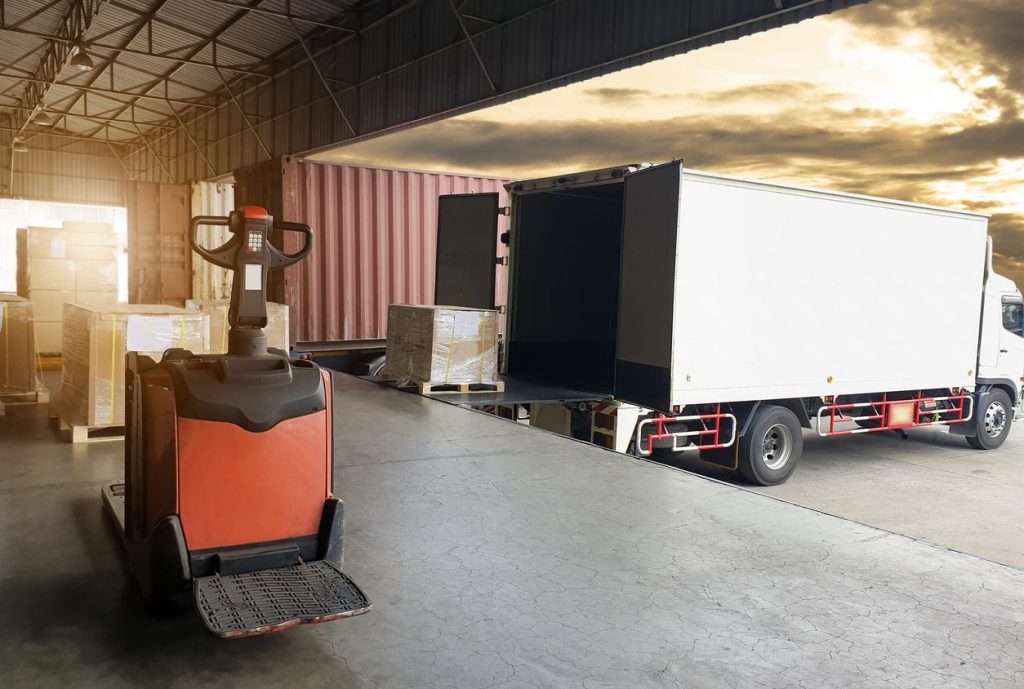
LTL Freight Shipping Explained
Less than truckload shipping exists because most freight is too big for a parcel service and too small to justify a whole trailer, and it works by putting your pallets on a truck with other people’s. That sharing is what makes it affordable and it is also the source of every complication: your freight gets handled at terminals along the way, and how you pack and describe it determines what you pay.

How the Network Actually Works
An LTL carrier runs a hub and spoke network rather than point to point trucks, and understanding that explains most of what customers find surprising.
A local truck collects your pallets and brings them to a service center. There the freight is unloaded and re sorted onto a linehaul trailer heading toward a hub. At the hub it may be sorted again onto another linehaul trailer. At the destination service center it is unloaded once more onto a local delivery truck.
So a shipment moving 900 miles might be handled four or five times. That is the trade you are making: you pay a fraction of a truckload rate, and in exchange your freight is touched repeatedly by forklifts in busy terminals.
It also explains transit times. LTL is measured in business days rather than hours, because the freight waits for the next linehaul departure at each step.
How LTL Pricing Works
LTL pricing is genuinely different from truckload and the differences catch people out.
Freight class is the foundation. Commodities are classified on a scale that reflects density, stowability, handling difficulty and liability. Dense, sturdy, easily stacked freight gets a low class and a low rate. Light bulky freight, or anything fragile or hazardous, gets a high class and costs considerably more for the same weight.
Many carriers now use density based pricing instead, calculating pounds per cubic foot directly rather than assigning a class. Either way, the principle is the same: you are paying for the space your freight occupies as much as for its weight.

Accessorials then sit on top, and on LTL there are many: liftgate service, residential pickup or delivery, inside delivery, limited access locations, appointment scheduling, and reweighing or reclassification if what arrives does not match what you declared.
The Reclassification Problem
This is the single most common source of an LTL invoice that does not match the quote.
Carriers weigh and measure freight at terminals. If your shipment is heavier, larger or a different class than declared, the carrier reclassifies it and rebills, frequently with an inspection fee attached. The adjusted figure is not negotiable after the fact because they have the measurement.
The fix is simple and almost entirely within your control. Weigh the freight on a scale rather than estimating. Measure the pallet including any overhang and the wrap. Declare the correct class or density. If you are unsure of the class, ask the carrier rather than guessing low.
Under declaring is not a saving. It is a deferred charge with a fee on top.
Packaging Decides Whether It Arrives Intact
Freight in an LTL network is handled several times by people who have never seen it before, and packaging is what survives that.
Palletize wherever possible. Loose cartons get separated, crushed and lost in a way palletized freight does not. Keep the load within the footprint of the pallet, because overhang is what gets clipped by a forklift.
Shrink wrap thoroughly and band where the load is heavy. Stack squarely rather than in a pyramid, and put heavier items at the bottom. Mark the freight clearly, on more than one side, and label anything fragile in a way that survives being wrapped.

Freight that is well packaged travels LTL perfectly well. Freight that would survive one careful truckload trip may not survive four terminal handlings.
Insurance and Liability Are Limited by Class
LTL carrier liability is not the value of your goods, and this surprises shippers at exactly the wrong moment.
Carriers publish a maximum liability per pound that varies by freight class, and on many commodity classes it is a small figure. A pallet of electronics worth twenty thousand dollars may be covered for a few hundred under the carrier’s standard liability, because the calculation is weight based rather than value based.
Where the gap matters, declare the value and buy additional coverage before the freight moves. Some carriers offer excess liability directly; third party shipment insurance is the other route and frequently the cheaper one.
Read what is excluded too. Concealed damage found after delivery, freight that was inadequately packaged and shipments signed for clean are all common grounds for a denied claim, which is another reason to inspect and note damage on the delivery receipt before signing.
When to Move Up to Truckload
There is a crossover point and it is worth knowing where you are relative to it.
As a working rule, somewhere between six and twelve pallets, depending on weight and density, a full truckload becomes cheaper than the LTL equivalent. Past that you are paying LTL rates for most of a trailer without getting the benefits of one.
Fragility moves the line earlier. If damage in handling is your main risk rather than cost, a truckload or partial truckload with no terminal handling frequently wins well before the price argument does.
Partial truckload sits between the two, typically six to eighteen pallets, where your freight travels with one or two other shipments and is not sorted at terminals. Our guide to truckload pricing covers the comparison.
Getting an Accurate LTL Quote
Provide the origin and destination zip codes, the commodity, the exact weight, the pallet dimensions including overhang, the pallet count, and whether the freight is stackable.
Declare every accessorial in advance: liftgate at either end, residential address, inside delivery, limited access site such as a school, farm or construction site, and whether an appointment is required.
Every one of those is cheaper disclosed than discovered, and a quote based on complete information is one that matches the invoice.
Common Questions
What is LTL? Less than truckload: your freight shares a trailer with other shipments, moving through a hub and spoke terminal network.
Why is my LTL invoice higher than the quote? Almost always reclassification. The carrier weighed or measured the freight and it did not match what was declared.
How is LTL priced? By freight class or density, weight and distance, plus accessorials. You pay for the space as much as the weight.
How many times is my freight handled? Frequently four or five times on a long lane, which is why packaging matters more than in truckload.
When should I switch to truckload? Typically between six and twelve pallets, and earlier if the freight is fragile.
Get a Quote
Call Ship A Car, Inc. at (866) 452-3657 for freight with the commodity, weight, pallet dimensions and count, both zip codes and any accessorial requirements, or request a quote through the specialized transport calculator.