Solar on Refrigerated Trailers: The One Vehicle Where It Adds Up
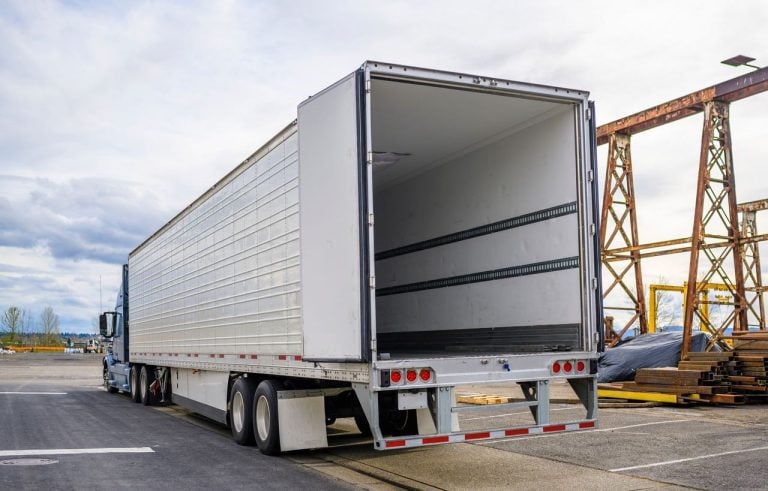
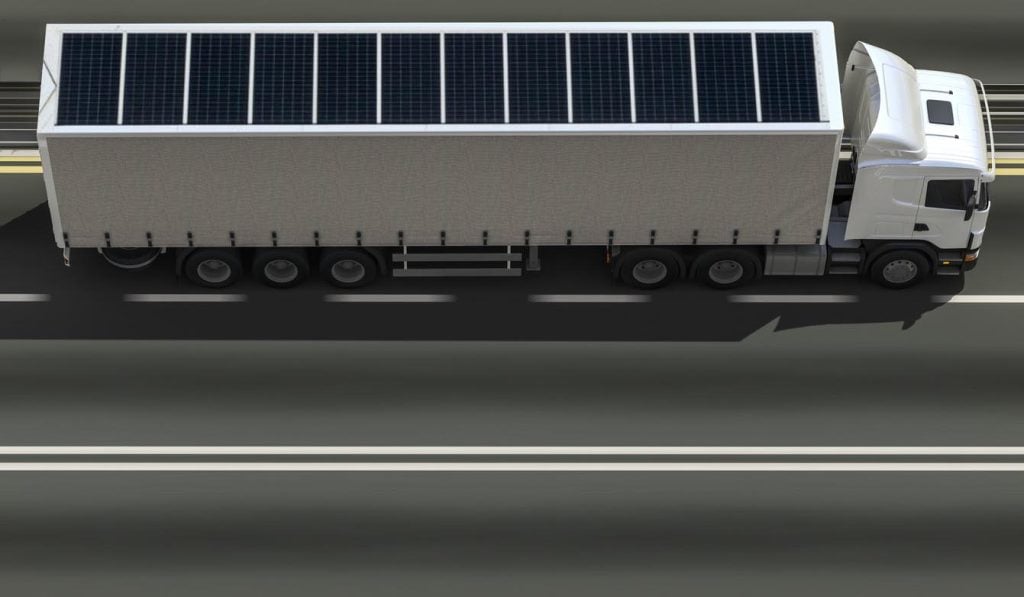
Solar panels on a car are a curiosity. Solar panels on a refrigerated trailer are straightforward engineering, and the difference is the roof. A reefer trailer offers roughly 400 square feet of flat, unshaded surface sitting above a unit that draws power continuously, including while the truck is parked. That combination, plenty of area and a genuine standing load, is what vehicle-mounted solar has always needed and almost never had. This is the application where the arithmetic finally works.

Why a Trailer Roof Beats a Car Roof
The problem with solar on a car is not the panel, it is the ratio. A car offers a small, curved, frequently shaded roof to a vehicle that consumes energy at highway speed far faster than any roof can gather it. Real-world gains land in the low single-digit miles per day.
A refrigerated trailer inverts every one of those factors. The roof is large and flat. The vehicle spends substantial time parked in the open at distribution centers and truck stops, which is exactly when a car would be gathering nothing useful. And the load it serves is not propulsion, which is enormous, but refrigeration, which is comparatively modest and runs continuously.
What It Realistically Delivers
Be careful with the claims. Roof solar does not run a refrigeration unit outright on a hot day with a full load; the peak draw is well beyond what panels of that area produce. What it does is meaningful in a less dramatic way.
It keeps batteries charged so the unit’s electronics, telematics and controls do not drain them during long parked periods, which removes a common cause of a trailer that will not start a unit on Monday morning. It reduces engine or generator run time during standby, which is where a lot of reefer fuel is burned to do very little. And it supports electrical loads such as lift gates, lighting and door heaters that otherwise pull from the tractor.
Framed that way, the payback is real and unglamorous: less idling, fewer dead batteries, less maintenance on a diesel unit that spends fewer hours running.
Regulation Is Doing the Pushing
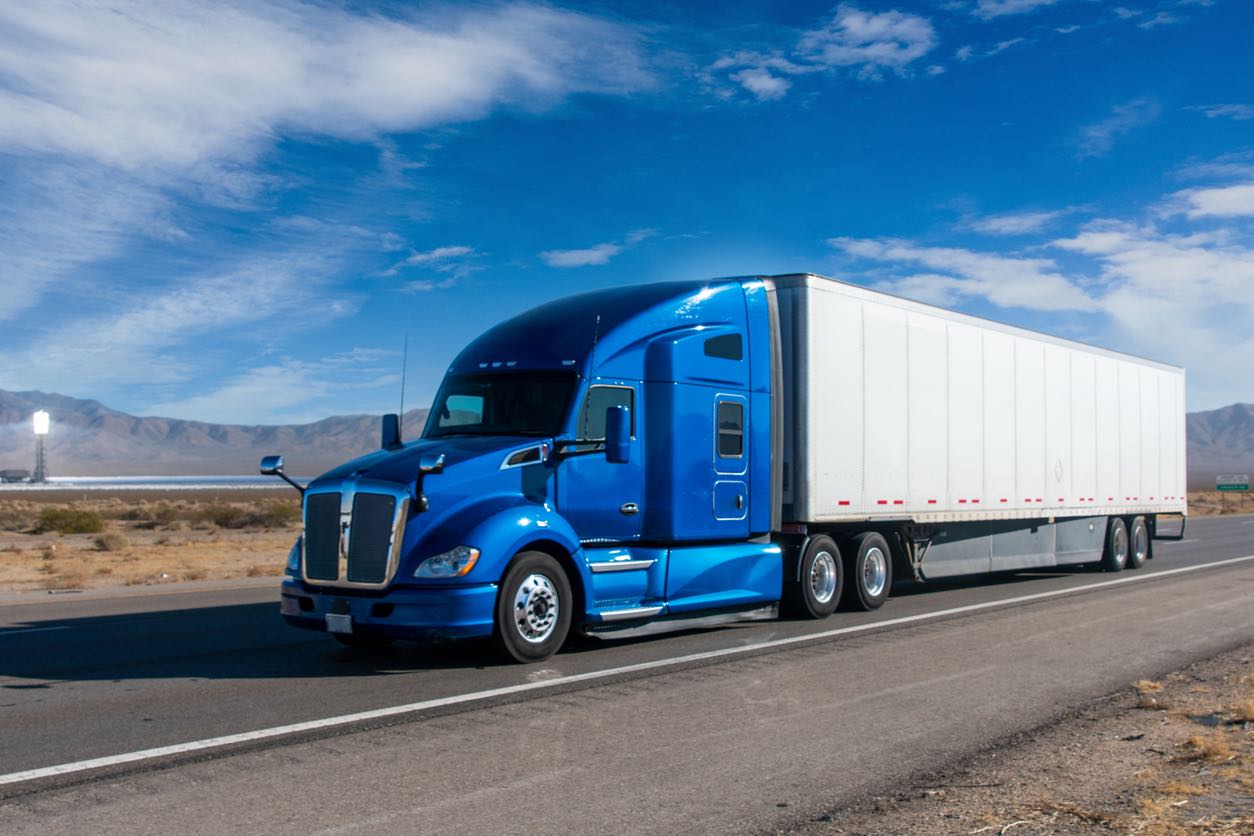
The commercial case is helped considerably by rules. California has been progressively tightening requirements on transport refrigeration units, pushing operators toward lower-emission and eventually zero-emission systems, and because so much refrigerated freight either originates in or passes through California, those rules shape fleet purchasing well beyond the state line.
That matters more than any individual technology, because it changes the question from whether solar saves enough fuel to justify itself to how a fleet meets a standard it has to meet regardless. Solar assist becomes one component of an electrified reefer package rather than a standalone efficiency gadget.
Where It Does Not Help
Worth stating plainly, because the marketing rarely does. A trailer that works nights, spends its parked hours indoors at a distribution center, or runs mainly in the northern winter gathers far less. Roof-mounted panels add weight and a maintenance item, and they are exposed to hail, branches and dock damage. And any calculation based on peak output in June sunshine will disappoint in practice.
The honest framing is that this is an incremental efficiency and reliability measure with a decent payback in the right duty cycle, not a transformation.
Does Any of This Affect Vehicle Shipping?
Not directly, and it is worth being clear rather than stretching the connection. Car carriers are open or enclosed trailers with no refrigeration and no meaningful standing electrical load, so there is nothing for roof solar to usefully power.
The indirect link is real though. Refrigerated freight and auto transport draw on the same driver pool, the same fuel prices and the same regulatory environment, so anything that reduces reefer idling and fuel burn eases cost pressure across trucking generally. And the underlying lesson applies directly to the vehicle side: solar works where there is area and a standing load, which is why it belongs on a trailer roof or an RV rather than on a car.
Common Questions
Can solar run a refrigeration unit by itself? Not in normal conditions. It offsets standby loads and keeps batteries charged rather than replacing the unit’s primary power.
What is the actual saving? Mostly reduced idling and fewer battery failures, which show up as lower fuel burn and less downtime rather than as a headline number.
Why does it work here and not on cars? Area and duty cycle. A trailer roof is large and flat, the trailer sits in the open, and the load it serves is far smaller than propulsion.
Is regulation forcing this? California’s rules on transport refrigeration units are pushing fleets toward lower-emission systems, and that influences purchasing nationally.
Do car carriers use solar? No meaningful application. There is no refrigeration and no standing electrical load worth powering.
Get a Quote
Call Ship A Car, Inc. at (866) 821-4555 to speak with a coordinator, or request a vehicle move estimate by email through the quote calculator.