The Alaska Highway: What It Takes to Move a Vehicle Up the Alcan
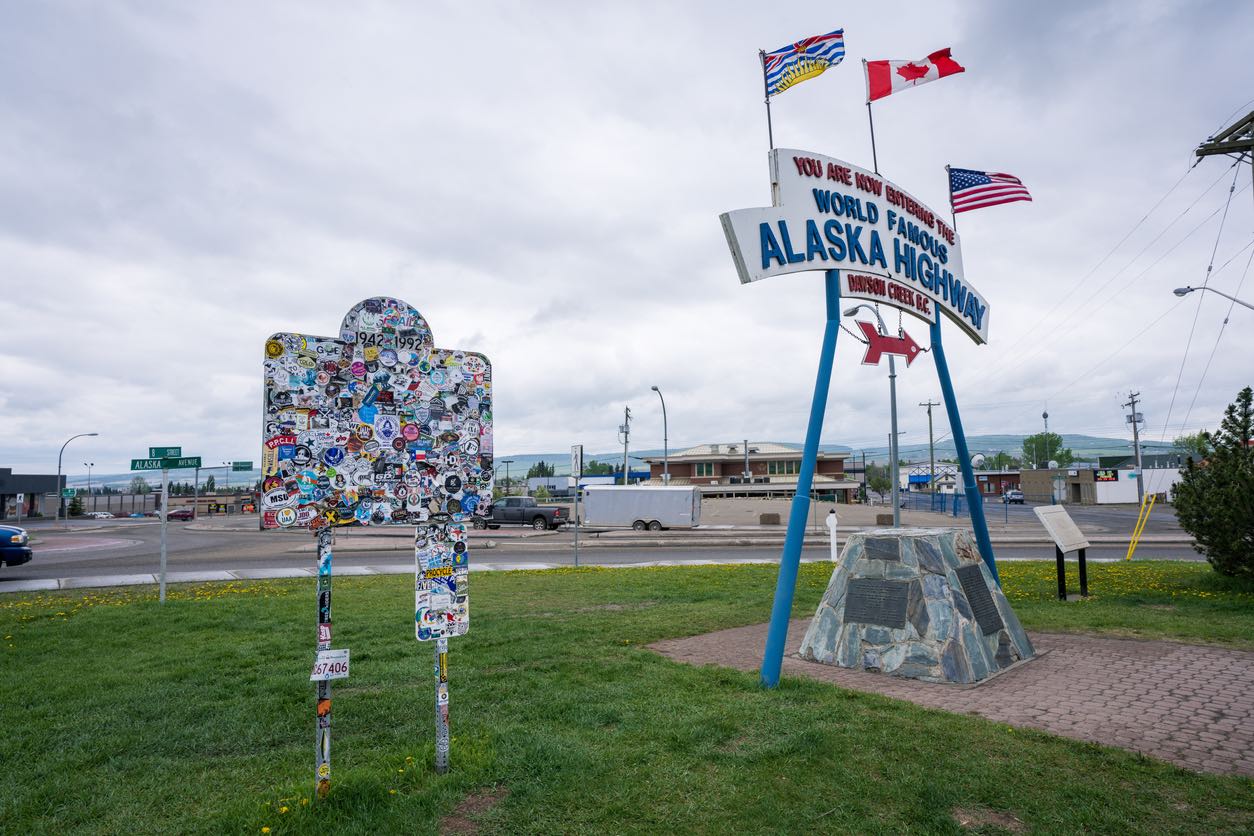
The Alaska Highway runs roughly 1,400 miles from Dawson Creek, British Columbia to Delta Junction, Alaska, and it is the only road connection between Alaska and the rest of the United States. Every vehicle that reaches Alaska by land goes up it, which makes it one of the more consequential roads in North America and one of the most misunderstood.
Here is what the route actually involves, why it prices the way it does, and what to expect when a vehicle travels it.

The Route, and Why It Crosses Canada
The highway begins at Mile Zero in Dawson Creek, runs northwest through British Columbia and the Yukon, and ends at Delta Junction, southeast of Fairbanks. Almost all of its length is in Canada.
That is the fact that shapes everything else. A vehicle moving between the lower 48 and Alaska by road makes an international crossing in each direction, with customs formalities at the border, and it travels for over a thousand miles through territory with long distances between services.
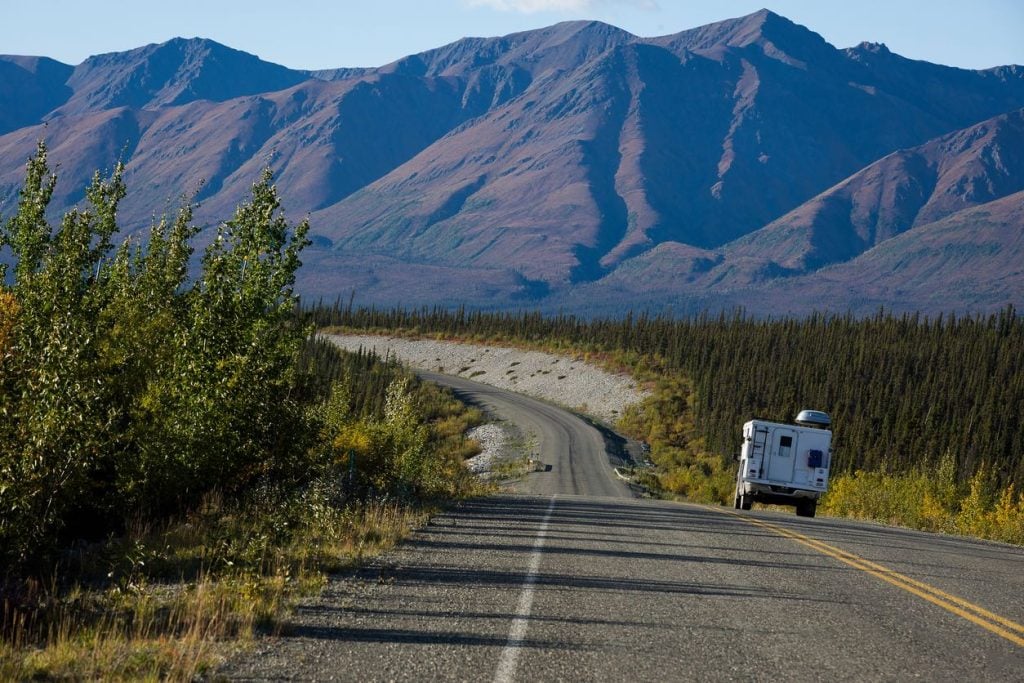
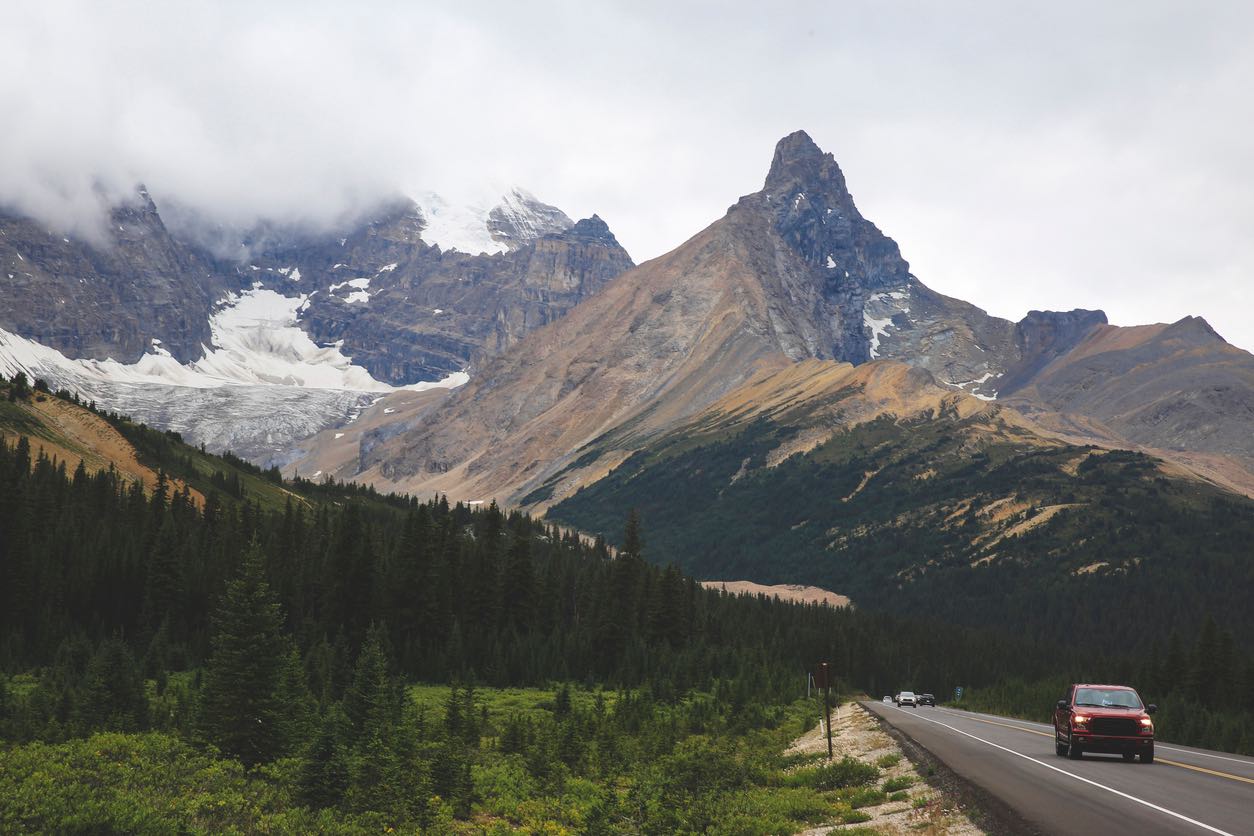
The road itself is fully paved now and maintained year round. The persistent image of an unpaved wilderness track is decades out of date. What has not changed is the remoteness: stretches with no fuel for well over a hundred miles, limited cell coverage, and weather that can close sections at short notice.
Why It Is Expensive to Ship On
Five reasons, and they compound.
Distance. Seattle to Anchorage by road is roughly 2,300 miles, much of it through sparsely populated country.
No backhaul. This is the big one. Carriers price a lane on the assumption of finding a load in the other direction. Northbound volume to Alaska substantially exceeds southbound, so a truck frequently returns partly or entirely empty, and that empty mileage is in the northbound price.
The border. Two international crossings, customs documentation for the vehicle, and carriers who must be authorized to operate in Canada. That narrows the pool of carriers considerably.
Seasonality. Demand concentrates in the warmer months, and winter transport carries real operational risk and cost. The spread between summer and winter is wider on this route than on almost any other.
Remoteness. A mechanical problem 300 miles from the nearest shop is a different event from one on Interstate 40.
Road Versus Barge
The alternative most people do not know about, and often the better one.
Vehicles also move to Alaska by barge, typically from Washington state to Anchorage, and by ferry through the Inside Passage. Barge is frequently competitive on price with road transport, avoids the border crossing entirely, and puts no highway miles on the vehicle.
Road transport wins on flexibility and on destinations away from the ports. Interior Alaska, Fairbanks, and anywhere off the coastal network is more directly served by road, and a road move can collect from a specific address rather than a terminal.
The honest advice is to price both. Which one wins depends on where in Alaska the vehicle is going, the season, and how much the timing matters, and the answer is not the same for every move.
What the Border Crossing Involves
Worth understanding in advance, because it is the part with the least margin for improvisation.
A vehicle moving between the lower 48 and Alaska by road exits the United States, transits Canada, and re-enters the United States. For a commercial carrier that means authority to operate in Canada, the correct documentation for a vehicle it does not own, and a driver with the credentials to make the crossing.
For an owner driving personally, it means proof of ownership, identification that satisfies both countries, and awareness of what cannot cross. Firearms, certain foods and some goods that are unremarkable on one side of the line are restricted on the other, and a vehicle loaded with household contents is a far slower crossing than an empty one. This is one more reason an empty vehicle is the right way to ship, quite apart from the insurance point.
Driving It Yourself
Plenty of people do, and it is a genuine trip rather than a chore. It is also a real undertaking.
Budget a week or more each way at a sensible pace. Carry a full size spare and know how to use it, since tire damage from gravel breaks and construction is the most common problem on the route. Fill up more often than seems necessary, because the gap between stations is the constraint rather than the tank.
Windshield damage is close to expected. Debris thrown by oncoming trucks on gravel stretches is what causes it, and increasing your following distance is the only real mitigation.
Carry documentation for the border in both directions, including proof of ownership for the vehicle. And plan for limited connectivity: download maps rather than relying on a signal.
Preparing a Vehicle Either Way
If it is being shipped, the usual applies with a little more emphasis. Wash it and photograph every panel in daylight, since the condition report matters more on a long remote route. Empty the interior completely, because personal items are not covered by cargo insurance and a customs crossing is a poor place to be carrying undeclared contents.
Leave about a quarter tank of fuel. Confirm the pickup and delivery arrangements specifically, since Alaskan delivery points are often further from a terminal than customers expect and a meeting point may be the practical answer.
If you are driving it, service it first properly: tires, brakes, cooling system, battery and wipers. The route is not technically difficult, but it is unforgiving of a marginal component.
Common Questions
Is the Alaska Highway paved? Yes, along its full length, and maintained year round. The unpaved reputation is decades out of date.
Why does shipping to Alaska cost so much? Distance, two border crossings, a narrower carrier pool, strong seasonality, and northbound volume that far exceeds southbound so trucks return empty.
Is barge cheaper than road? Frequently competitive, and it avoids the border. Road is better for interior destinations and specific addresses. Price both.
When is the best time to ship? The warmer months are cheaper and lower risk. Winter transport is possible but costs more and carries real weather exposure.
What is the most common problem driving it? Tire and windshield damage from gravel and construction. Carry a full size spare.
Get a Quote
Call Ship A Car, Inc. at (866) 821-4555 with both zip codes, your date range and the Alaskan destination, or request an estimate for the move through the quote calculator.