
Distracted Driving in Trucking
A truck traveling at highway speed covers roughly the length of a football field in the time it takes to glance at a phone, and it needs far more room to stop than the car in front of it. That combination is why distracted driving is treated as a serious safety violation in commercial trucking rather than as a bad habit, and why the federal rules on it are stricter than the rules that apply to ordinary drivers.

What the Federal Rules Actually Say
Commercial drivers operate under restrictions that go beyond most state laws for passenger vehicles.
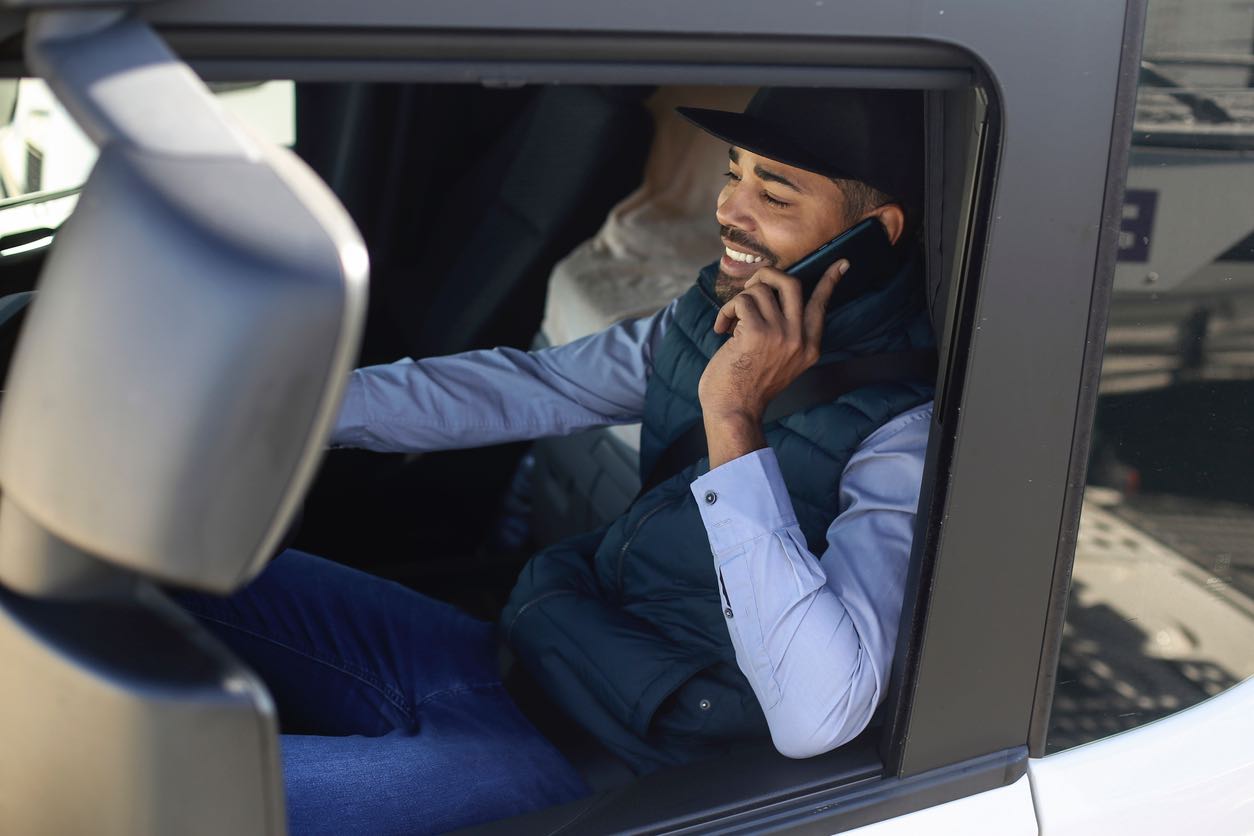
Texting while driving a commercial motor vehicle is prohibited outright. So is holding a mobile phone to make a call, or reaching for one in a way that requires leaving a seated driving position. Dialing more than a minimal number of buttons is also restricted.
Hands free use is permitted, provided the device is within reach and can be operated with a single touch. The rule is not that phones are banned; it is that anything requiring the driver to look away, reach or type is.
Penalties are meaningful. Drivers face civil penalties and can be disqualified from operating commercially after repeated violations. Carriers that allow or require drivers to use handheld devices face substantially larger penalties, and violations feed the carrier’s federal safety record.
It Is Not Only Phones
The research on this consistently finds that phones are the most cited distraction but far from the only one.
Reaching for an object in the cab is one of the highest risk actions measured, because it frequently combines looking away with a change in seating position. Eating and drinking, reading anything including paperwork or a map, and adjusting controls or a dispatch device all appear repeatedly in crash analysis.

External distraction matters too: looking at a crash scene, roadside activity or scenery. So does the internal kind, meaning fatigue and preoccupation, which do not involve looking away at all and are correspondingly hard to police.
The common thread in the studies is duration. Brief glances away from the road are near universal and largely survivable. Eyes off the road for more than about two seconds is where risk rises sharply, and a phone interaction almost always exceeds that.
What the Naturalistic Studies Found
Most of what is known about this comes from naturalistic driving research, where cameras and sensors record real drivers over long periods rather than testing them in a simulator. That method is why the findings are unusually credible: nothing is staged and nobody is performing for a researcher.
Three results come up consistently. The first is that risk scales with time spent looking away rather than with the activity itself, which is why a hands free conversation measures very differently from reading a message even though both involve a phone.
The second is that tasks combining a visual glance with a physical reach are the worst of all, because the driver loses both attention and position at once. Reaching for a dropped object measures alarmingly high for something almost nobody thinks of as risky.
The third is that drivers systematically underestimate how long they were distracted. Video shows glances lasting several seconds that the driver recalls as momentary, which is why self reported data on this subject is close to useless and why camera evidence changed the industry’s understanding.
Why It Is Worse in a Truck
The physics are unforgiving in three separate ways.
Stopping distance is the first. A loaded combination at 80,000 pounds needs substantially more room to stop than a passenger car from the same speed, and that gap widens on a wet surface or a downgrade.
Mass is the second. Whatever the truck hits, it hits with far more energy, which is why crashes involving heavy vehicles have disproportionately severe outcomes for the other party.
Vehicle dynamics are the third. A truck cannot swerve the way a car can without risking a rollover or a jackknife, so the evasive options available to a distracted driver who looks up late are narrower.
What Carriers Do About It
The measures that work are structural rather than exhortative, and the better fleets treat this as a management problem.
Written policies that prohibit handheld use, applied consistently and without exceptions for dispatch, are the baseline. So is dispatch discipline: a carrier that calls drivers while they are moving has a policy in name only.
Forward and driver facing cameras have become common, and the evidence for them is reasonably strong, particularly where footage is used for coaching rather than only for discipline. Collision mitigation and lane departure systems reduce the consequences when attention does lapse.
And addressing fatigue matters as much as addressing phones, because a tired driver is inattentive whether or not a device is involved. That means realistic scheduling and paying for non driving time rather than pressuring drivers to make up delays.
What This Means If You Are Shipping
For a customer moving a vehicle, this is one more reason the carrier’s safety record is worth two minutes of your time.
Federal safety data includes driver related violations, and a carrier well above the national average is a carrier with a supervision problem. That truck may be carrying your car. Our guide to checking USDOT and MC numbers explains how to read it.
It is also a reason to be reasonable about communication. Customers frequently want to reach the driver directly for updates, and a driver who answers a phone while driving is doing something both illegal and dangerous. Route your questions through dispatch and accept that a driver will call back when stopped.
Treat a carrier who is hard to reach mid route as a carrier whose drivers are following the rules, not as poor service.
Common Questions
Can a truck driver legally use a phone? Hands free only, within reach and operable with a single touch. Texting and holding a phone are prohibited outright.
What are the penalties? Civil penalties for the driver, disqualification after repeated violations, and substantially larger penalties for carriers that allow it.
Is texting the main risk? It is the most cited, but reaching for objects in the cab measures as comparably dangerous, and fatigue causes inattention without any device.
Why is it worse in a truck? Far longer stopping distances, much greater mass on impact, and fewer safe evasive options without rolling or jackknifing.
Can I call the driver for an update? Better not to. Go through dispatch. A driver answering while moving is breaking federal rules.
Get a Quote
Call Ship A Car, Inc. at (866) 821-4555 with both zip codes and your date range, and ask for our USDOT number so you can check the safety record yourself, or request an estimate for the move through the quote calculator.