Shipping Mining Equipment
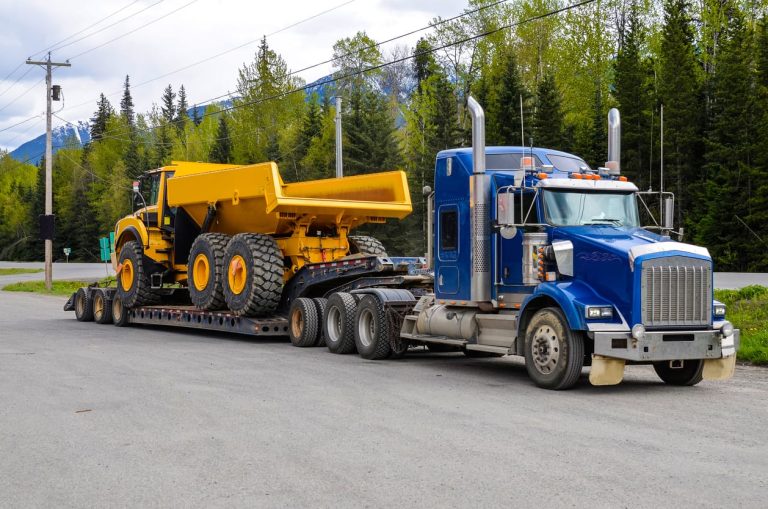
Most mining equipment does not move as one piece, and planning as though it will is the mistake that costs weeks. A large haul truck arrives at site as several separate loads: chassis, dump body, tires and assemblies, each permitted individually. Even mid sized machines routinely exceed legal width or height once they leave the yard. So the first conversation is not about trucks, it is about how the machine breaks down, what each component actually weighs, and how far in advance the permits have to start.
Plan It as Components, Not a Machine
Ask the manufacturer or your maintenance team how the unit is shipped from the factory, because that is usually the answer for moving it again.
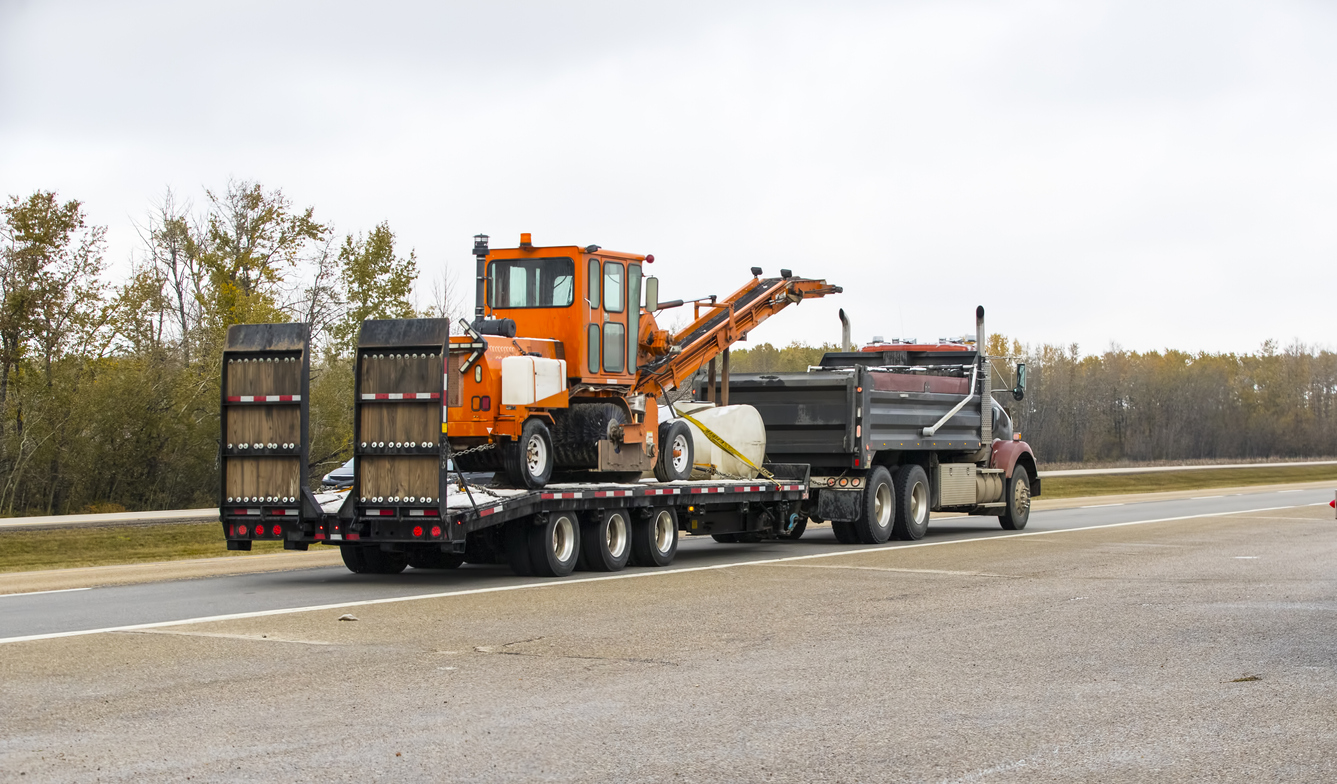
A large haul truck typically separates into a chassis, a body, and wheels and tires handled on their own. Shovels and excavators of any size come apart into a base, boom and counterweight. Crushers and screens often ship as a frame plus removable components. Each of those becomes a separate permitted load with its own trailer, route and cost.
The practical consequence is that a single machine can be five or six shipments. That is normal, it is how these units are delivered new, and it is far cheaper than the alternative of a superload move that may not be permittable at all.
The Tires Are Their Own Problem
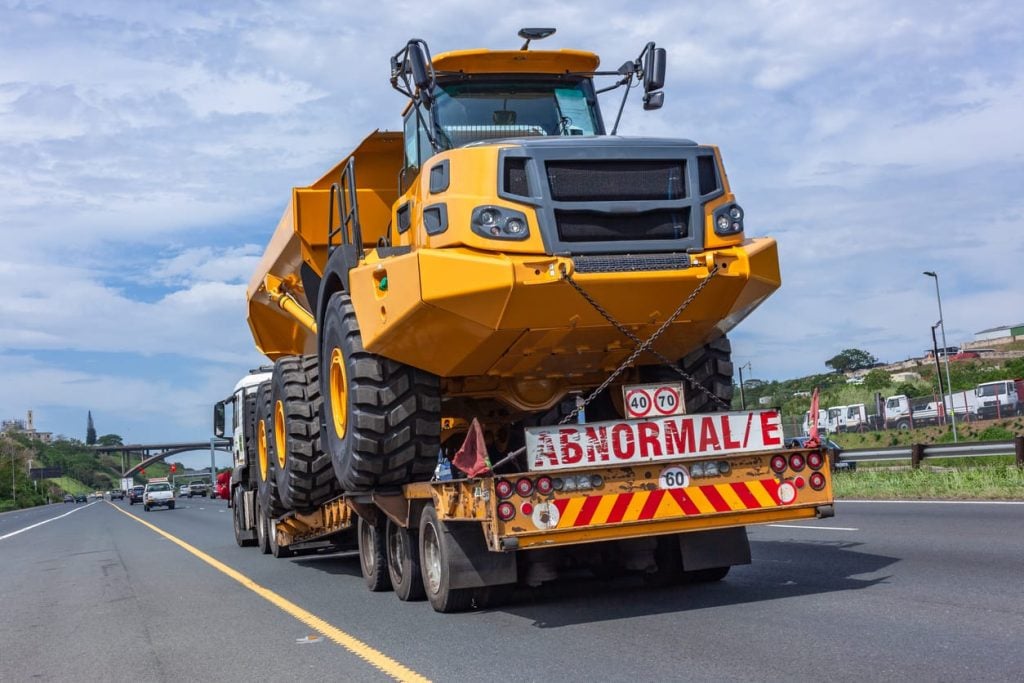
Worth stating separately because it surprises people outside the industry. Large off the road mining tires can stand taller than a person and weigh several tons each, and a set of them is not an accessory to the shipment, it is a shipment.
Loaded upright they are often over height. Laid flat they are often over width. Either way they usually need their own trailer and permit, and they need proper cradling and securement because a loose tire of that size is genuinely dangerous.
Count them in from the start rather than treating them as something to sort out at the end.
Weigh It, Do Not Estimate It
Permits are issued against declared weights and dimensions, and an inaccurate declaration is the fastest way to have a load stopped at a scale.
Get certified weights per component rather than a brochure figure for the complete machine. Measure each piece as it will actually travel: height to the highest fixed point, width at the widest, length including anything left attached. Note the center of gravity and any designated lift points, because a rigging crew needs those.
Two machines with the same model number differ once buckets, ripper teeth, counterweights or aftermarket cabs are involved. The numbers from your yard are the ones that matter.
Permits, Escorts and Lead Time
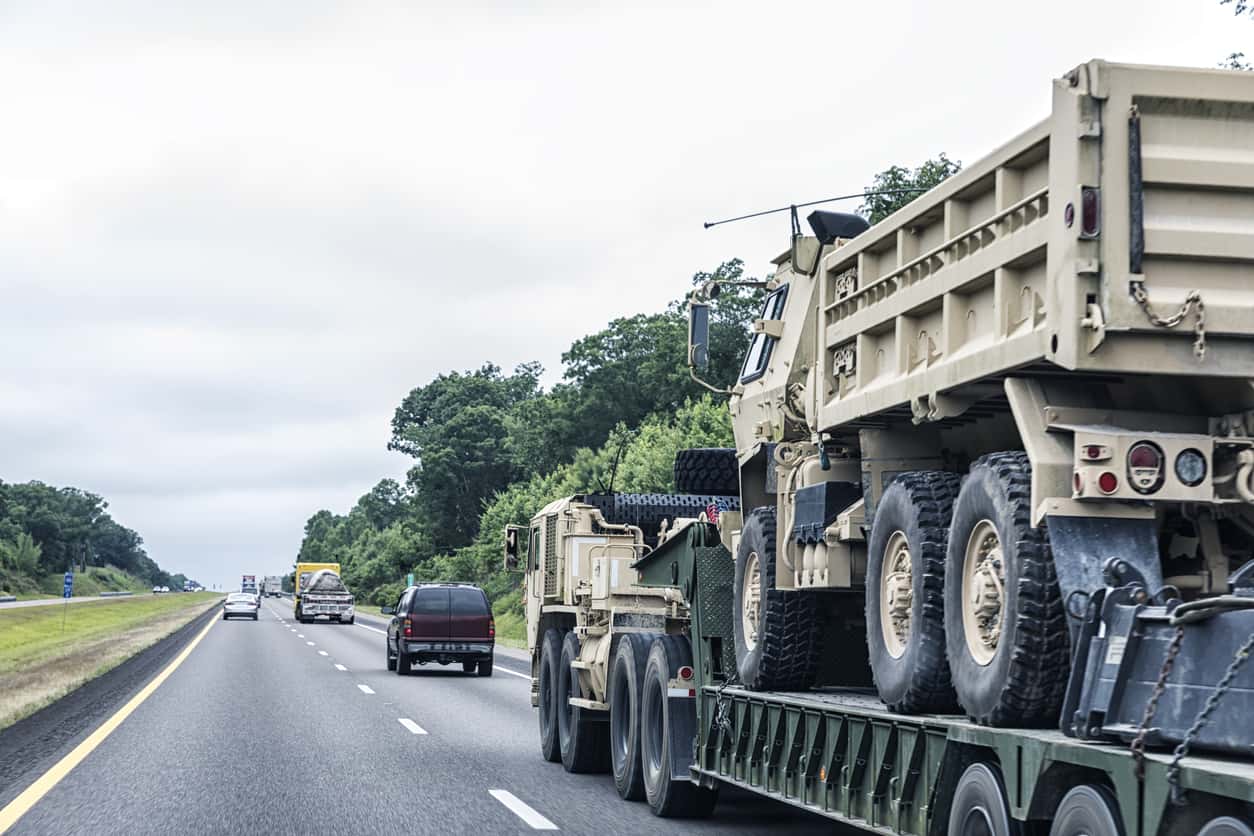
Anything beyond 8 feet 6 inches wide, 13 feet 6 inches high or 80,000 pounds gross needs an oversize or overweight permit from every state on the route, each for a defined path and period.
Mining components regularly go well past those thresholds, which moves them into superload territory. That brings route surveys, engineering analysis of bridges, escort vehicles, sometimes police escorts, and occasionally arrangements to lift utility lines or temporarily remove signage. Travel is generally restricted to daylight on weekdays with holiday restrictions on top.
Lead time is the thing to internalize. A routine permitted load can often be arranged in days. A genuine superload with bridge analysis is measured in weeks and sometimes longer. Start the conversation as soon as the purchase or the move is decided, not once the machine is ready.
Site Access at Both Ends
Mine sites and quarries are usually remote, and the last few miles are frequently unpaved, steep or seasonally restricted. That is often harder than the highway portion.
Tell us honestly what the access looks like: surface, gradient, turning room, overhead clearances, and whether there is a loading pad and equipment on site to assist. Whether a crane is available at either end changes the trailer choice, because a machine that can be craned on does not need a ramp angle that works.
Seasonal restrictions matter too. In northern states, spring thaw weight postings can close local roads to heavy loads while the interstate leg is unaffected.
Preparing Each Component
Most damage happens during loading and securement rather than on the road.
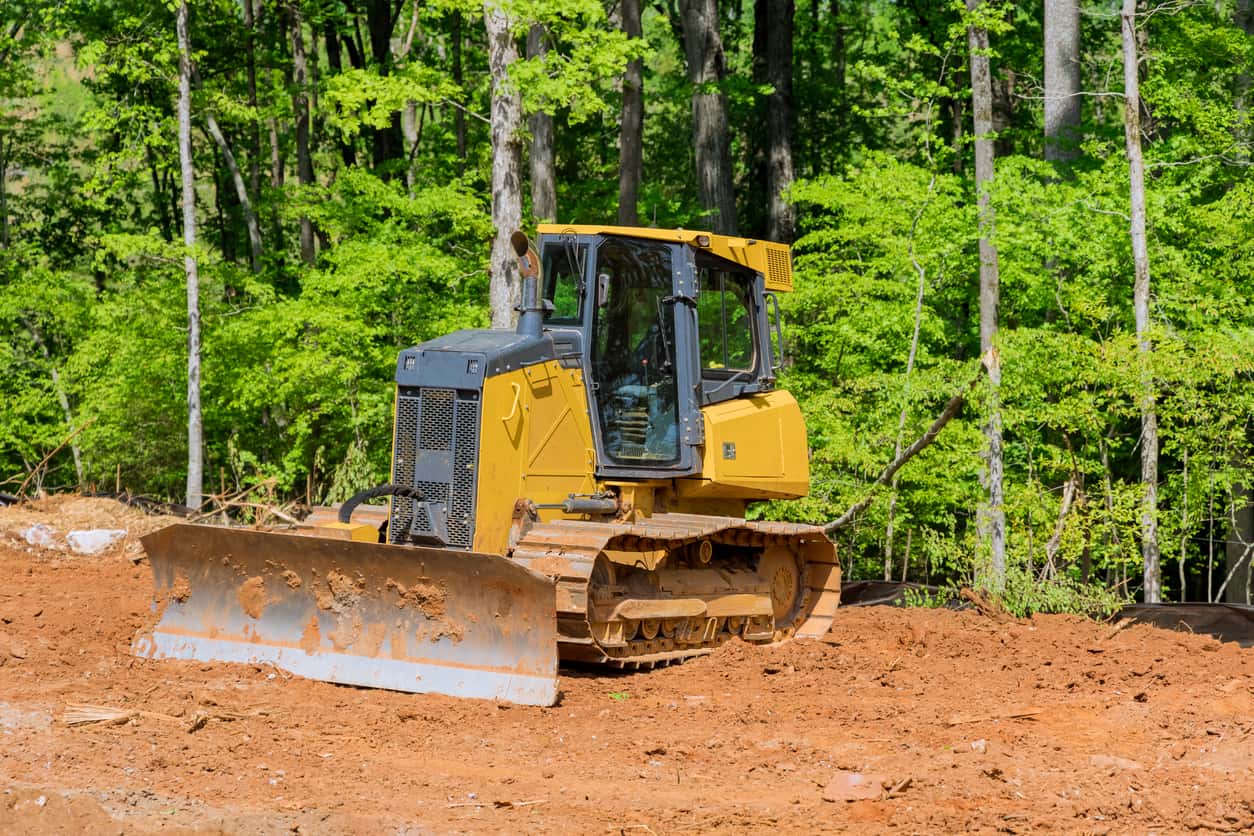
Drain or reduce fluids to the level the carrier specifies, and be explicit about anything that cannot be drained. Lower, retract and pin booms, blades and stabilizers. Remove or secure everything loose, including buckets, teeth, mirrors, lights and exhaust stacks that raise the travel height. Clean off mud and rock, both because debris falling from a load is a serious matter and because it hides existing damage.
Photograph every component from all sides before it is loaded, including the undercarriage and glass, and walk each one with the driver so existing condition is recorded before it moves.
Common Questions
Does the machine need to be disassembled? Usually, for large units. How it shipped from the factory is normally how it should ship again.
Do the tires ship separately? Large mining tires generally need their own trailer and permit, upright or flat depending on the dimensions.
How far ahead should I book? Routine permitted loads in days; a superload needing bridge analysis and escorts in weeks. Start early.
What do you need to quote? Certified weight and measured dimensions per component, both site addresses, and what the access and lifting equipment look like at each end.
Can you handle a non running machine? Yes, with winching or crane assistance. Say whether it rolls and steers, because that changes the equipment.
Get a Quote
Call Ship A Car, Inc. at (866) 452-3657 for heavy haul and specialized freight, with your component list, certified weights and both site addresses.