How to Vet a Heavy Haul Transport Company Before You Hire One
Heavy haul is the part of transport where hiring badly costs the most. The loads are expensive, the permits are unforgiving, and a carrier who is not properly authorized or insured for oversize work creates exposure that only becomes visible when something has already gone wrong.
Here is what to verify, what to ask, and which answers should end the conversation.
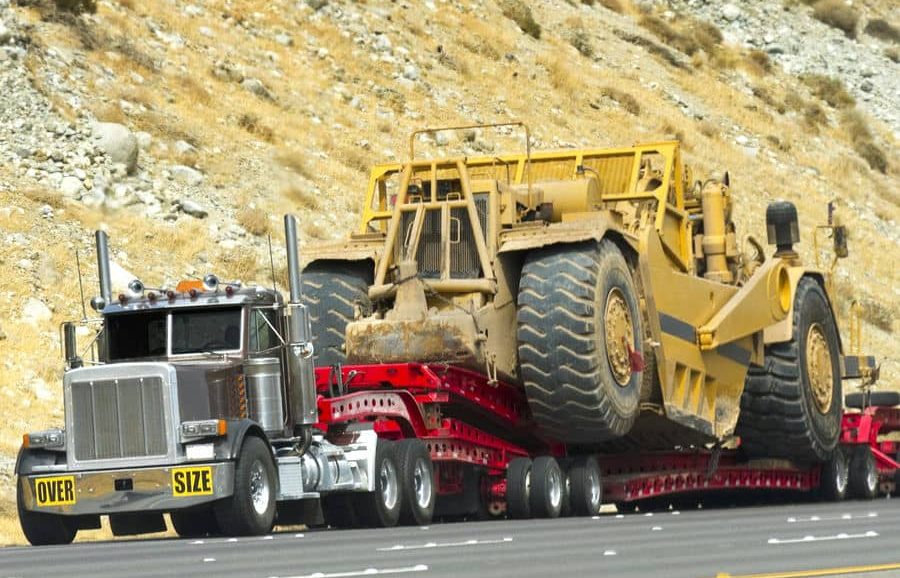
Verify the Authority First
Before discussing price, confirm the company exists as it claims to.
Every legitimate carrier and broker operating across state lines is registered with the federal motor carrier regulator and holds a USDOT number, an MC number, or both. Ask for it and look it up yourself rather than trusting a number printed on a website.
Four things to check. That the authority is active rather than revoked or pending. That the legal name and address on file match what you were told, since borrowed numbers are a known tactic. That there is an operating history rather than a registration created weeks ago. And the safety record, including roadside inspection and out of service data, which is public.
The out of service rate is the most informative single number for heavy haul specifically. Equipment pulled out of service at a roadside inspection means a load sitting on a shoulder waiting for a replacement truck, and that is a schedule and cost problem before it is anything else.
Check the Insurance Against Your Load
Ask for the certificate of insurance and read it rather than accepting a description.
Liability coverage protects against damage the truck causes to others. Cargo coverage protects the thing being hauled, and the limit is what matters. On heavy haul the values involved routinely exceed standard cargo limits, so compare the number on the certificate against the replacement value of your machine.
Two specifics that matter here more than in general freight. Whether the policy covers oversize and overweight operations, since some exclude them or limit them. And whether it covers loading and unloading, which is when a significant share of heavy equipment damage actually occurs.
If the values are high, verify the certificate with the agent named on it. That is one phone call and it distinguishes a document from a claim you can actually make.
Ask Who Handles the Permits
The question that separates operators who do this routinely from those who do not.
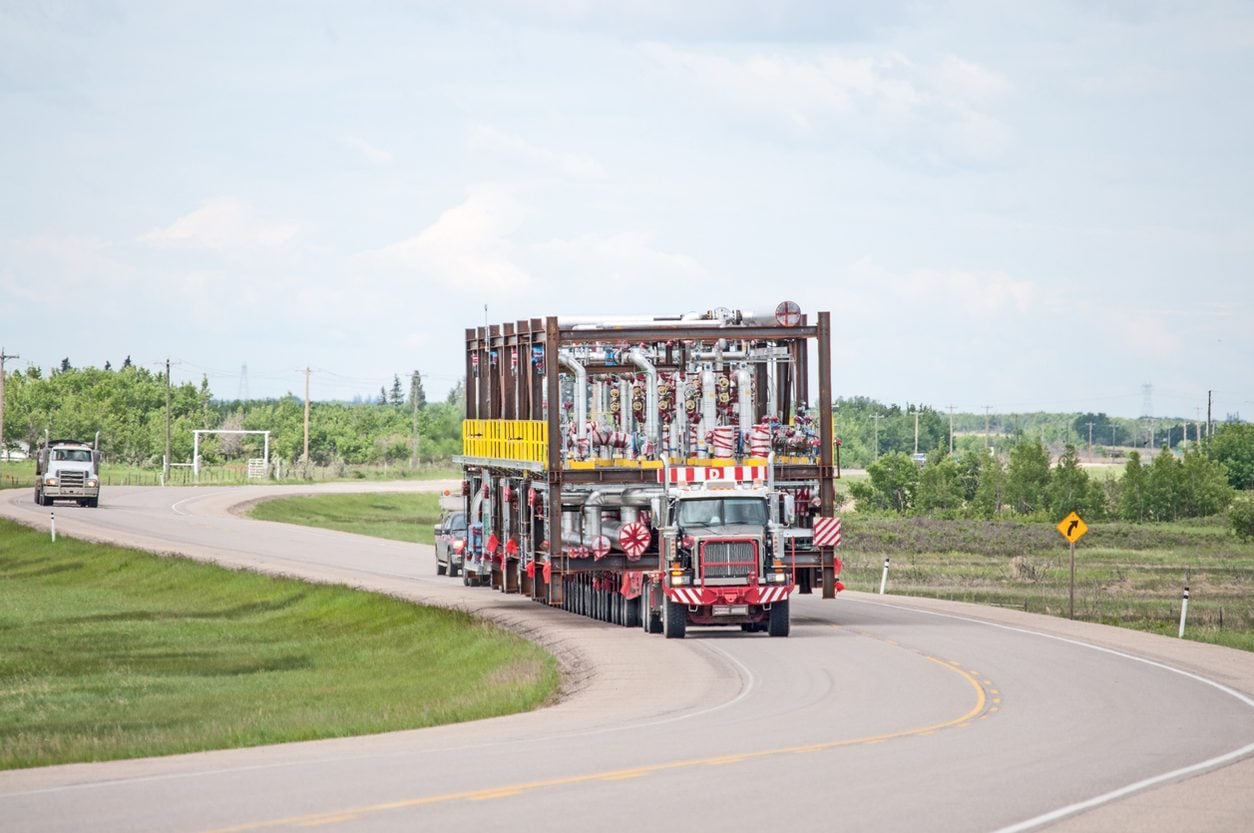
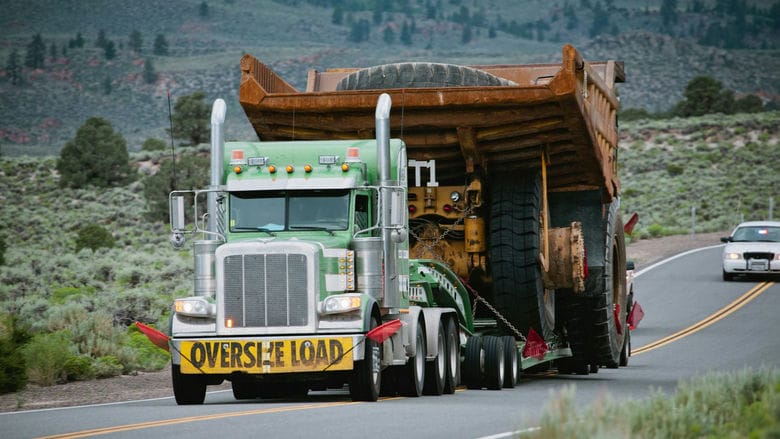
Oversize permits are issued per state, each with its own fee, route and conditions, and there is no national permit. A competent heavy haul operation handles this as a matter of course and can tell you which states your route crosses, roughly how long each takes to issue, and whether anything on the route requires an engineering review.
Ask specifically whether the quoted price includes permits, escort vehicles and any required route survey, or whether those are added later. Both are legitimate approaches. What is not legitimate is a quote that does not mention them at all, because it is not a complete number and the difference appears on the invoice.
A vague answer here is a genuine warning sign. Permitting is the core competence of heavy haul, and an operator who cannot discuss it fluently has not done much of it.
Confirm the Equipment Matches the Load
The right trailer is what makes the numbers legal.
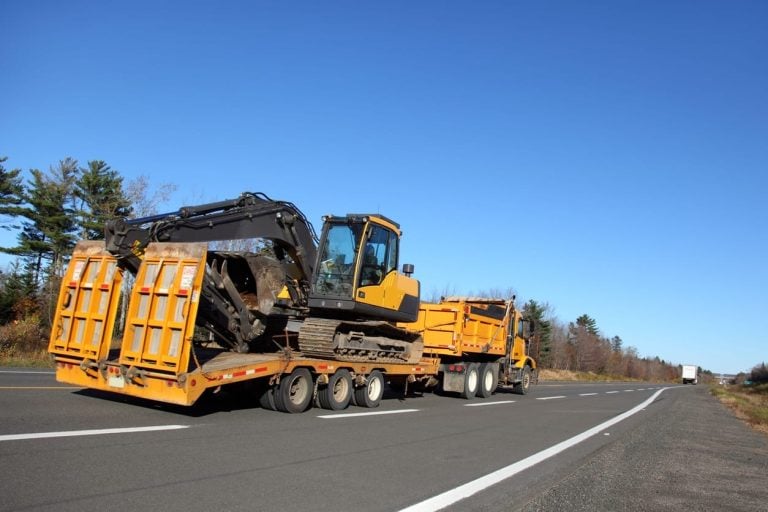
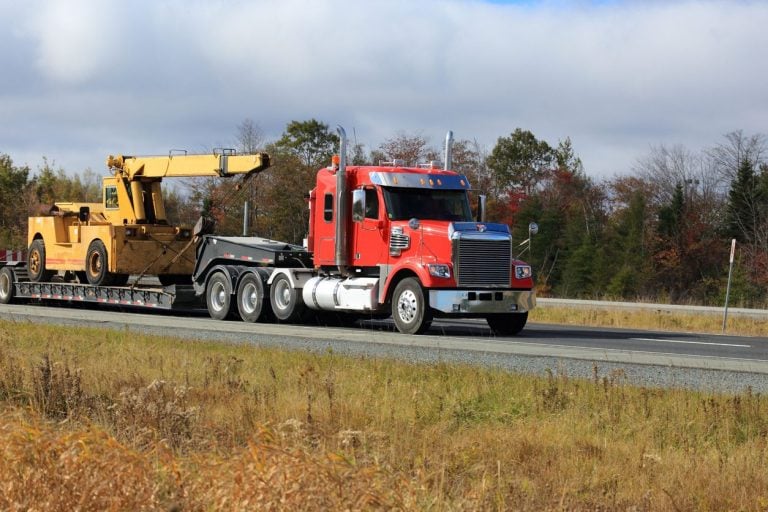
A standard flatbed sits high enough that a tall machine on one is immediately over height. A step deck lowers it. A double drop or removable gooseneck lowers the well section far enough that tall equipment can often travel without a height permit at all. A removable gooseneck also detaches at the front so tracked or wheeled equipment can be driven straight on rather than craned.
So ask which trailer they intend to use and why, and whether they own it or are sourcing it. Then give them accurate dimensions and weight, including the center of gravity if the load is unusual, so the answer means something. A carrier who quotes without asking for dimensions and weight is guessing.
Ask About Access at Both Ends
Where heavy haul jobs actually fail.
A long combination needs room to turn, ground firm enough not to sink under the weight, and clearance overhead. Many job sites and rural properties cannot take that, and the answer is a transfer at a staging point nearby, which adds equipment and time.
A competent operator raises this before quoting. Establishing it in advance is straightforward; discovering it when a truck is already at a gate is expensive.
Answers That Should End the Conversation
Five, and each is a reason to move on.
A refusal or inability to provide a USDOT or MC number. A refusal to produce an insurance certificate. A quote dramatically below the others, which in heavy haul almost always means permits, escorts or the correct equipment have been left out. A demand for a large deposit by wire, cryptocurrency or a cash app, none of which can be reversed. And no written contract or bill of lading, which is the document any claim depends on.
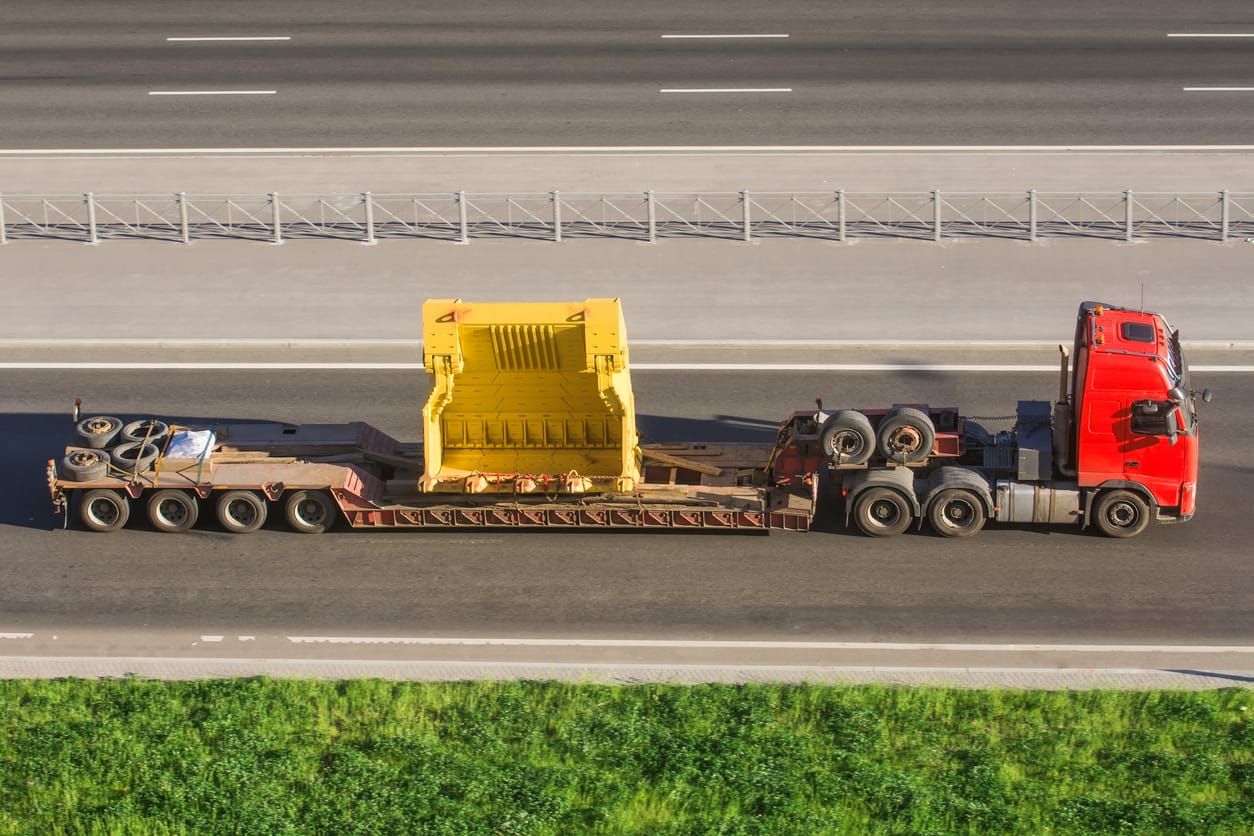
Broker or Carrier
Both are legitimate and they do different jobs.
A carrier owns trucks. A broker arranges the load with a vetted carrier from a network, which matters in heavy haul because the right equipment for an unusual load may be several states away and no single fleet has everything.
What you should expect either way is to know which carrier is actually assigned, and to be able to look them up. A broker who will not tell you who is hauling your machine is asking you to skip the verification above. What the process itself involves is set out in our page on oversize load permits and requirements.
Common Questions
What should I verify first? The USDOT or MC number with the federal regulator, confirming active authority, matching name and address, operating history and safety record.
Is standard cargo insurance enough? Often not for heavy haul. Compare the limit against replacement value, and confirm it covers oversize operations and loading.
Who arranges the permits? The carrier or broker should, per state. Ask whether the quote includes permits, escorts and any route survey.
Why is one quote much lower? Usually because permits, escort vehicles or the correct trailer have been left out of it.
Is using a broker a problem? No, provided you are told which carrier is assigned and can verify them yourself.
Get a Quote
Call Ship A Car, Inc. at (866) 452-3657 with dimensions, weight, both addresses and your date range, or price the move with the specialized transport calculator.