California Heavy Equipment Shipping
California is the one state where the federal dimensions are not the numbers to work from, and getting that wrong is how loads end up rerouted at the border. The state allows 14 feet of height rather than the 13 feet 6 inches most of the country uses, and it applies a length rule almost nowhere else does: a limit on the distance from the trailer kingpin to the rear axle. A machine legal in Nevada can be illegal on a California highway for reasons that have nothing to do with its size.
The California Numbers
Start with what moves without a permit, because the figures differ from the ones you may be used to.
Maximum width is 8 feet 6 inches, the same as everywhere. Maximum height is 14 feet, which is six inches more than the federal figure and is genuinely useful on a tall machine. Gross weight is capped at 80,000 pounds, with 20,000 on a single axle and 34,000 on a tandem, as elsewhere.
The one that catches out of state carriers is the kingpin to rear axle measurement, which California limits to 40 feet on most highways. It is a length rule expressed as a distance within the trailer rather than an overall length, and a long stretched trailer that is entirely legal elsewhere can fail it. On the designated national network routes the rules are more permissive, which is why route choice in California is not simply the shortest line.
The practical takeaway is not to memorize this. It is to use a carrier who runs California regularly, because the routing knowledge is the service you are buying.
Permits and Who Issues Them
Past any of those limits, the load needs a permit from Caltrans, issued against a specific machine, a specific configuration and a defined route.
Routine oversize permits are normally issued quickly. Wider loads bring pilot cars into the picture, with thresholds varying by road type, and the largest loads become extralegal or superload movements that require engineering review of the structures on the route. Those take weeks rather than days.
City and county permits are separate again. A machine going to a job site inside Los Angeles or San Francisco may need local authorization on top of the state permit, and the local rules frequently restrict which hours the load can move.
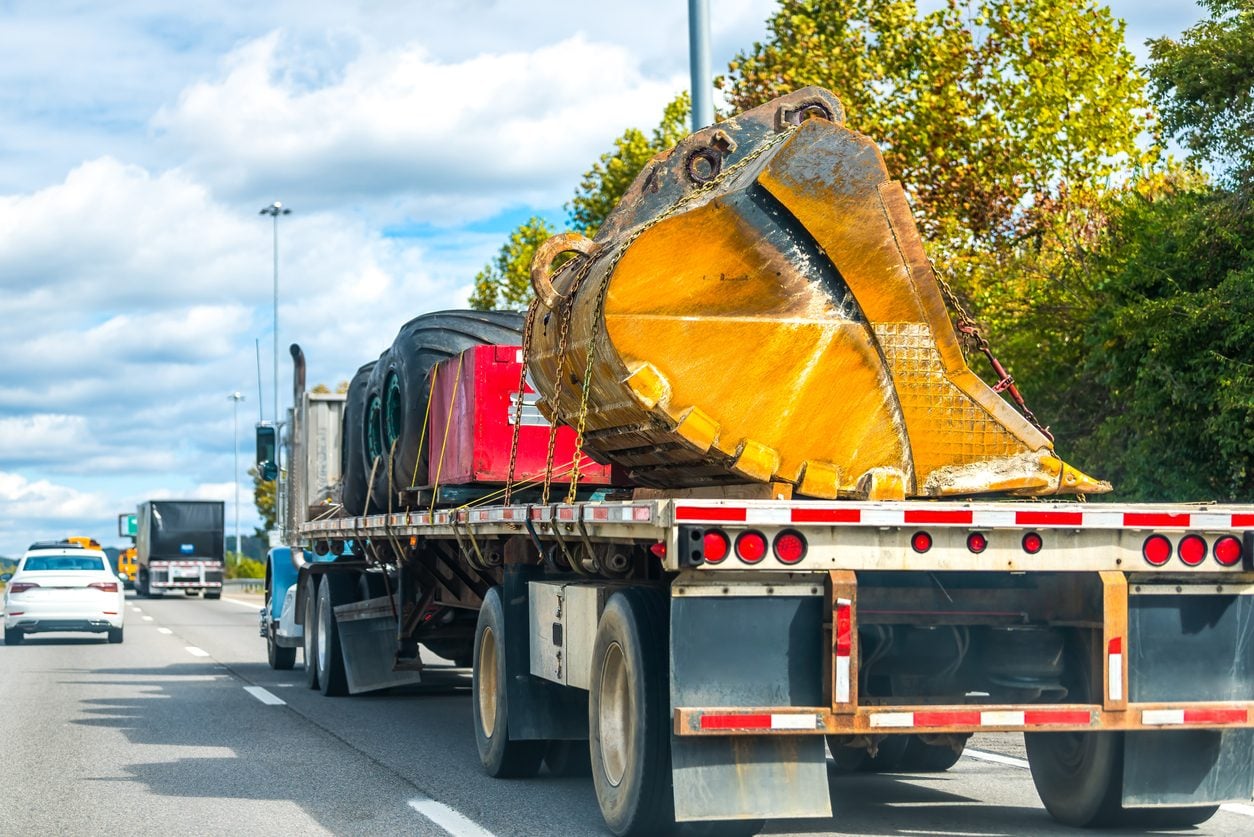
Emissions Rules Are a California Specific Question
This is the part that surprises people bringing equipment into the state and it is worth raising early.
California regulates diesel emissions more tightly than the rest of the country, through the California Air Resources Board. Off road diesel equipment operated in the state falls under a fleet program with registration and reporting obligations, and trucks operating in California are subject to their own compliance requirements.
None of this stops a machine being transported. It affects whether the machine can legally be put to work once it arrives, and that is a question for the buyer or the operator rather than the carrier. Ask it before you purchase equipment from out of state, not after it is sitting in your yard, because an older machine that is perfectly legal to own may not be legal to operate on a California job.
The Terrain Sets the Schedule
California geography does more to heavy haul schedules here than traffic does.
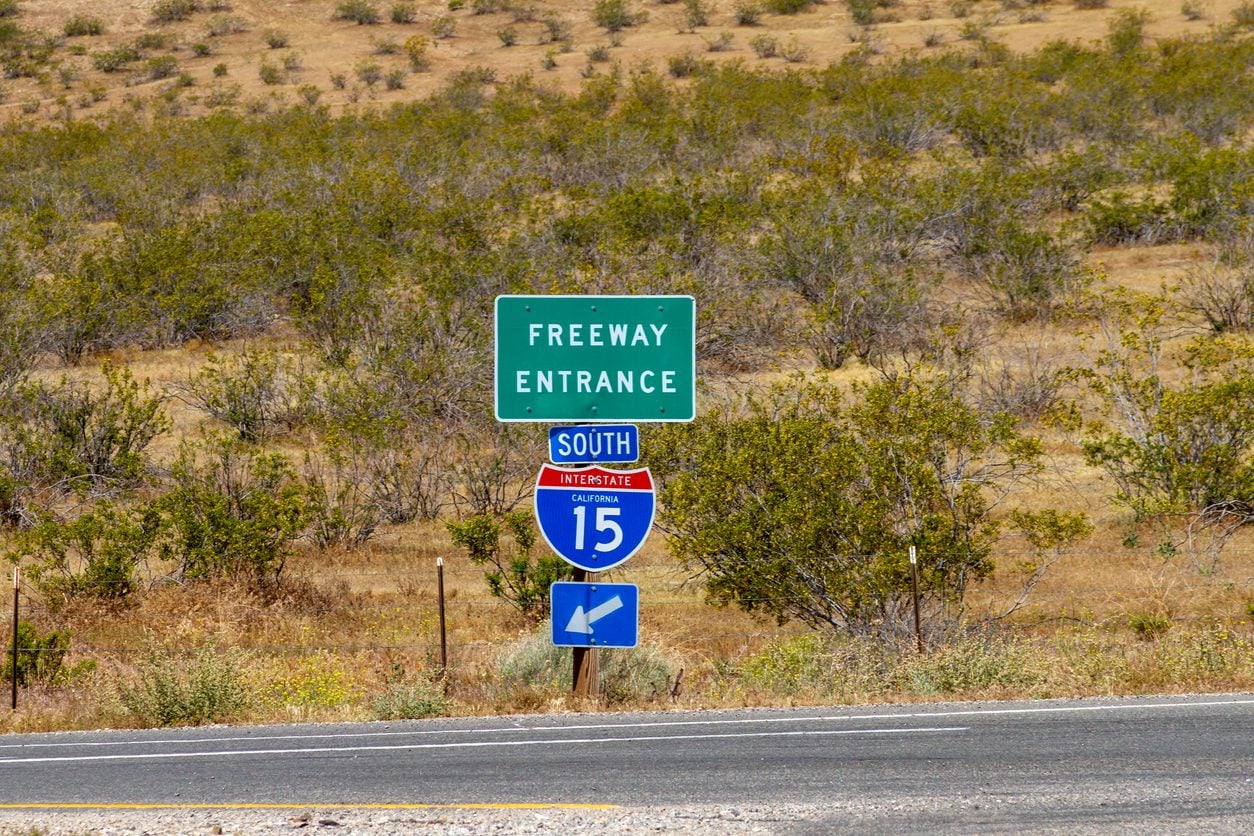
The Tejon Pass on I-5, universally called the Grapevine, climbs to around 4,100 feet and is the main link between Southern California and the Central Valley. Donner Pass on I-80 and the Cajon Pass on I-15 are the other significant climbs. Heavy loads move slowly on those grades in both directions, and descending a long grade with a permitted load is the part drivers plan around rather than the climb.
In winter the mountain routes carry chain requirements and close outright during storms, which affects anything crossing the Sierra Nevada. Coastal Highway 1 is scenic and irrelevant here, since it is unsuitable for this equipment and restricted to it in many stretches.
Build slack into any schedule that crosses a pass between November and April.
What Actually Moves in California
Three markets generate most of the volume and they need different equipment.
Construction is the largest, concentrated around Los Angeles, the Bay Area, San Diego and Sacramento: excavators, dozers, loaders and cranes moving between sites and rental yards. Agriculture in the Central Valley runs on tractors, harvesters and specialized orchard and vineyard machinery, most of which is wide rather than heavy and much of which moves hard against the harvest calendar. And the ports at Los Angeles, Long Beach and Oakland move imported and exported machinery in volume, which brings container and port drayage into the picture alongside conventional heavy haul.
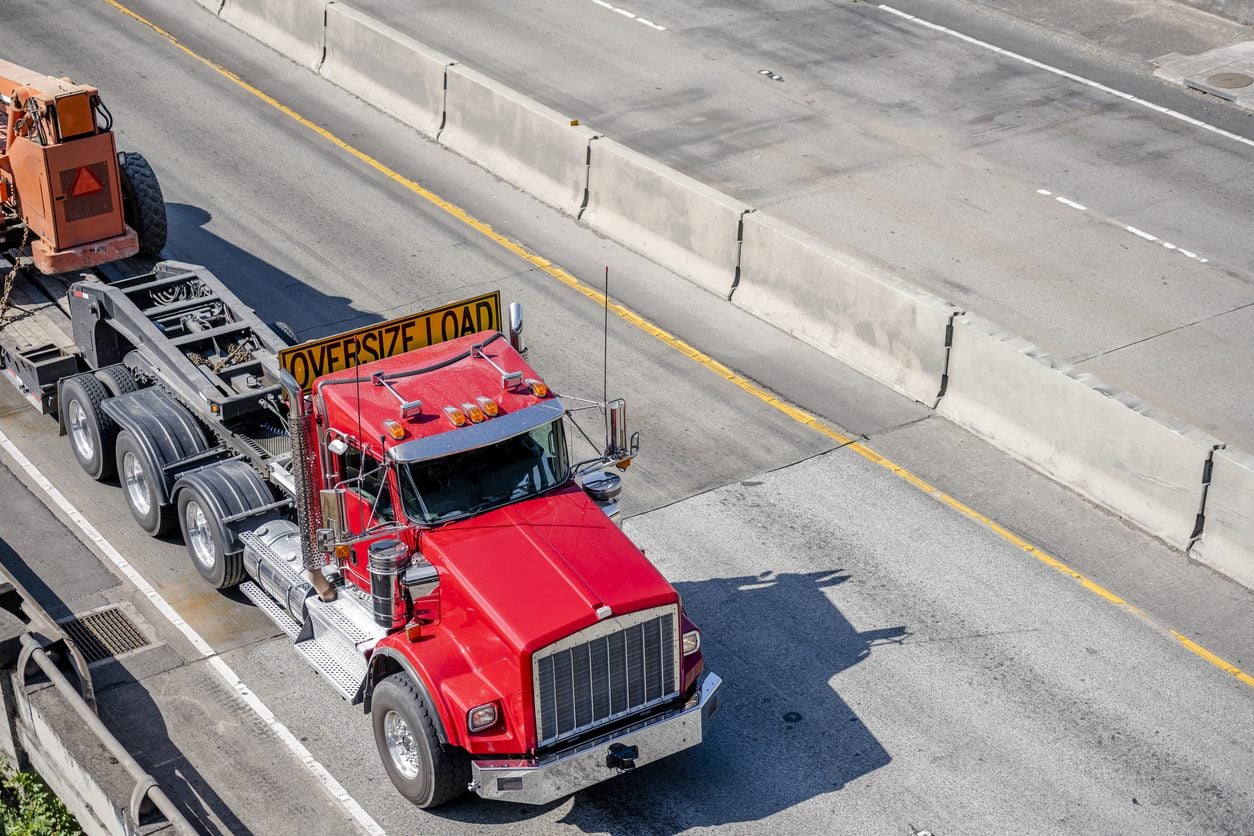
Choosing the Trailer
The machine picks the trailer, and California’s extra six inches of legal height occasionally changes the answer in your favor.
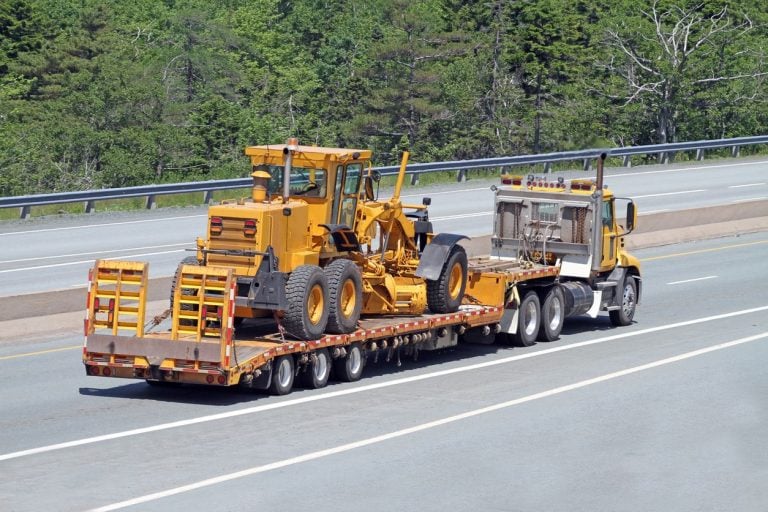
A flatbed suits smaller equipment such as skid steers, mini excavators and attachments. A step deck lowers the deck about a foot and handles mid size machines. A lowboy or removable gooseneck drops it further and is what large dozers, excavators and cranes travel on. Multi axle and stretch configurations spread weight to satisfy the bridge formula, though in California they interact with the kingpin rule, which is another reason the trailer decision belongs with a carrier who works here.
Preparing the Machine
Give an accurate weight from the manufacturer’s specification or a certified scale, and include everything traveling with it: counterweights, attachments, full tanks and fluid filled tires all add weight that is invisible from outside. Give the measured height from the ground to the highest fixed point rather than the brochure figure.
Then reduce the envelope where you can. Removing a counterweight, lowering or removing a boom, taking off a bucket or swapping wide pads can bring a load under a threshold and save a permit, an escort and the routing restrictions that come with both.
Secure or remove anything loose, drain what needs draining, disconnect the battery on a long move, and clean the tracks and tires, since carried mud is both weight and a road hazard. Photograph the machine in daylight from every side before it loads, including the undercarriage, the glass and the hour meter, and get existing damage described specifically on the bill of lading. Our guide to heavy equipment transportation covers the preparation process in more depth.
Common Questions
What is the legal height in California? 14 feet, which is six inches more than the federal 13 feet 6 inches used by most states.
What is the kingpin rule? California limits the distance from the trailer kingpin to the rear axle, generally 40 feet on most highways. It can make a trailer that is legal elsewhere illegal here.
Do I need a permit? Past 8 feet 6 inches wide, 14 feet high, 80,000 pounds gross or any axle limit. Caltrans issues it, and cities and counties may require their own.
Will CARB affect my machine? Possibly, but as an operating question rather than a transport one. Check before buying out of state equipment you intend to work in California.
How far ahead should I book? A week or two for a routine permitted load, considerably longer for a superload or for agricultural equipment in harvest season.
Get a Quote
Call Ship A Car, Inc. at (866) 452-3657 for heavy haul and specialized freight with the machine’s make and model, its measured width, height and weight, and both site addresses, or price it with the specialized transport calculator.