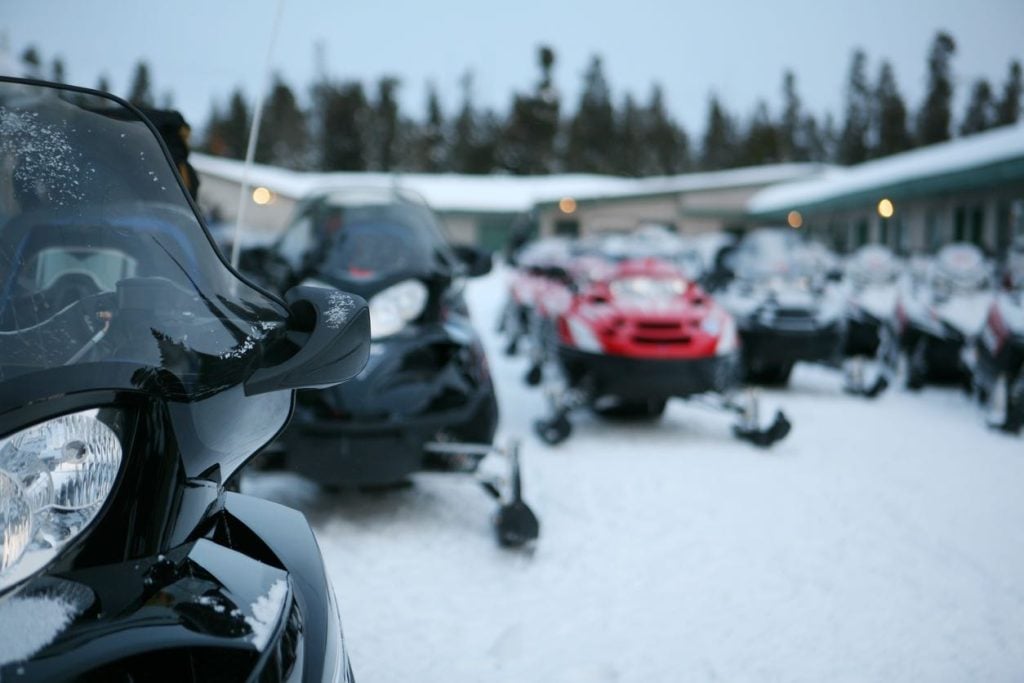
The best snowmobiling in the country is rarely close to home, and the sled is the one piece of gear you cannot check as luggage. That leaves two choices: tow it there, or have it shipped and meet it at the lodge. Below are the eleven destinations that earn a long trip, followed by the practical part most guides skip, which is how a snowmobile actually gets from a garage in Ohio to a trailhead in Wyoming.
The Eleven, Grouped by What They Offer
These are the places riders keep coming back to, and each one rewards a different kind of rider.
- West Yellowstone, Montana. The self-styled snowmobile capital, with groomed trails running to the park boundary and the Big Sky country beyond it. Book lodging early for the December opening.
- Yellowstone National Park. Guided, commercially guided only, and worth doing once in a lifetime for the geysers in winter steam.
- Michigan’s Upper Peninsula. Thousands of miles of groomed trail, lake-effect snow that arrives early and stays, and small towns built around the sport.
- Minnesota’s Iron Range. A trail network that connects towns, so you can ride between lodgings for a week without repeating a mile.
- Wyoming’s Continental Divide. Togwotee Pass and the Wind River country for deep powder and long sightlines.
- Colorado’s high country. Grand Lake, Vail Pass and Rabbit Ears for altitude riding above 9,000 feet.
- Maine. The Interconnected Trail System links the whole northern half of the state, with Moosehead Lake as the classic base.
- New Hampshire. The Great North Woods around Pittsburg, where the trails cross into Maine and Vermont.
- Utah. The Uinta Mountains and the Wasatch back country for powder within an hour of Salt Lake City.
- Idaho. Island Park sits on the west side of Yellowstone with its own trail network and fewer crowds.
- New York. Tug Hill takes the heaviest lake-effect snow east of the Rockies, and the Adirondacks run a season that starts in December and holds into March.
Tow It or Ship It: The Real Math
Towing a sled 1,500 miles in January means a truck, a trailer, fuel at winter mileage, two or three hotel nights each way, and the days of vacation those nights consume. It also means driving a trailer over the same mountain passes that make the destination worth visiting, in the same weather. For a rider who lives within a day of the trail, none of that matters. For a rider in Texas or Georgia heading to Montana, it is most of the trip.
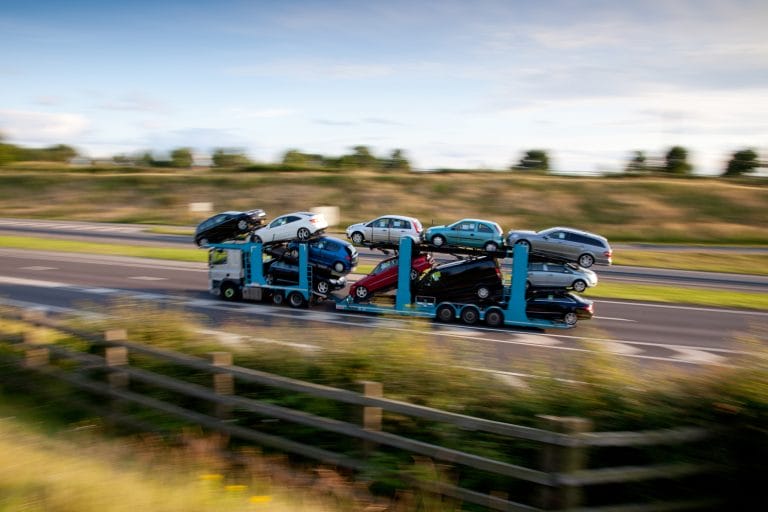
Shipping changes the shape of the week. The sled travels on a carrier, you fly in, and the days you would have spent on the interstate become days on the trail. The snowmobile shipping page covers the equipment and the process in detail, but the short version is that the sled rides on its own trailer or on a carrier deck, secured with straps rated for it, and arrives at a lodge, a dealer, a storage yard or a friend’s garage at the destination.
The decision usually turns on three things: distance over about 800 miles, whether you already own a trailer that can make the trip, and whether you are flying in anyway. When two of those three point the same way, shipping tends to win.
How a Snowmobile Ships
A snowmobile is small freight with awkward geometry, so the preparation matters more than it does for a car. Before the carrier arrives, drain or stabilize the fuel and run it low, disconnect the battery if the machine has one, and photograph every panel, the track, the skis and the hood from several angles in daylight. Remove anything loose: bags, spare belts, tools and the cover, which you can send separately or carry. Measure the sled with the windshield fitted, because that is the height the carrier plans around.
If the sled travels on its own trailer, the trailer needs working lights, sound tires and a hitch the carrier can accept, and it ships as a towed unit. If it ships on a carrier deck, the driver loads it by ramp and secures it at the frame, never at the handlebars or the skis. Either way, the bill of lading records the condition at pickup and again at delivery, and that document is what an insurance claim would rest on if anything ever went wrong.
Pickup can be a driveway, a dealer or a storage unit. Delivery can be the lodge, a dealer near the trailhead, or a private garage. Tell your coordinator which it is, because a lodge with a plowed lot takes a big truck and a cabin on a snow-packed county road does not, and that decides where the handoff happens.
Timing Around the Season
Demand for sled transport runs from late November, when the northern trail systems open, through March. The busiest weeks are the ones before the holidays and the first two weeks of January. Two to three weeks of lead time is comfortable for most of the season, and more is better for a Yellowstone trip timed to the mid-December opening. For a season-long stay, book the return leg at the same time as the outbound one, so the sled is home before the spring thaw closes the trails and the lodges empty out.
Weather affects the schedule more than the price. A carrier crossing Wyoming in February may add a day to the window when a pass closes, and a coordinator who tells you that up front is doing the job properly. Build a day of slack into the arrival and plan the first ride for the day after.
Common Questions
Can two sleds ship together? Yes, and it is usually cheaper per machine than shipping them separately. A double trailer ships as one unit, and two sleds on a carrier deck share the trip.
Does the sled need to run? No. A machine that will not start ships as inoperable and is loaded by ramp and winch. Say so at booking so the right equipment is sent.
What about the trailer itself? A snowmobile trailer can ship loaded or empty. Loaded, it is treated as a towed unit with its contents declared. Empty, it ships like any small trailer.
Is enclosed transport worth it for a snowmobile? For a new or high-value machine, often yes. Enclosed transport keeps road salt and grit off the sled in exactly the months when the roads are covered in both, and it typically adds about a third to the open rate.
How far ahead should I book for Yellowstone? Three to four weeks for a mid-December arrival. The lodging books out first, and the transport should be arranged as soon as the lodging is.
Get a Quote
Tell us the sled, the trailer if it has one, the two addresses and your dates, and the quote calculator emails an estimate for the move that a specialist then confirms. Or call (866) 821-4555 and a coordinator who has moved sleds to Montana in January will walk you through it. No deposit is taken until a carrier is assigned to your order.