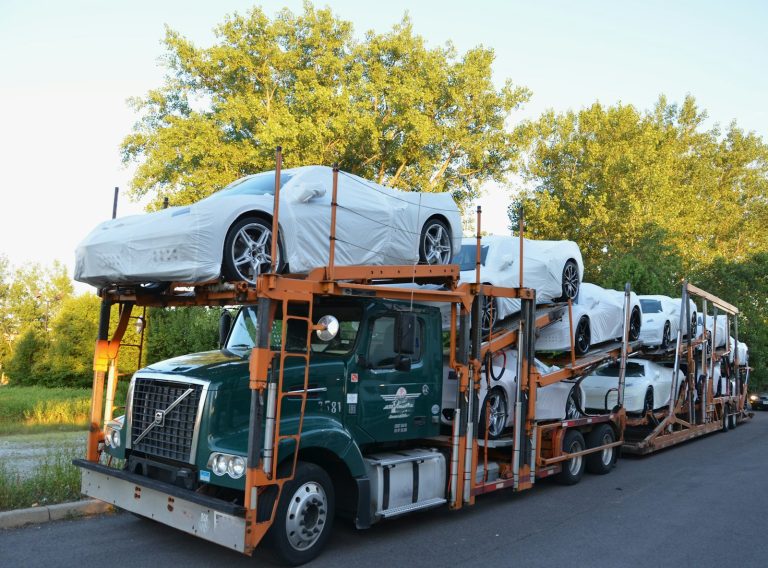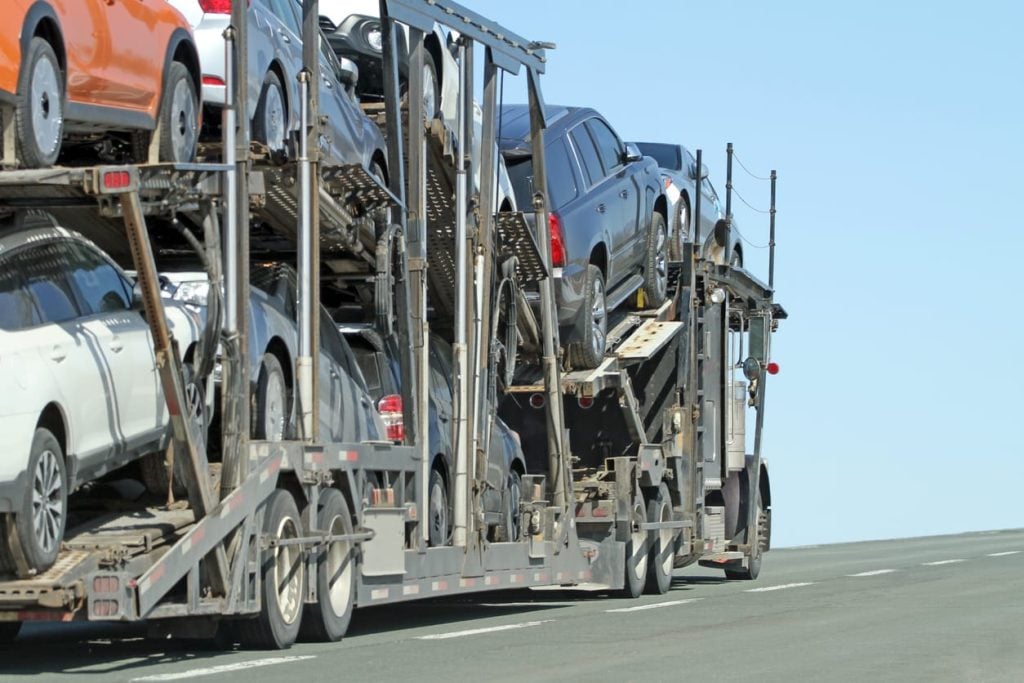
The Real Benefits of Using a Car Shipping Service
Stated honestly: a transport service buys you four things you cannot easily arrange yourself, carrier vetting, defined insurance, a documented condition record, and someone accountable when plans change, plus it removes the mileage and risk of a long drive. It does not buy you guaranteed delivery times, and any company promising those on standard service is overselling.
1. You Do Not Add the Miles
A cross-country drive puts 2,500 to 3,000 miles on a vehicle, which is wear, depreciation, and a meaningful fraction of a service interval. On a car you intend to keep or sell, that is real money. On a lease with a mileage allowance, it can be expensive money.

2. The Carrier Is Vetted Before Your Car Is Loaded
Every carrier we dispatch is checked for active FMCSA operating authority under its own MC number and current cargo insurance on file. You can do this yourself for a single shipment, and you should if you are arranging one independently, but it is the step most people skip.
3. Insurance Is Defined Rather Than Assumed
Carrier cargo insurance is included in the transport price. Ask for the certificate and the limit, and compare it against your vehicle’s value. That is a clearer position than relying on your own policy’s transit provisions, which vary and often surprise people.
4. There Is a Written Condition Record
The bill of lading documents the vehicle’s condition at pickup and again at delivery. Combined with your own photographs, it is the only thing that resolves a damage question. Without a baseline there is nothing to compare against.
What a Transport Service Actually Buys
5. Your Time Comes Back
Coast to coast is four to five days of hard driving, or seven to ten at a pace that is pleasant. Shipping removes those days entirely because the car travels while you fly. For a relocation with a fixed start date, this is usually the deciding factor rather than cost.
6. It Is Frequently Cheaper Than Driving
Past roughly 500 miles the arithmetic turns. Count fuel, lodging, meals, days off work, and depreciation from the added mileage, and shipping generally comes out ahead. Under 500 miles, driving usually wins and we will say so.
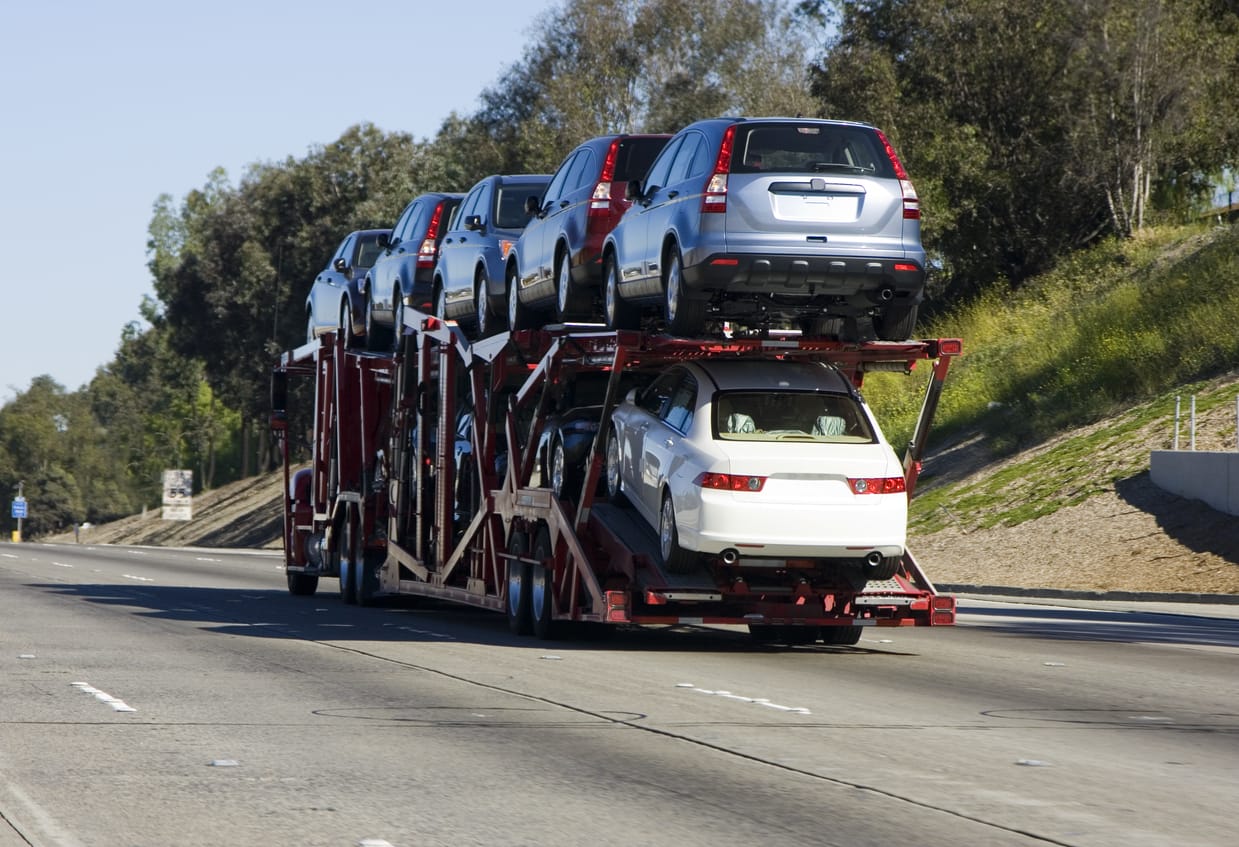
7. Multiple Vehicles Move Together
A two-car household otherwise needs two drivers making the same trip. Shipping both on one carrier costs less than two separate arrangements and both arrive at once.
8. Non-Running Vehicles Are Not a Problem
A car that does not start can still be moved, on a winch-equipped carrier, typically for an extra $100 to $250. Try driving one across three states.
9. Difficult Destinations Are Handled
Alaska and Hawaii are not driving decisions at all; vehicles travel overland to a West Coast port and sail, two to four weeks door to door. Dense urban destinations argue for shipping too, since arriving with a car you then have to park in Manhattan is its own problem.
10. Someone Calls You When Something Changes
Weather, traffic, and mechanical failures happen to everyone. What a professional operation controls is whether you hear about a change before you chase it. That is the honest version of “peace of mind.”
What It Does Not Buy
Pickup and delivery are windows of a day or two on each end, not appointments. Transit time once loaded is predictable; the matching of your shipment to a carrier is the variable part. Any company offering a guaranteed hour on standard service is either charging heavily for a dedicated truck or telling you what you want to hear.

Common Questions
How much does it cost? Open transport runs roughly $0.84 to $2.05 per mile depending on distance: about $400 to $950 for 200 to 500 miles, $1,000 to $1,300 around 1,000 miles, and $2,200 to $2,800 coast to coast. Those tiers are planning estimates. Our order book records where a car was picked up and delivered but not the mileage, so we cannot band by distance the way the tiers do. What it does show is the overall shape: across 3,604 single vehicle car moves since 2023 the middle half ran $900 to $1,550. Enclosed adds about a third.
How far ahead should I book? One to four weeks, longer in summer and around the seasonal snowbird flows.
Can I put belongings in the car? Federal rules restrict cargo inside shipped vehicles and personal items are not covered by cargo insurance.
Do I need to be there? Someone does, at both ends, but it does not have to be you. Name them on the order.
Where a Transport Service Adds Least
Being straight about this makes the rest credible. On a short in-state move of under a couple of hundred miles, with a car you are happy to drive and a schedule that allows it, a transport service adds cost without adding much. Drive it. The same applies if you actively want the road trip; nobody should ship a car they were looking forward to driving.
It also adds little if the vehicle is worth less than roughly twice the transport cost and is not mechanically sound. In that case the honest advice is usually to sell locally and buy at the destination, and we will tell you so rather than book a shipment that does not make sense.
Brokers, Carriers, and What You Are Buying
Most consumer auto transport is arranged by brokers, who do not own trucks but hold FMCSA broker authority, post your vehicle to national load boards, and arrange a vetted carrier. That is normal and it is what gives you access to lanes no single fleet covers.
What you are paying a broker for is matching and accountability: finding a truck already running your route, checking that carrier’s authority and insurance, and being reachable when something changes. A broker who does none of that is charging for nothing, which is why the four verifications matter more than the label.
How to Get the Best Price
Four levers, in order of effect. Book one to four weeks ahead rather than last minute. Keep your dates flexible so the shipment can join a truck already running the lane. Choose open transport unless the vehicle warrants enclosed. And give accurate vehicle details up front, because a quote built on wrong information is a quote that changes.
Get a Quote
Call Ship A Car, Inc. at (866) 821-4555, or price your move with the instant calculator.