
Moving to Florida: What Actually Draws People, and What It Costs
Florida has gained more residents from other states than anywhere else in the country for several years running, and the reasons are unusually easy to name. No state income tax, no winter, a job market that grew through a period when others did not, and housing that was cheaper than the Northeast when the wave started. Three of those four still hold. The fourth has changed a great deal.
Here is the honest version of what you get and what you pay for it.

No State Income Tax
This is the headline and it is real. Florida levies no personal income tax, and the state constitution makes introducing one difficult, so it is not a policy likely to reverse quickly.
For someone arriving from a state with a meaningful income tax, the difference on a professional salary is thousands of dollars a year. For a retiree, it also means pension and retirement account withdrawals are not taxed at state level.
What it does not mean is that Florida is cheap. The state raises revenue through sales tax, tourism and property, and the cost that surprises new arrivals is not tax at all. It is insurance.
Insurance Is the Number to Check First
Florida home insurance is the most expensive in the country by a substantial margin, and it has risen sharply. In parts of the state, and particularly near the coast, the annual premium can approach or exceed what a comparable house costs to insure in three or four other states combined.
Windstorm coverage is frequently separate, flood insurance is almost always separate, and both are effectively mandatory near the water. Some carriers have withdrawn from the state altogether, which limits choice.
The practical instruction is simple: get an insurance quote on the specific address before you make an offer on a house, not after. Two properties a few miles apart can differ by thousands of dollars a year depending on flood zone, distance from the coast, roof age and construction type. A twenty year old roof can make a house effectively uninsurable until it is replaced.
Weather Is Two Different Things
Winter is the reason most people come, and it delivers. From November through April the weather in most of the state is close to ideal, and the further south you go the more reliable that is.
Summer is the part people underestimate. From June through September the combination of heat and humidity is genuinely demanding, afternoon thunderstorms are close to daily, and air conditioning runs constantly, which shows up on the electricity bill.
Hurricane season runs from June through November. Most years pass without a direct hit on any given area, but the risk is real, it drives the insurance market, and it should shape where you buy rather than whether you come.
Jobs, Housing and the Traffic Nobody Mentions
The economy is broader than the tourism reputation suggests. Healthcare, aerospace on the Space Coast, finance and technology in Miami and Tampa, logistics around the ports and defense across several regions all employ substantially.
Housing is the item that has changed most. Florida was cheap relative to the Northeast and California when the migration accelerated, and in the popular metros it is no longer cheap in absolute terms. It remains better value than the coastal Northeast; it is no longer the bargain of five years ago.
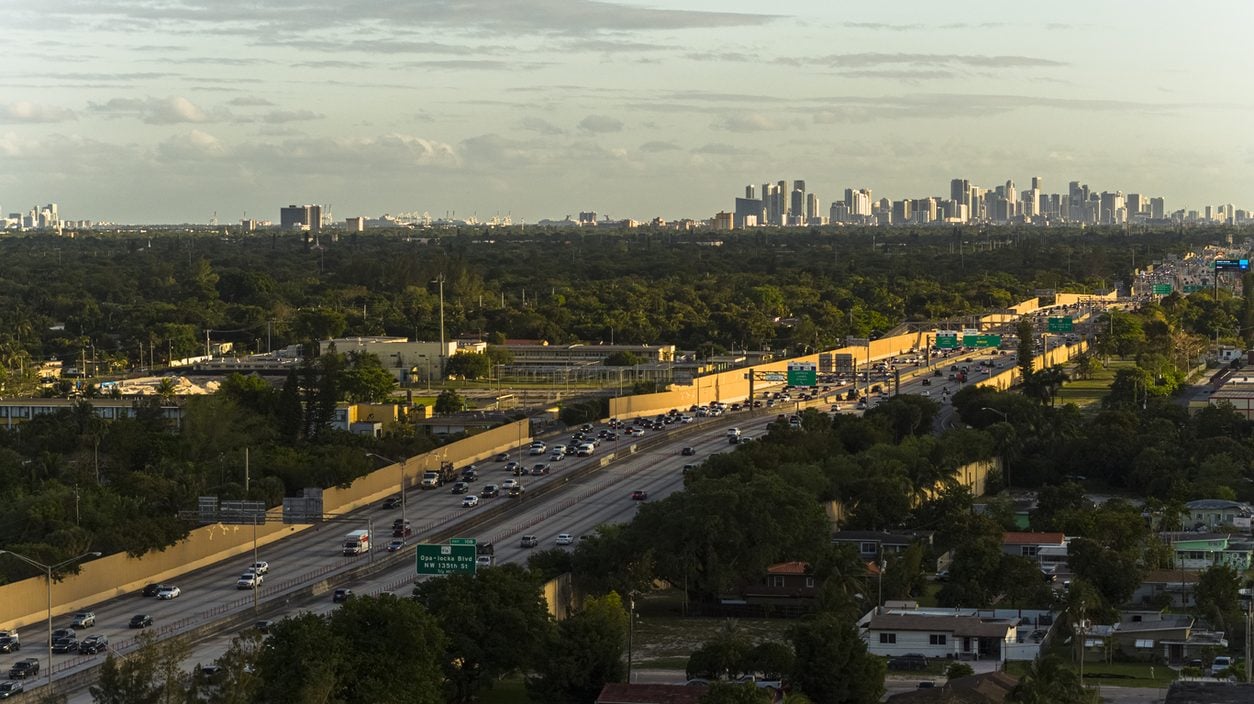
Traffic follows the same story. Rapid population growth has outpaced road capacity in the Tampa, Orlando and southeast Florida corridors. If you are choosing between two areas, drive the commute at the hour you would actually drive it.
Becoming a Resident Has Deadlines
The tax advantage only applies once you are actually a Florida resident, and the state sets a clock on the vehicle side of that.
New residents are expected to obtain a Florida driver license and register their vehicles within a short window of establishing residency, which is triggered by things like accepting employment, enrolling children in school or claiming a homestead exemption. Registration requires proof of Florida insurance meeting state minimums, and Florida’s insurance requirements differ from most states, so your existing policy will need rewriting rather than transferring.
Filing a declaration of domicile and applying for the homestead exemption are the two steps people most often delay. The homestead exemption reduces assessed value and, more importantly, caps how fast that assessment can rise each year, which matters a great deal in a market that has moved as fast as this one.
Getting Your Vehicles There
Most moves to Florida involve at least one car that nobody wants to drive down, and frequently two vehicles with one available driver.
Shipping is straightforward because the volume is enormous. Interstate 95 down the east coast and Interstate 75 through the middle of the country are two of the busiest vehicle transport corridors in the United States, so carriers are plentiful and rates are competitive most of the year.

The exception is the snowbird season. From October through December southbound capacity tightens and prices firm, and the same happens northbound from March through May. Booking three to four weeks ahead in those windows is realistic; one to two weeks is fine outside them.
Be honest about access at the Florida end. Gated communities with height bars, 55 plus developments with narrow internal roads and association rules against commercial vehicles are all common, and a meeting point at a large retail lot near a highway exit is the normal answer. For the wider picture, see our Florida car shipping page.
Common Questions
Does Florida really have no income tax? Yes, and no tax on retirement income either. Sales tax, property tax and insurance are where the money is raised instead.
What is the biggest hidden cost? Home insurance. Get a quote on the specific address before you buy, because it varies enormously street by street.
Is housing still cheap? Cheaper than the coastal Northeast, but not cheap in absolute terms in the popular metros. That has changed considerably.
When is the worst time to move a car there? October through December, when snowbird demand tightens southbound capacity. Book three to four weeks ahead.
Can a car hauler reach my new community? Often not inside the gates. Expect to meet the driver at a nearby lot, which is standard practice.
Get a Quote
Call Ship A Car, Inc. at (866) 821-4555 with both zip codes, your date range and an honest description of the access at the destination, or request an estimate for the move through the quote calculator.