Shipping a Motorcycle: How It Works and What It Costs
A motorcycle is not simply a small car, and the difference that matters is that it does not stand up on its own. Everything about how bikes ship follows from that: they need to be secured upright by their suspension rather than strapped down by wheels, and the quality of that securing is what determines whether one arrives undamaged.
Here is how it works, what it costs and what to ask before you book.
The Three Ways a Bike Travels
Crated is the most protective option. The bike is secured to a pallet or in a wooden crate, which allows it to travel as freight. It costs more, partly for the crate itself, and it is the standard for a shipment going overseas or for a genuinely valuable machine.
Enclosed is the usual choice for anything worth protecting. The bike travels inside a trailer, out of weather and road debris, secured on a wheel chock with soft straps over the handlebars or frame. Enclosed motorcycle carriers frequently move several bikes together in dedicated equipment.
Open is the least expensive and works for ordinary bikes on short moves. The machine is exposed to weather and road spray for the whole trip, which for most owners is the reason to spend the difference on enclosed.
How It Should Be Secured
This is worth understanding because it is the thing most likely to go wrong, and you can ask about it.
The bike goes into a wheel chock that holds the front wheel. Soft straps run over the handlebars or the frame, and the suspension is compressed slightly so the bike is held under tension rather than able to bounce. Ratchet straps directly onto handlebars, fork tubes or any painted surface are how bars get bent and paint gets marked.
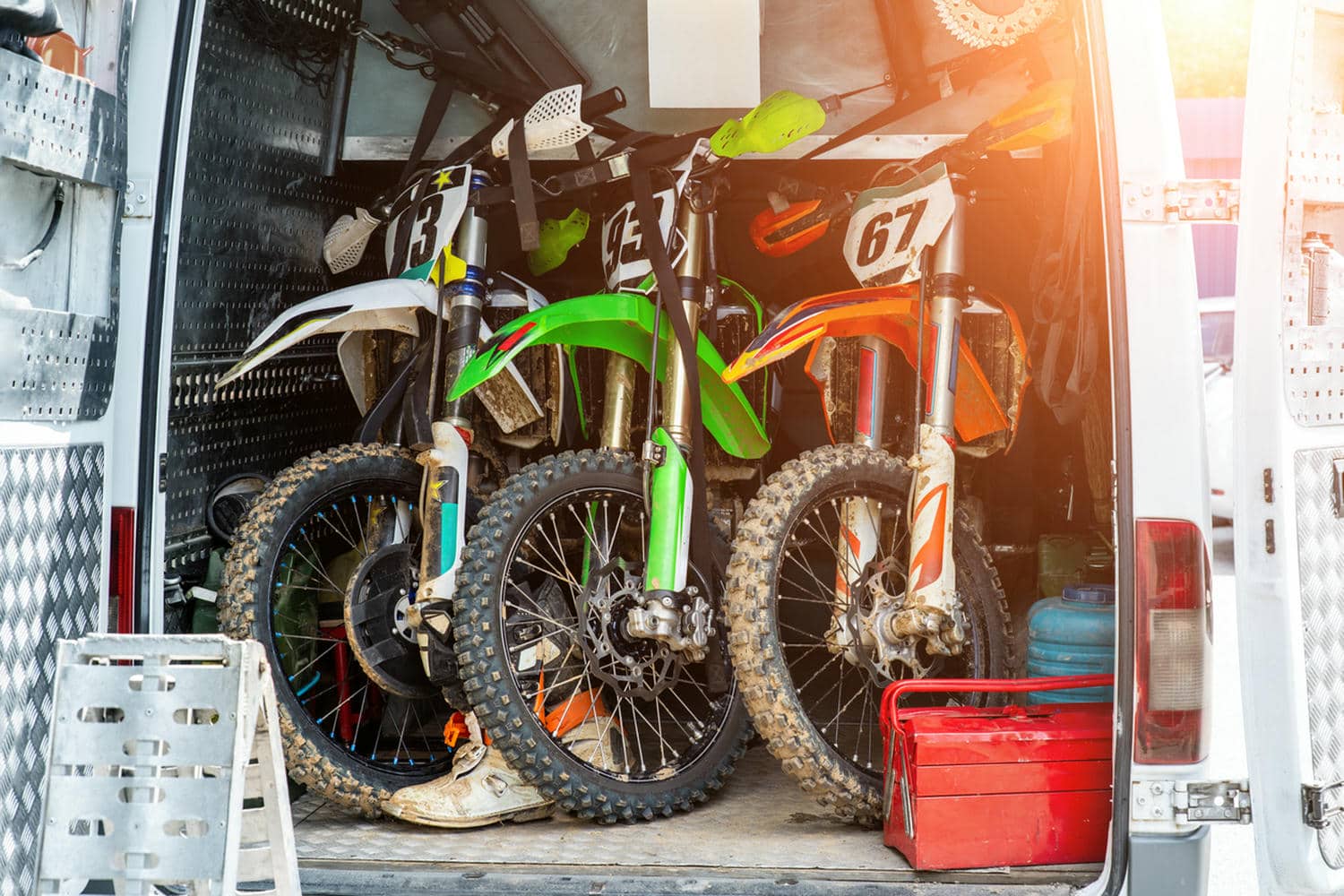
Compressing the suspension fully for days at a time is its own problem on a bike with sensitive forks, so the right answer is firm rather than maximum. A carrier who does bikes regularly will have proper chocks and soft straps as standard. One who arrives with only ratchet straps and no chock is not equipped for the job, and that is a reasonable thing to check when booking.
Terminal or Door to Door
Motorcycles are more likely than cars to move through terminals, and it is worth knowing which you are buying.
Door to door means the bike is collected and delivered at addresses you nominate. Terminal to terminal means you deliver it to a facility and collect it from another, which is usually cheaper but adds two journeys of your own and, on some routes, storage time at each end.
For a bike, terminal shipping has one specific risk worth weighing: the machine may be handled and moved by several people at the facility rather than by the driver who secured it. On a valuable motorcycle that is an argument for door to door with a single carrier.
What Changes the Price
Distance and route work as they do for cars: long moves cost more in total and less per mile, and an established corridor prices better than a detour off the interstate.
Beyond that, transport type is the largest factor, with open cheapest, enclosed higher and crated highest. Size matters at the extremes, since a full dress touring bike with hard luggage takes considerably more room than a sport bike. A trike or a sidecar outfit is wider than standard and should be quoted specifically.
Timing follows the riding season. Spring and early summer are busiest as bikes move north and to rally destinations, and rates firm accordingly. Autumn southbound has its own peak. Deep winter is the quiet season in most of the country and prices reflect it.
Insurance is worth settling before booking rather than after. The carrier’s cargo coverage has a limit, and on a bike worth more than that limit you want to know the number in advance. Ask what it is, and ask whether your own policy covers the machine while it is in someone else’s care, because many do not.
Preparing the Bike
Wash it so existing marks are visible, then photograph it in daylight from every angle including the tank, the fairings, the wheels, the exhaust and the odometer. Photograph any existing scratch or stone chip specifically.
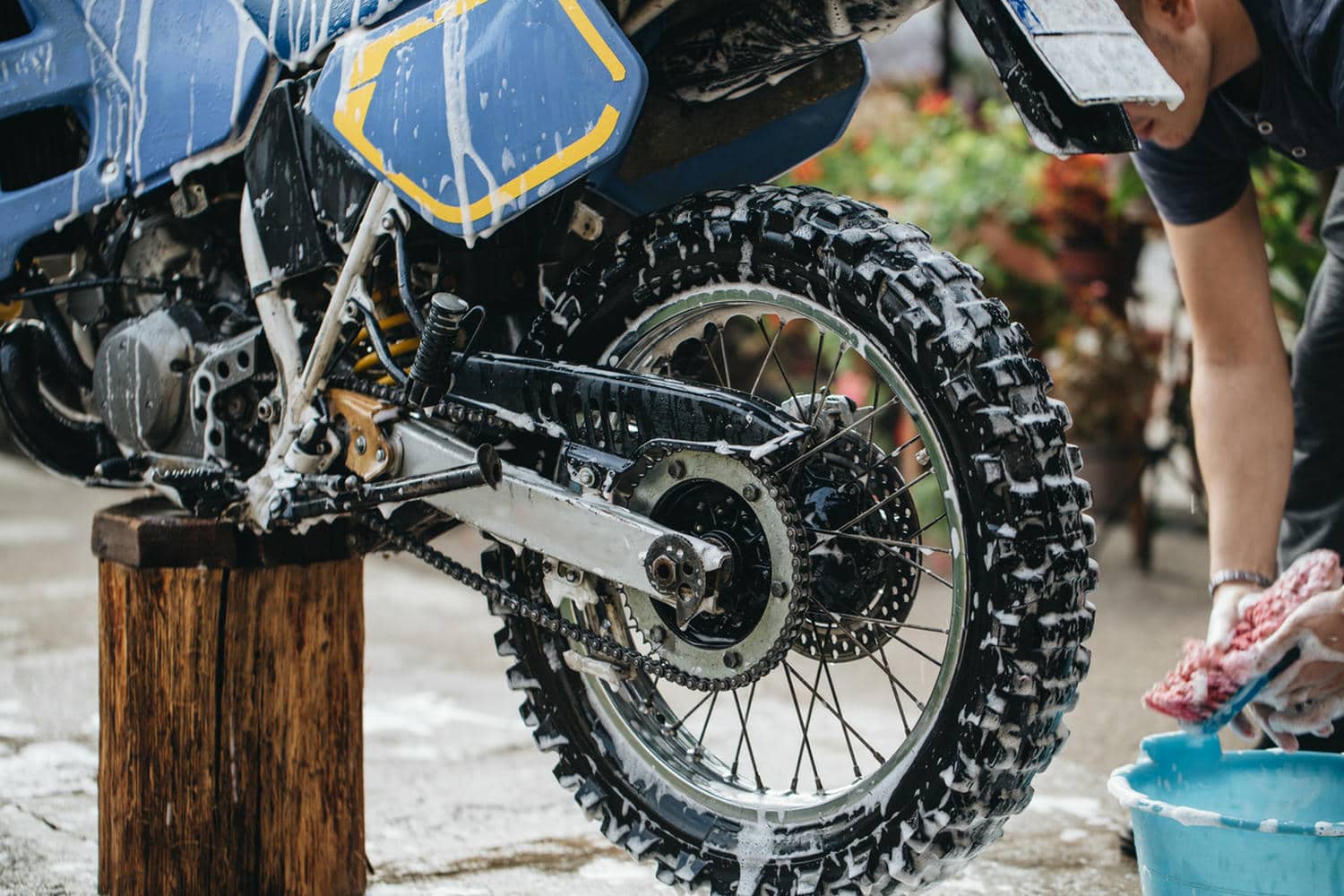
Leave about a quarter tank of fuel, no more. Check that the tires hold pressure and the battery is charged, because a bike that will not roll or start is harder to load and can attract a charge.
Remove anything loose or easily taken: a GPS unit, a tank bag, a top box if it detaches, and any aftermarket accessory that is not bolted down. Fold or remove mirrors if they protrude. Disable an alarm or explain the procedure, and provide a key.
Note any starting quirk in writing. A bike with a fuel tap that must be set a particular way, or a kill switch in an unusual place, should not require the driver to work it out.
At delivery, inspect before signing and compare against your photographs. Note anything unexpected on the bill of lading while the driver is present. For the cost comparison specifically, see our page on the cheapest way to ship a motorcycle.
Common Questions
Open, enclosed or crated? Open is cheapest and exposes the bike to weather. Enclosed is the usual choice for anything valued. Crated is for overseas shipments and high value machines.
How should the bike be strapped? In a wheel chock with soft straps over the bars or frame and the suspension slightly compressed. Ratchet straps directly onto bars or fork tubes cause damage.
Does it need to run? It is easier and cheaper if it rolls and starts. Say if it does not, because loading a non runner needs different handling.
When is it cheapest? Winter in most of the country. Spring and early summer are the busiest, along with rally season.
How much fuel should I leave? About a quarter tank, the same as a car.
Get a Quote
Call Ship A Car, Inc. at (866) 821-4555 with the make and model, both zip codes and your date range, or request an estimate for the move through the quote calculator.